Manaslu Circuit Trek vs Annapurna Circuit Trek: An Honest Comparison
Table of Contents
- Quick Comparison: Manaslu Circuit Trek vs Annapurna Circuit Trek at a Glance
- Who Is This Manaslu vs Annapurna Comparison For?
- Overview of Both Treks
- Manaslu Circuit Trek Overview: Know What You Are Challenging
- Annapurna Circuit Trek Overview: What It Is Today (Not What It Was)
- Difficulty Comparison: Manaslu vs Annapurna: Which Nepal Trek Is Actually Harder?
- Manaslu Circuit Trek Difficulty
- Annapurna Circuit Trek Difficulty
- The Bail-Out Factor: A Difference Most Nepal Trekking Guides Ignore
- Larkya La Pass Closure Risk: What Nobody Tells You
- Scenery and Mountain Views: Manaslu vs Annapurna: An Honest Assessment
- Best Photography Spots on the Manaslu Circuit Trek
- Best Photography Spots on the Annapurna Circuit Trek
- Cultural Experience: Manaslu vs Annapurna: Depth vs Diversity
- The Secret Cultural Advantage of the Manaslu Circuit Trek: Tsum Valley
- Permits, Regulations and Logistics: Manaslu vs Annapurna
- Manaslu Circuit Trek Permits
- Annapurna Circuit Trek Permits
- Cost Comparison: Manaslu vs Annapurna: What You'll Actually Spend on Each Trek in Nepal
- Manaslu Circuit Trek Total Cost Breakdown
- Annapurna Circuit Trek Total Cost Breakdown
- Manaslu vs Annapurna: Which Trek Offers Better Value for Trekking in Nepal?
- Manaslu Circuit Trek vs Annapurna Base Camp Trek
- Which Trek Is Better for You? A Decision Framework
- Choose the Manaslu Circuit Trek If…
- Choose the Annapurna Circuit Trek If…
- Choose the Manaslu-Annapurna Combination Trek If…
- Practical Planning Tips Before You Book Your Nepal Trek
- Best Time to Trek: Season-by-Season Breakdown
- Fitness and Training: How to Prepare for High-Altitude Trekking in Nepal
- Teahouse Realities: What to Actually Expect
- Frequently Asked Questions
If you're stuck choosing between the Manaslu Circuit Trek and the Annapurna Circuit Trek, you're not a beginner unaware of the best treks in Nepal. You already know both names and are in a dilemma about choosing the perfect trek for you. The Annapurna Circuit Trek built the legend, no doubt, but roads, crowds, and comfort have reshaped the experience in ways people don't always admit. The Manaslu Circuit Trek, meanwhile, still feels raw and a bit unpredictable… though it's not as untouched as some blogs like to romanticize.
So this isn't another checklist-style Manaslu vs Annapurna comparison of trekking in Nepal. We're getting into what actually changes your experience on the trail the kind of stuff trekkers only notice when they are on actual trails.
Quick Comparison: Manaslu Circuit Trek vs Annapurna Circuit Trek at a Glance
| Factor | Manaslu Circuit Trek | Annapurna Circuit Trek |
|---|---|---|
| Distance | 177 km (Approx) | 160-230 km (depends on road skips) |
| Duration | 14-18 days | 10-14 days (flexible) |
| Highest Pass | Larkya La (5,106 m) | Thorong La (5,416 m) |
| Difficulty | Moderate to Challenging | Moderate |
| Permit Requirement | Restricted area permits + MCAP + ACAP | ACAP |
| Guide Requirement | Mandatory | Not required (but recommended) |
| Best Season | Spring and Autumn | Spring and Autumn |
| Estimated Cost | Higher (permits + guide) | Moderate |
| Crowds Level | Low | High (especially peak season) |
| Solo Trekking | Allowed (as per 2026 updated rule) | Allowed |
The real quick difference between the Annapurna Circuit Trek and the Manaslu Circuit Trek is that Annapurna gives you flexibility, comfort and a social trail. That means you can adjust, skip or shortcut your way through it. Meanwhile, Manaslu doesn't play that game. It asks for commitment. It has a fixed route, fewer exits. It asks for a guide and in return, you get a trek that feels like Nepal before everything got easier.
Who Is This Manaslu vs Annapurna Comparison For?
This isn't written for someone casually googling "best trek in Nepal." It's for three specific types of trekkers.
First, those who've already walked the Annapurna Circuit Trek and are now eyeing the Manaslu Circuit Trek as the next step, in simple words, those looking for something quieter and less predictable.
Second, first-time Nepal trekkers who are stuck between the safety of a classic Himalayan trek and the pull of something less crowded.
And third, people who've heard about the road situation on the Annapurna Circuit and aren't sure if it's a deal-breaker or just overhyped noise people who want a straight answer, not a sugar-coated one.
Overview of Both Treks
Both the Manaslu Circuit Trek and Annapurna Circuit Trek are classic Himalayan circuits looping around massive 8,000m peaks, Mount Manaslu and Annapurna I. They sit geographically close enough that they actually connect. The Manaslu Circuit Trek feeds into the Annapurna trail at Dharapani. If someone is thinking about combining both into one long and challenging Nepal trek, this connection becomes the core.
Manaslu Circuit Trek Overview: Know What You Are Challenging
The Manaslu Circuit Trek starts quietly, usually from Soti Khola or Machha Khola, and builds up without much drama… until it suddenly does. You're looking at roughly 177 km over 14-18 days, finishing at Dharapani after crossing the big one: Larkya La Pass (5,160 m). It's a restricted area, so permits aren't optional, and neither is a guide. There's also the Tsum Valley extension if you want to push deeper into that Tibetan-influenced place where things feel older, slower, and less touched. Overall vibe? Raw, remote, and just developed enough to keep you moving, but not enough to make it comfortable.
Annapurna Circuit Trek Overview: What It Is Today (Not What It Was)
The Annapurna Circuit Trek still carries its legacy, though the experience may have shifted. The classic route runs from Besisahar to Nayapul or straight into Pokhara, stretching anywhere from 160 to 230 km. It depends on how much road you skip or tolerate. Most itineraries for trekking in Nepal's Annapurna region take 12-18 days, with Thorong La Pass (5,416 m) as the high point. However, roads have been cut into large sections, especially in the lower regions before Manang and after Muktinath.
But it hasn't ruined the whole trek the stretch from Manang to Muktinath still holds onto that high-altitude, isolated feel people come for. What's changed is the rhythm. You're no longer fully immersed the entire way, but you gain flexibility, easier logistics and a trail that bends to your comfort level if you want it to.
Difficulty Comparison: Manaslu vs Annapurna: Which Nepal Trek Is Actually Harder?
"Hard" isn't just altitude. It's how the trail behaves, how often you can change your mind, and how tired you feel on day 7 when the weather turns a bit ugly. Both the Manaslu Circuit Trek and Annapurna Circuit Trek will push you, but in very different ways.
Manaslu Circuit Trek Difficulty
The Manaslu Circuit Trek doesn't start brutally. It just quietly stacks pressure day after day. Once you're deep into the Budhi Gandaki valley, you're committed; there's no casual exit, no jeep waiting a few hours away. The trail can feel rough and less maintained, especially in the canyon sections where landslides and narrow paths are part of the deal.
You're typically gaining 600-800 meters a day, walking 6–8 hours, and that adds up fast. Then comes Larkya La. The Larkya La Pass is a long, cold, mentally draining crossing where the distance matters just as much as the altitude.
Add limited rescue infrastructure and that constant awareness of remoteness, it's not just physical, it gets into your head.
Annapurna Circuit Trek Difficulty
The Annapurna Circuit Trek plays a different game. Yes, Thorong La is higher at 5,416 m, and you'll feel that altitude no matter how fit you are. But the build-up is more gradual, and Manang gives you a proper acclimatization pause; this alone makes a big difference on a Himalayan trek.
The trail itself is generally better maintained and the overall rhythm feels more forgiving. Even on the pass day, it's tough but structured, with more trekkers, clearer paths and better support along the way.
And then there's the unspoken advantage: the roads. Roads make the whole Annapurna Circuit Trek easier to manage if things don't go as planned.
The Bail-Out Factor: A Difference Most Nepal Trekking Guides Ignore
Here's where things get real. On the Annapurna Circuit Trek, you've got options: jeep roads, alternate routes, places to stop early if your body says "not today." You can adapt mid-trek without turning the whole plan upside down.
On the Manaslu Circuit Trek, that flexibility basically disappears once you're in. If you get injured, sick, or stuck before the pass, your choices narrow fast. You'll be left with only the options of waiting it out or calling for evacuation. That's why good insurance with helicopter coverage isn't some "nice to have" here; it's part of the plan, at the same level as boots and trekking permits.
Larkya La Pass Closure Risk: What Nobody Tells You
Larkya La Pass doesn't always cooperate. Unlike Thorong La Pass, which usually reopens fairly quickly after snowfall, Larkya La can stay shut for days, and in worst cases, especially heading into late autumn, it can remain closed for weeks. If you're trekking in November or early December, this becomes a real factor, not just a "maybe."
On the Manaslu Circuit Trek, a closed pass can trap your itinerary in a way the Annapurna Circuit rarely does. So you build buffer days, keep your return plans flexible and actually check conditions with a local agency before committing to crossing dates. It's one of those behind-the-scenes details that doesn't show up in glossy itineraries, but it can make or break your trek.
Scenery and Mountain Views: Manaslu vs Annapurna: An Honest Assessment
If you're expecting a polite "both are equally beautiful" answer, that's not really how this plays out on the ground.
The Annapurna Circuit Trek hits you with range literally. You move from subtropical valleys through pine forests and dry alpine zones and eventually into that stark, high-altitude desert around Manang. The view from Thorong La Pass is huge and unforgettable. You see wide Himalayan mountains, including Dhaulagiri and the Annapurna range, spread across the skyline like a perfect scene.
The Manaslu Circuit Trek, on the other hand, doesn't try to impress you with variety. It locks you into one dominant presence, Mount Manaslu, and just keeps changing how close you feel to it. One day it's distant and towering. The next day, it's filling your entire field of vision like it's watching you walk. There's a rawness here, an unfiltered quality that the Annapurna Circuit has partially lost to infrastructure and popularity.
What you should know is: the Manaslu Circuit Trek is less about "Wow, look at everything" and more about "This one mountain feels too close now."
Best Photography Spots on the Manaslu Circuit Trek
The Manaslu Circuit Trek has a few spots that quietly do all the heavy lifting for photography. Lho Village is the classic early morning light hits the north face of Mount Manaslu in a way that feels almost imaginary. Samdo opens up into a wide, almost empty plateau where the Tibetan border landscape adds a different kind of depth to your shots.
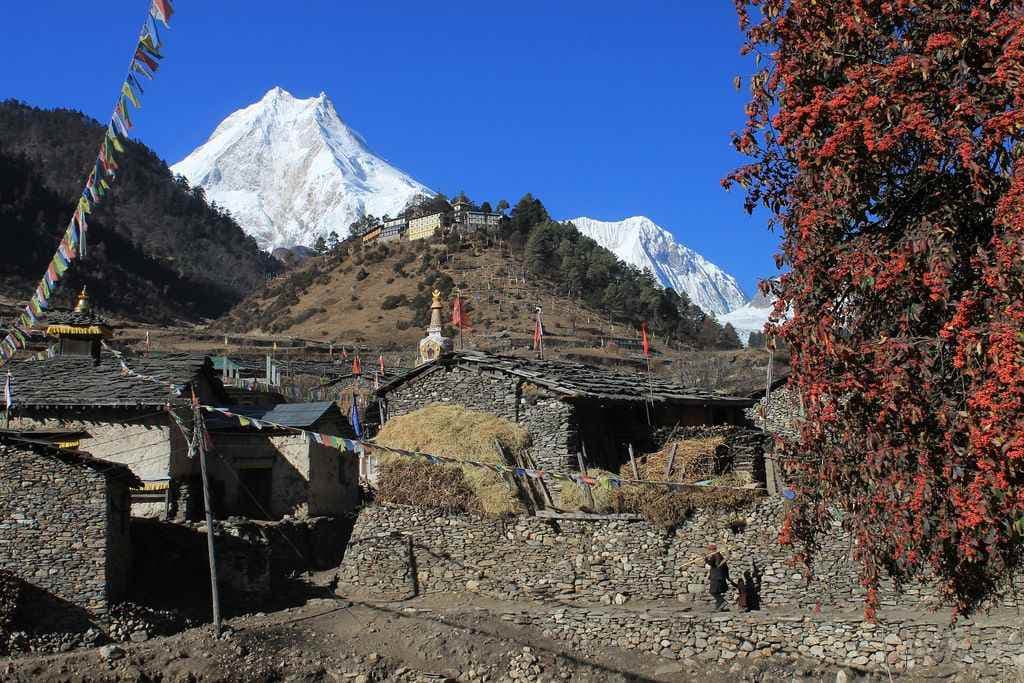
The approach to Larkya La base camp gives you that gritty, high-altitude texture with glaciers creeping into frame. Birendra Lake adds a calm, reflective break in all that ruggedness, while Bimtang, after the pass, is where the massif finally explodes back into view. Early mornings in Lho and Samdo are where you'll get your cleanest light no haze, no distractions, just mountains and silence.
Best Photography Spots on the Annapurna Circuit Trek
The Annapurna Circuit Trek spreads its photography across multiple "wow" zones. The high trail between Ghyaru and Ngawal is one of the most consistently rewarding stretches, with the panorama of Annapurna II and IV dominating the skyline. Tilicho Lake feels almost unreal, cold, still, and framed by sheer rock walls that make every photo look exaggerated. The Thorong La Pass summit delivers the classic panoramic shot, with Dhaulagiri standing heavy in the distance.
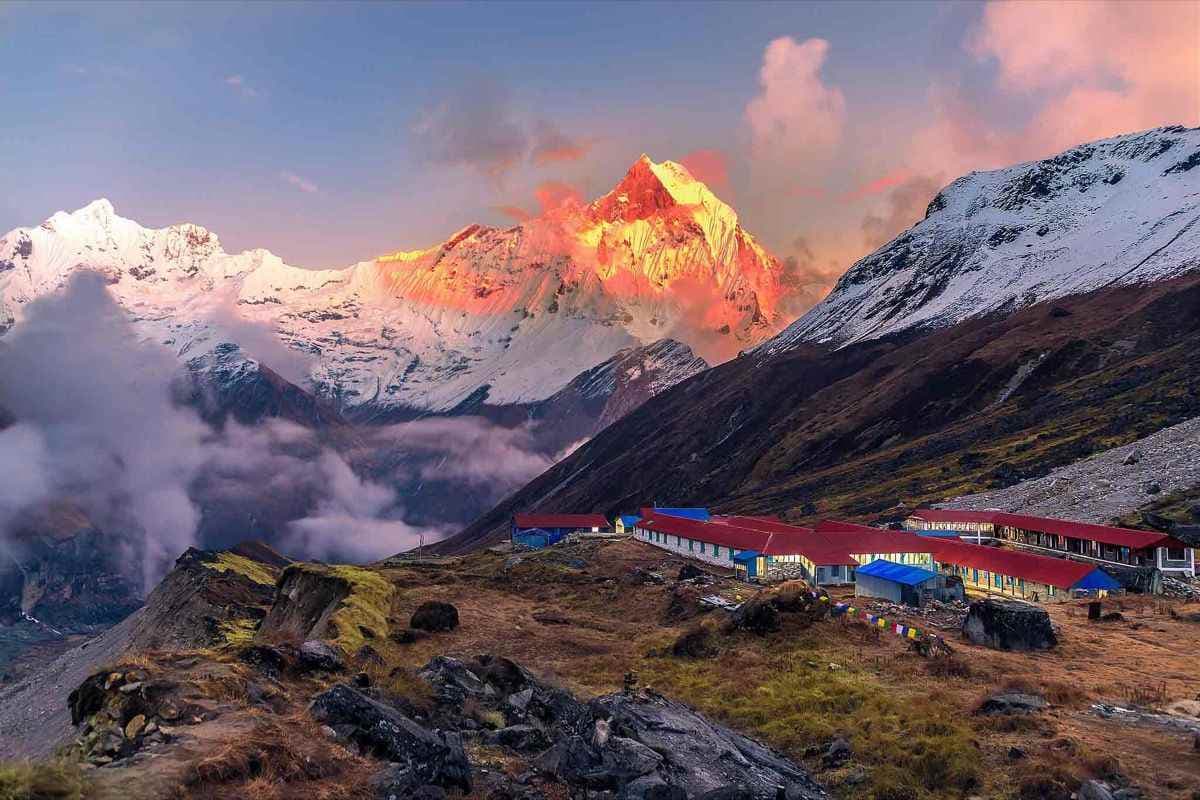
Around Muktinath, the landscape opens up again with wide views and shifting light, while Poon Hill (if you extend the trek) gives you that famous sunrise shot over the entire Annapurna range. The Ghyaru–Manang section, though, is arguably the most photogenic continuous stretch on any Nepal circuit trek and still largely road-free, which helps preserve its rhythm.
Cultural Experience: Manaslu vs Annapurna: Depth vs Diversity
The Manaslu Circuit Trek and the Annapurna Circuit Trek don't just differ in scenery; they differ in how culture actually feels on the ground.
The Manaslu Circuit leans into depth. Most of the trail runs through Tibetan-influenced villages where life feels steady, quiet and less adjusted to tourism pressure. It's not a "performed" culture, it's just life continuing the way it has for a long time, especially as you move closer to the upper Budhi Gandaki region.
Then there's the Annapurna Circuit Trek. It gives you variety. You move through Gurung villages, Thakali settlements, and Tibetan-influenced highland communities within a single trek. The flip side is that many of these places are now shaped by tourism infrastructure, resulting in a more comfortable and welcoming experience, but one that has decreased the old, untouched vibe.
So the experience becomes broader but slightly less raw. The Manaslu Circuit Trek feels like a deep dive into one cultural stream. The Annapurna Circuit Trek feels like switching between multiple channels, each with its own tone and pace.
The Secret Cultural Advantage of the Manaslu Circuit Trek: Tsum Valley
The Manaslu Circuit Trek has something the Annapurna Circuit simply doesn't match in cultural depth: the Tsum Valley. This side valley branches off before the main circuit and feels almost like stepping out of time entirely. It's deeply sacred, with strong Tibetan Buddhist traditions, ancient monasteries and villages that have seen very little external world influence compared to most trekking regions in Nepal.
Adding Tsum Valley usually extends the trek by 5-7 days and requires a separate restricted area permit. But what you get in return is a level of cultural immersion that feels more intact and less filtered.
For trekkers who value people and culture as much as mountains, this extension quietly becomes one of the strongest arguments for choosing the Manaslu Circuit Trek over the Annapurna Circuit Trek.
Permits, Regulations and Logistics: Manaslu vs Annapurna
This is where the decision quietly becomes practical. Permits and regulations shape your budget beyond scenery and difficulty they also shape your planning timeline and even whether you can trek independently or not.
Manaslu Circuit Trek Permits
The Manaslu Circuit Trek requires a layered permit system because it is a restricted area. The Manaslu Restricted Area Permit (RAP) costs about USD 100 per person per week from September to November and around USD 70 per week in other seasons. Then there is the Manaslu Conservation Area Permit (MCAP) at roughly USD 30. If your route continues into the Annapurna region via Dharapani, you'll also need an ACAP permit (around USD 30).
As per the 2026 updated rules, a solo permit can be issued. However, independent trekking is still not allowed. You must hire a licensed guide. This instantly changes the style of the trek, making it more structured and less flexible.
On the plus side, the ACAP already obtained here effectively carries you into the Annapurna section if you're doing a combined route, which slightly offsets the overall cost compared to trekking both Nepal circuits separately.
Annapurna Circuit Trek Permits
The Annapurna Circuit Trek is much simpler in comparison. You typically need the Annapurna Conservation Area Permit (ACAP) around USD 13-15 and a TIMS card, usually around USD 15-20 for independent trekkers (often included in agency-organized trips).
Most importantly, there is no mandatory guide requirement, and solo trekking is allowed. This makes the Annapurna Circuit Trek significantly more flexible and budget-friendly for those who prefer controlling their own pace, route, and daily decisions. Cost Comparison: Manaslu vs Annapurna What You'll Actually Spend on Each Trek in Nepal
Cost Comparison: Manaslu vs Annapurna: What You'll Actually Spend on Each Trek in Nepal
Manaslu Circuit Trek Total Cost Breakdown
The Manaslu Circuit Trek sits in a higher cost bracket mainly because of regulations. Permits alone typically add up to around USD 130-160, depending on season and route combinations. The biggest expense is the mandatory licensed guide, usually USD 25-35 per day for a 14-17 day trek. A porter, if used, adds another USD 15-20 per day.
Teahouse stays on the Manaslu Circuit Trek remain relatively modest at USD 5-15 per night, with meals around USD 5-10 each. Transport from Kathmandu to the trailhead and back generally falls between USD 30 and 80, depending on vehicle and route.
Putting everything together, a realistic, independently planned but guided Manaslu Circuit Trek usually lands around USD 1,200-1,700. Booking through an agency with logistics handled end-to-end, packages typically range from USD 1,400-2,200, depending on service level and inclusions.
Annapurna Circuit Trek Total Cost Breakdown
The Annapurna Circuit Trek is noticeably more flexible on budget. Permits are relatively low at around USD 28-35 total (ACAP and TIMS combined). The biggest saving comes from the fact that a guide is optional, which can cut USD 350-600 or more from a typical two-week Nepal trekking cost.
Teahouse accommodation ranges from USD 5-20 per night, and meals remain similar to the Manaslu Circuit, except in some specific places due to better-developed infrastructure.
A realistic independent Annapurna Circuit Trek usually costs between USD 700-1,000, while agency-supported versions sit around USD 1,000-1,800 depending on comfort level and services included.
Manaslu vs Annapurna: Which Trek Offers Better Value for Trekking in Nepal?
The Manaslu Circuit Trek is more expensive, but the mandatory guide requirement adds real value in terms of safety, navigation and cultural access in a remote restricted region. You're paying for structure and reduced risk as much as experience.
The Annapurna Circuit Trek offers better value for trekkers who want control, flexibility and lower cost without sacrificing core Himalayan scenery. If you're doing the combo route, the permit overlap into Dharapani is a small but useful cost efficiency that slightly balances the Manaslu premium.
Manaslu Circuit Trek vs Annapurna Base Camp Trek
Honestly, comparing the Manaslu Circuit Trek with the Annapurna Base Camp Trek isn't really a like-for-like debate it's two completely different Nepal trekking philosophies. The Annapurna Base Camp (ABC) Trek is a round-trip route that goes directly into the Annapurna Sanctuary, reaching around 4,130m without any major high passes or complex logistics.
It's shorter (usually 7-10 days), more accessible, and far more forgiving in terms of altitude progression and infrastructure. There are no restricted permits and no mandatory guide rules, and thereby, very few planning complications. This is why it's often the first real Himalayan trek for many people visiting Nepal.
The Manaslu Circuit Trek sits at the opposite end of the spectrum. Full circuit. Longer. Higher in commitment and shaped by remoteness rather than convenience. You're dealing with a high mountain pass, restricted area regulations and a trail that doesn't offer easy exits or shortcuts.
The choice becomes pretty straightforward. If someone has limited time, is new to trekking in Nepal, or wants a strong but manageable introduction ABC makes sense.
But if the goal is a true wilderness experience, something longer, more isolated and structurally demanding, the Manaslu Circuit Trek is in a completely different league.
Which Trek Is Better for You? A Decision Framework
This is where the comparison stops being theoretical and starts becoming personal. The Manaslu Circuit Trek and the Annapurna Circuit Trek suit completely different types of trekkers. So instead of "better or worse," it comes down to where you are in your Nepal trekking journey, how much time you have and how much uncertainty you're willing to handle.
Choose the Manaslu Circuit Trek If…
- You've already done the Annapurna Circuit Trek or similar Himalayan treks and want a clear step up in remoteness and challenge. This is where you go when comfort starts feeling predictable.
- You want that "Annapurna 20-30 years ago" kind of experience less infrastructure, fewer trekkers and a trail that still feels like it's operating on its own terms.
- You have around 16-20 days and don't mind committing fully once you're on the trail. The Manaslu Circuit Trek doesn't really reward rushed decisions or tight schedules.
- You're comfortable with limited exit options. If something goes wrong, your flexibility is minimal and you're okay with that trade-off for remoteness.
- You're interested in extending into Tsum Valley for a deeper cultural layer that most trekkers never experience.
- You're considering the Manaslu-Annapurna connection route and want a longer, continuous Himalayan circuit instead of a single standalone trek.
Choose the Annapurna Circuit Trek If…
- This is your first major trek in Nepal and you want something iconic but still manageable in structure and risk.
- You have around 12-14 days and prefer a route that doesn't require strict logistical commitment or long isolation.
- You want the freedom to trek independently without being tied to a mandatory guide or fixed support system.
- You're working with a tighter budget and want maximum Himalayan trekking experience per dollar spent.
- You're interested in add-ons like Tilicho Lake, Nar Phu Valley, or even Poon Hill extensions for variety.
- You value having multiple exit points and flexibility in case weather, health or timing forces a change of plans.
Choose the Manaslu-Annapurna Combination Trek If…
The Manaslu Circuit Trek naturally connects into the Annapurna region at Dharapani, which makes a full combined Nepal trek surprisingly logical for experienced trekkers. The Manaslu RAP effectively transitions into the Annapurna section, so you don't have to reset your logistics halfway.
This combined route usually takes around 22-26 days and becomes one of the most complete circuit trekking experiences in Nepal.
It's not for casual planning, it demands time, budget and solid physical preparation, but the reward is a full-spectrum Himalayan journey that moves from raw restricted wilderness into the more developed Annapurna landscape. For trekkers who want the "definitive Nepal circuit experience," this is the version that stitches everything together instead of forcing a choice. If you're planning it as an itinerary, this is exactly the kind of route that experienced Himalayan trekking companies like Everest Thrill structure as a complete package.
Practical Planning Tips Before You Book Your Nepal Trek
Before you lock in dates for either the Manaslu Circuit Trek or the Annapurna Circuit Trek, a bit of timing, fitness reality-checking and expectation-setting really matters. Most regrets on these treks don't come from the trail itself they come from underestimating conditions before even starting.
Best Time to Trek: Season-by-Season Breakdown
Autumn (September to November) is the prime season for both the Manaslu Circuit Trek and the Annapurna Circuit Trek. Clean skies, steady weather and the most predictable conditions define this window. Manaslu has a slightly sharper edge in November because Larkya La Pass can start getting snowfall-related closures later in the month.
Spring (March to May) is the strongest alternative to warmer conditions, blooming rhododendrons and comparatively fewer crowds, especially on the Manaslu Circuit Trek where the trail feels more open.
Winter (December to February) is technically possible for lower sections of both Nepal treks, but high passes like Thorong La and Larkya La often become unreliable or closed.
Monsoon (June to August) is generally not recommended for the Manaslu Circuit Trek due to landslides, trail erosion and poor visibility. The Annapurna Circuit Trek is marginally more tolerant due to rain-shadow areas.
For a full month-by-month breakdown of weather windows and trail conditions, see the Manaslu seasonal trekking guide.
Fitness and Training: How to Prepare for High-Altitude Trekking in Nepal
Preparation really matters, especially for the Manaslu Circuit Trek, where daily distance and remoteness add extra strain compared to the Annapurna Circuit Trek. A realistic training window is 8-12 weeks before departure, focusing on weighted backpack hikes, stair climbing, and steady aerobic conditioning rather than short bursts of gym work.
The goal shouldn't be peak athletic performance, it should build your endurance for 6–8 hours of loaded walking a day. The Manaslu Circuit Trek demands a slightly higher baseline because there are fewer rest-stop options and longer sustained ascents. It's also worth consulting a medical professional about altitude medication like Diamox before you go, especially if you've never been above 4,000 meters.
Teahouse Realities: What to Actually Expect
On the Manaslu Circuit Trek, teahouses are functional rather than comfortable. Rooms are usually simple, shared during peak season, and menus list a narrow range of dal bhat, noodles, eggs and the occasional variation depending on supply routes. Hot showers become rare once you move above Samagaon, and charging devices can be inconsistent in higher villages. WiFi is either very limited or completely absent in most of the upper trail.
The Annapurna Circuit Trek feels more developed in comparison. You'll still find basic lodges, but many villages offer private rooms, broader menus, reliable hot showers, and far more consistent charging facilities. WiFi is widely available in most major stops, especially in the lower and mid sections. The difference is less about luxury and more about predictability you generally know what you're getting each night on the Annapurna Circuit Trek, while the Manaslu Circuit Trek keeps things simpler and less standardized.
Frequently Asked Questions
About Author
Amir Adhikari is the Founder and Trip Curator of Everest Thrill Trek and Expedition. With 10+ years of experience in Nepal’s competitive tourism sector, he is a recognized expert in designing safe, personalized, and high-thrill Himalayan itineraries. His dedication to responsible travel and creating authentic experiences has positioned Everest Thrill as a leading specialist for Everest, Annapurna, and off-the-beaten-path adventures.