Date Updated:
Manaslu Circuit Trek Preparation | Training & Fitness Guide
Table of Contents
- What Fitness Level Do You Need for Manaslu?
- How Long Should You Train?
- Train for the Trail, Not Just the Gym
- Build Endurance
- Strengthen Your Legs
- Hiking Is the Most Important Practice
- Practice Consecutive Hiking Days
- Train With Your Daypack
- Can You Train for Larkya La at Sea Level?
- Learn to Control Your Pace
- Prepare for the Mental Side of the Trek
- Nutrition and Hydration During Training
- Acclimatization Is Part of Preparation
- The Final Two Weeks Before Departure
- A Simple Weekly Training Pattern
- Final Thoughts
The Manaslu Circuit Trek requires preparation for sustained mountain walking rather than technical climbing.
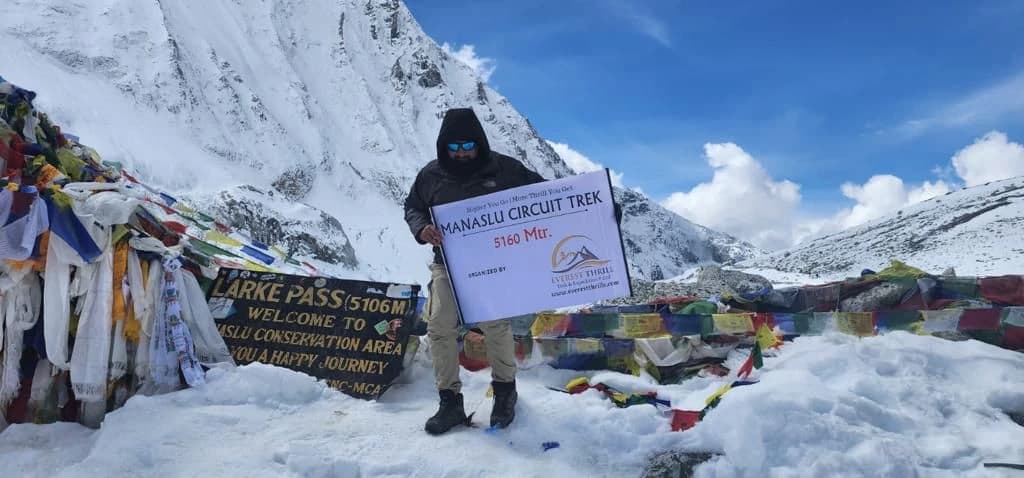
The route combines long walking days, repeated ascents and descents, uneven trails, increasing altitude, and the Larkya La crossing at around 5,100 meters. The main challenge is not one difficult section; it is being ready to walk for several hours and repeat that effort over consecutive days while adapting to altitude.
You do not need to become an elite athlete before the trek. You need enough endurance, leg strength and trekking experience to make the demands of the route familiar.
This Manaslu Circuit Trek preparation guide focuses on the training that transfers directly to the trail, how long to prepare, hiking and backpacking practice, altitude preparation, and the final weeks before departure.
What Fitness Level Do You Need for Manaslu?
There is no single fitness test that determines whether you are ready.
Before the trek, you should ideally be comfortable with:
- Walking for several hours without excessive fatigue
- Sustained uphill and downhill sections
- Uneven and rocky terrain
- Consecutive days of physical activity
- Carrying a personal daypack
- Maintaining a steady pace for a long period
Your starting point matters. Regular hikers may need less structured training, while people new to hiking should allow more time to build gradually.
The objective is to finish a normal trekking day tired but still able to walk the following morning again.
For the physical demands of the route, see our Manaslu Circuit Trek difficulty guide.
How Long Should You Train?
For most trekkers, 8-12 weeks is a practical preparation period.
Someone who already hikes or participates in endurance activities may need less structured preparation. If you are starting from a low fitness base, begin earlier rather than trying to accelerate your training close to departure.
A simple progression is:
| Training period | Main focus |
|---|---|
| Weeks 1-4 | Aerobic fitness and basic leg strength |
| Weeks 5-8 | Longer hikes, hills and elevation |
| Weeks 9-11 | Long and consecutive hiking days |
| Final week | Reduced training and recovery |
The goal is gradual improvement, not maximum effort.
Train for the Trail, Not Just the Gym
Manaslu requires several types of fitness working together.
Build Endurance
Aim for around 3-4 cardio sessions each week, depending on your current fitness.
Brisk walking, incline walking, running, cycling, swimming and stair climbing are useful options.
If you have access to hills or an incline treadmill, include uphill walking regularly. It develops the sustained effort needed for mountain trails without requiring every workout to be intense.
Strengthen Your Legs
Your legs must handle both climbing and descending.
Useful exercises include:
- Squats
- Step-ups
- Lunges
- Split squats
- Romanian deadlifts
- Calf raises
Two strength sessions per week can complement regular hiking.
Do not train only for uphill movement. Long descents can be particularly demanding when your legs are already tired.
Hiking Is the Most Important Practice
Running and gym workouts can improve your fitness, but they do not fully reproduce a trekking day.
Regular hiking lets you practice:
- Sustained uphill walking
- Long descents
- Uneven ground
- Pacing
- Eating and drinking while active
- Using trekking poles
- Wearing your trekking boots
Start with manageable walks and gradually work toward 5-7 hour hikes.
There is no need to complete a very long hike every weekend. Consistent progression is more useful than occasional exhausting efforts.
Practice Consecutive Hiking Days
A multi-day trek requires more than being capable of one long hike.
Once your basic endurance has developed, occasionally hike on consecutive days.
For example:
- Saturday: 5 hour hike
- Sunday: 3-4 hour hike
As your training progresses, you can increase the duration.
This helps you become comfortable walking when your legs are still carrying some fatigue from the previous day, the reality of a multi-day Himalayan trek.
The purpose is not to exhaust yourself. It is to make consecutive trekking days familiar.
Train With Your Daypack
Even when using a porter, you will normally carry a personal daypack with water, layers, snacks, electronics and other essentials.
Use your actual backpack during longer training hikes.
Start with a comfortable load and increase it gradually. There is little benefit in carrying an unnecessarily heavy pack simply for training.
Use these hikes to test your actual trekking equipment as well:
- Backpack
- Boots
- Socks
- Trekking poles
- Rain protection
- Warm layers
A small equipment problem is much easier to solve at home than several days into the trek.
For the equipment you may need, see our Manaslu Circuit Trek packing list.
Can You Train for Larkya La at Sea Level?
Not directly.
Exercise at sea level can improve cardiovascular fitness and strengthen the muscles used for trekking, but it does not reproduce the reduced oxygen availability at around 5,100 meters.
This distinction is important: Fitness helps you handle the physical workload. Acclimatization helps your body adjust to altitude.
You can build fitness before leaving home, but the actual process of acclimatization takes place progressively during the trek.
If you live near mountains, occasional higher-elevation hikes can also give you useful experience with how your body responds as altitude increases.
For the route's elevation profile, see our Manaslu trek height, altitude, elevation and length guide.
Learn to Control Your Pace
Pacing is one of the simplest skills to practice before Manaslu.
Starting too quickly can leave you unnecessarily tired later in the day, particularly as the route climbs.
During training hikes, practice maintaining an effort you could continue for several hours.
Focus on:
- Short, controlled steps on climbs
- Consistent breathing
- A sustainable walking rhythm
- Regular but sensible breaks
- Saving energy for the later part of the day
At high altitude, a steady pace is generally more useful than trying to walk quickly.
Prepare for the Mental Side of the Trek
The mental challenge of Manaslu often comes from accumulation rather than one dramatic moment.
You may encounter slow progress, cold mornings, tired legs, changing weather and long sections of trail.
Useful preparation is simple:
- Break long days into smaller sections.
- Accept that your pace may slow at altitude.
- Stay patient when progress is slower than expected.
- Adapt when trail or weather conditions change.
- Tell your guide early if something does not feel right.
You do not need to prove that you can ignore discomfort. Good trekking judgment includes knowing when to slow down and communicate.
Nutrition and Hydration During Training
Use your longer training hikes to find out what food and snacks work well for you.
Maintain a balanced diet containing carbohydrates, protein, healthy fats, fruit and vegetables.
On longer hikes, practice eating before you become completely hungry and carry the snacks you expect to use during the trek.
Hydrate according to your activity, weather and individual needs rather than following an arbitrary amount that applies to everyone.
Remember that drinking more water does not replace proper acclimatization.
Acclimatization Is Part of Preparation
Your preparation continues after you arrive in Nepal.
The itinerary should allow gradual elevation gain and appropriate time for your body to adjust before the highest sections.
Good physical fitness does not make you immune to altitude illness.
During the trek, pay attention to how you feel and communicate unusual symptoms early to your guide. Your trekking schedule should be designed with altitude, recovery and the Larkya La crossing in mind.
For detailed route planning, see our Manaslu Circuit Trek itinerary.
The Final Two Weeks Before Departure
The final stage is about arriving fresh rather than exhausted.
During the last 7-14 days:
- Reduce the volume of your longest workouts.
- Keep light walking and mobility work.
- Avoid sudden increases in training.
- Check your boots and backpack.
- Test your important clothing and equipment.
- Prioritize sleep and recovery.
- Maintain your normal balanced diet.
Do not use the final week to compensate for months of missed training.
A Simple Weekly Training Pattern
A practical training week could look like this:
| Day | Activity |
|---|---|
| Monday | Rest or mobility |
| Tuesday | Cardio + leg strength |
| Wednesday | Easy walk |
| Thursday | Incline walking or stairs + core |
| Friday | Rest |
| Saturday | Long hike with daypack |
| Sunday | Moderate hike or recovery walk |
The exact schedule matters less than gradually making your training more specific to the trek.
Final Thoughts
Effective Manaslu Circuit Trek preparation is specific rather than extreme.
Build your endurance, strengthen your legs, hike regularly, practice consecutive days, test your equipment and learn to conserve energy. Then allow the trekking itinerary to provide the gradual exposure to altitude that training at home cannot reproduce.
Train before Nepal. Acclimatize in Nepal. On the trail, let the altitude set the pace.
For a fully organized journey with planned trekking stages, guide support and logistics, see our Manaslu Circuit Trek package.
About Author
Amir Adhikari is the Founder and Trip Curator of Everest Thrill Trek and Expedition. With 10+ years of experience in Nepal’s competitive tourism sector, he is a recognized expert in designing safe, personalized, and high-thrill Himalayan itineraries. His dedication to responsible travel and creating authentic experiences has positioned Everest Thrill as a leading specialist for Everest, Annapurna, and off-the-beaten-path adventures.


Manaslu Circuit Trek Package - 14 Days
USD 1215/per person