Date Updated:
Manaslu Circuit Trek Accommodation | Available Teahouses and Facilities
Table of Contents
- Manaslu Circuit Trek Accommodation at a Glance
- Manaslu Circuit Trek Accommodation in Details
- Accommodation in Kathmandu Before the Manaslu Trek
- Soti Khola
- Machha Khola
- Jagat
- Deng
- Namrung
- Lho
- Shyala
- Samagaon
- Samdo
- Dharamshala
- Bhimthang
- Tilije
- What Facilities Are Available in Manaslu Teahouses?
- Rooms
- Bathrooms
- Hot Showers
- Electricity and Charging
- Wi-Fi and Mobile Network
- Do You Need a Sleeping Bag for the Manaslu Circuit?
- Should You Book Manaslu Teahouses in Advance?
- Teahouse Trekking or Camping on Manaslu?
- Practical Tips for Manaslu Circuit Trek Accommodation
- Final Thoughts on Manaslu Circuit Trek Accommodation
Accommodation on the Manaslu Circuit Trek is mainly in local teahouses, with simple rooms, shared bathrooms, and a common dining area. The standard is comfortable in the lower villages but becomes increasingly basic as you climb toward Samdo and Dharamshala.
For trekkers planning their first Manaslu trek, knowing where you will sleep, what facilities are available, and what to carry for cold nights is an important part of preparation.
Unlike a luxury holiday, the Manaslu Circuit is a remote Himalayan trek. You walk through small mountain settlements where accommodation depends on local lodges, weather, altitude, and the number of trekkers on the trail. In return, you get something that hotels cannot provide: evenings in traditional villages, meals prepared by local families, and close views of the Himalayas from your teahouse.
The Manaslu Circuit has become well established as a teahouse trekking route, so camping is not normally required for the standard circuit itinerary.
Manaslu Circuit Trek Accommodation at a Glance
| Trekking stop | Typical accommodation | What to expect |
|---|---|---|
| Soti Khola | Basic teahouses | Simple rooms and shared bathrooms |
| Machha Khola | Local teahouses | Twin rooms, dining halls and basic facilities |
| Jagat | Established teahouses | Comfortable enough for the early part of the trek |
| Deng | Basic mountain lodges | Simple rooms and limited services |
| Namrung | Teahouses and lodges | Better accommodation choices |
| Lho | Small village teahouses | Basic rooms with excellent mountain views |
| Shyala | Mountain teahouses | Simple accommodation in a spectacular setting |
| Samagaon | Several teahouses | More choices and some private bathrooms |
| Samdo | High-altitude teahouses | Cold nights and limited facilities |
| Dharamshala | Very basic lodges | Limited rooms before Larkya La |
| Bhimthang | Teahouses and lodges | More comfortable after the pass |
| Tilije | Local lodges and teahouses | Comfortable final night on the circuit |
Manaslu Circuit Trek Accommodation in Details
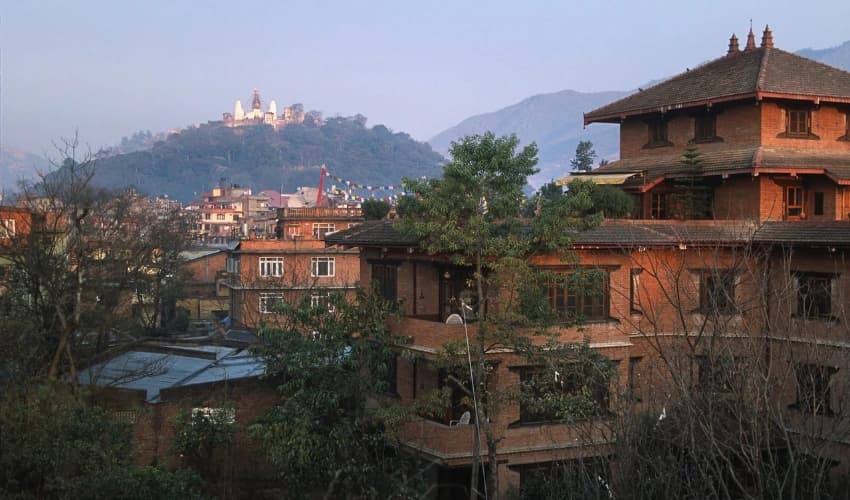
Accommodation in Kathmandu Before the Manaslu Trek
Your accommodation in Kathmandu will be considerably more comfortable than anything you experience on the trekking route.
Most organized Manaslu trekking packages include a hotel in or around Thamel (3 to 5 star hotel). Depending on your package, you may have a private bathroom, hot shower, Wi-Fi, breakfast, luggage storage, and reliable electricity.
This is also the best time to finish your trek preparation.
Before leaving Kathmandu, check your Manaslu trekking permits, organize your trekking gear, test your boots, purchase missing equipment, and stock up on personal snacks and medication you normally use.
Once you leave the city, shopping becomes limited and prices generally increase as you reach higher villages.
Everest Thrill Tip: Keep your Manaslu trekking essentials organized before departure. Your guide and porter should be able to load your main duffel without you having to reopen it every morning.
Soti Khola
Soti Khola is commonly used as an early overnight stop on the Manaslu Circuit, although the exact starting point can change depending on your itinerary and road conditions.
The teahouses here are basic but suitable for trekkers. Rooms generally have simple beds and mattresses, while bathrooms are usually shared.
The dining room is where you will spend most of your evening. A typical menu includes dal bhat, noodles, fried rice, momos, eggs, soup, and other familiar trekking meals.
Hot showers and charging facilities are available for an additional fee, but facilities vary between teahouses.
Some trekking itineraries continue beyond Soti Khola toward Machha Khola, particularly when the road and trail conditions allow.
Machha Khola
Machha Khola is one of the most common first-night stops for trekkers following the standard Manaslu Circuit itinerary.
There are several teahouses, so accommodation choices are generally better than in smaller settlements farther along the valley. Most rooms are twin-sharing, with mattresses, pillows and blankets.
Bathrooms are generally shared.
After a long day on the trail, a hot shower can be especially welcome here if your lodge has one available. Electricity and Wi-Fi may also be available, although neither should be treated as guaranteed throughout the trek.
The dining room is normally the warmest part of the lodge and becomes a natural meeting point for trekkers, guides and porters.
Trekking Tip: Carry some small Nepalese notes for showers, charging, drinks, and other personal expenses. It is much easier than trying to find change in a remote village.
Jagat
Jagat is a more developed settlement and an important point on the Manaslu Circuit.
The accommodation remains simple, but the teahouses are accustomed to serving trekkers. You can generally expect twin-sharing rooms, basic bedding, shared bathrooms, and a dining room.
Jagat is also an important permit checkpoint. Keep your Manaslu Restricted Area Permit (RAP) and other trekking documents easily accessible because they may be checked along the route.
From this point onward, the feeling of remoteness becomes more noticeable.
There are fewer services, fewer shops, and fewer opportunities to replace forgotten trekking equipment. This is one reason we recommend checking your gear carefully before leaving Kathmandu.
Deng
After Jagat, the trail enters a quieter section of the Manaslu region.
Deng is a small settlement where accommodation is straightforward. Rooms are generally basic, with beds and blankets, while bathrooms are commonly shared.
The dining room becomes especially important in the evening. At this stage of the trek, you will begin to notice the difference between staying in a mountain teahouse and staying in a conventional hotel.
Wi-Fi, hot showers, and charging may be available, but they can cost extra and may not always work reliably.
Do not be concerned if the facilities feel simpler than they did in Machha Khola. This is normal as the trail moves deeper into the Himalayas.
Namrung
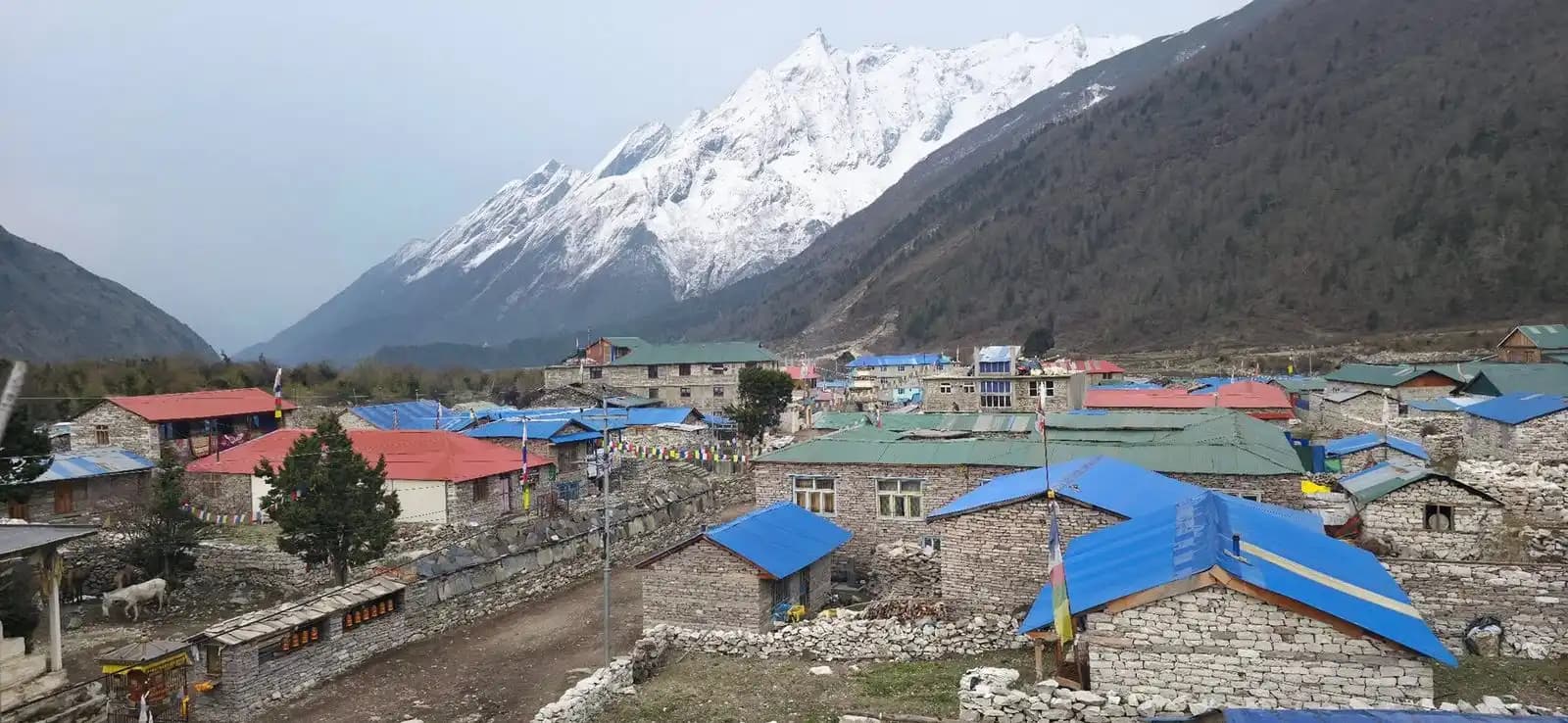
Namrung is one of the most attractive overnight stops on the Manaslu Circuit.
The architecture, prayer flags, mani walls, surrounding peaks, and Tibetan-influenced culture make it feel very different from the lower Budhi Gandaki Valley.
Accommodation also improves slightly. There are several teahouses and lodges, including some comparatively comfortable options. Depending on the lodge, you may find private or attached bathrooms, hot showers, Wi-Fi, and better dining facilities.
However, availability depends on the season and the number of trekkers arriving that day.
Namrung is also where the mountain scenery becomes much more dramatic. The first major views of Manaslu make this a memorable part of the trek.
Everest Thrill Tip: If you are trekking Manaslu during the busy spring or autumn seasons, let your guide arrange accommodation before reaching Namrung. This is more convenient than arriving late and searching for a room after a full day of walking.
Lho
Lho is one of the most scenic villages on the Manaslu Circuit.
Traditional houses, Buddhist monasteries, mani walls, and views toward Manaslu give the village a distinctive Himalayan character.
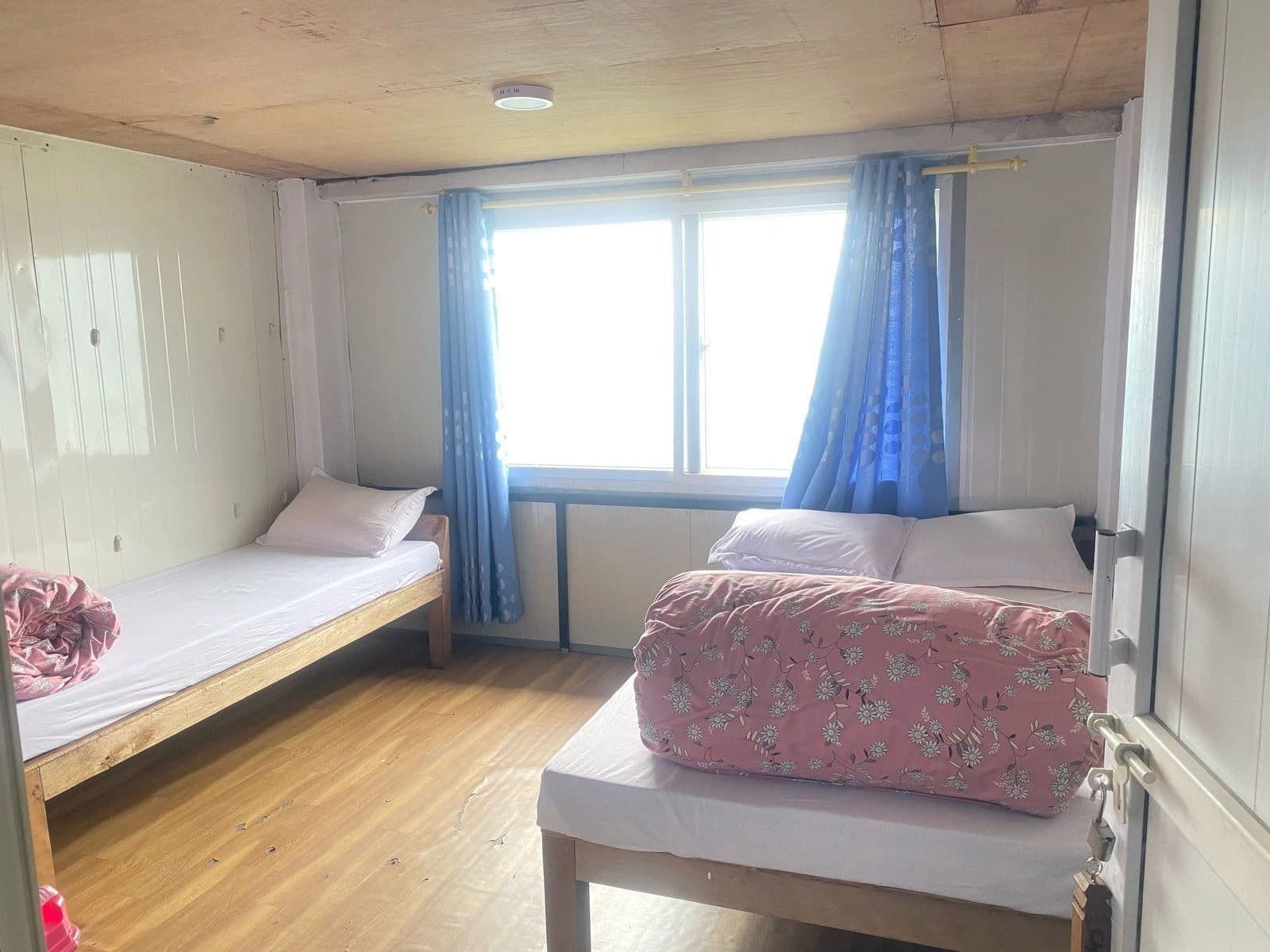
Accommodation is mainly in small local teahouses. Rooms are simple, with mattresses and blankets, and bathrooms are generally shared.
Dining rooms are normally heated in the evening, while bedrooms are not.
This is an important point for first-time trekkers: do not expect your bedroom to be heated at high altitude. Once the sun goes down, a good sleeping bag and warm layers become much more valuable than hotel-style facilities.
Shyala
Shyala is surrounded by some of the finest mountain scenery on the Manaslu Circuit.
The accommodation is still basic, but several teahouses serve trekkers. Rooms usually contain simple beds and mattresses, with shared bathroom facilities.
The dining room is the centre of activity after sunset. Most trekkers eat dinner, drink tea, talk with their guides, and stay close to the stove because the temperature outside drops quickly.
Facilities such as hot showers, Wi-Fi, and charging can be available, but their reliability varies.
At this elevation, it is better to focus on getting enough food, water, rest, and sleep than worrying about internet access.
Samagaon
Samagaon is one of the largest and most important villages on the Manaslu Circuit trek route.
Because it is the main settlement in the upper valley, there are more teahouses and accommodation choices here than at most other stops.
Some lodges have attached bathrooms, hot showers, Wi-Fi, and relatively comfortable dining rooms. Others remain very basic.
Samagaon is also where most well-planned Manaslu itineraries include an acclimatization day.
This extra day is important before climbing higher toward Samdo and Dharamshala. Rather than treating it as a day to stay inside the lodge, trekkers can take a gradual acclimatization hike depending on weather, fitness, and the advice of their guide.
Popular options include hiking toward Manaslu Base Camp or Pungyen Gompa.
The purpose is not to walk as far as possible. The aim is to spend time at altitude while allowing your body to adjust before the higher section of the trek.
Samdo
Samdo sits at approximately 3,875 m and is the last major village before the route reaches Dharamshala and Larkya La Pass.
Accommodation here is noticeably more basic.
Rooms are small, bathrooms are usually shared, and temperatures can be very cold at night. Hot showers may be available, but you should not depend on them.
Electricity and internet access can also be limited.
This is one of the places where a quality sleeping bag makes a real difference.
Our Tip: Keep your sleeping bag where you can reach it easily each evening. Do not bury it at the bottom of your duffel. At Samdo, you will appreciate having warm bedding ready as soon as you arrive.
Dharamshala
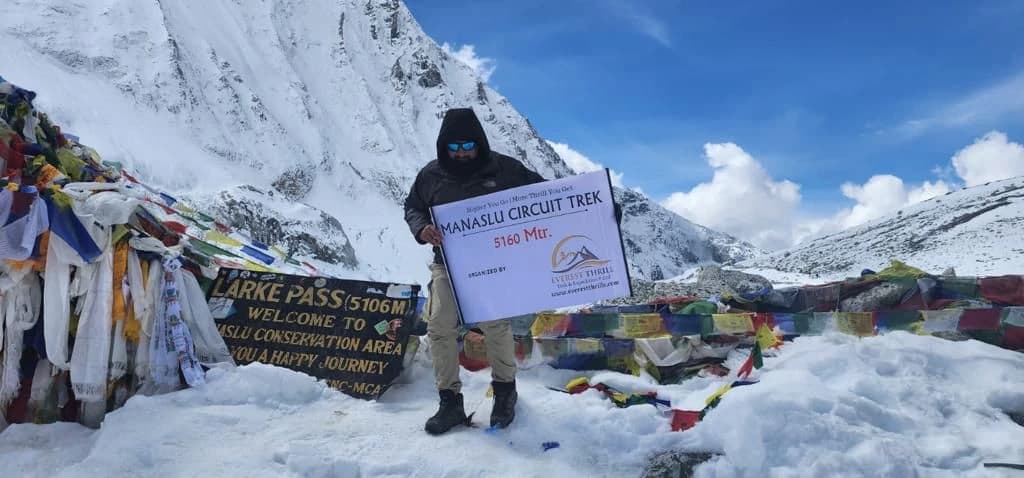
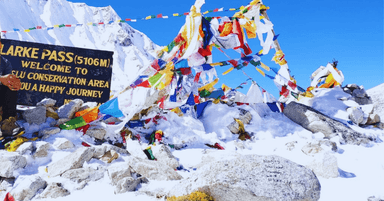
Dharamshala, also called Larkya Phedi, is the overnight stop before crossing Larkya La Pass.
This is the most basic accommodation you are likely to experience on the standard Manaslu Circuit.
There are only a limited number of rooms, and trekkers generally sleep in shared rooms. Facilities are minimal because of the altitude and remote location.
Do not expect reliable Wi-Fi, a proper hot shower, or the same level of comfort available in lower villages.
The purpose of staying at Dharamshala is simply to position yourself for the early-morning crossing of Larkya La.
Most trekkers have an early dinner, prepare their daypack, organize warm clothing and a headlamp, and go to bed as early as possible.
Why is Dharamshala accommodation so basic?
The answer is simple: altitude and remoteness.
There are no large settlements, roads, or developed hotel facilities here. Everything required by trekkers and lodge owners has to reach this high-altitude area through a difficult supply chain.
For this reason, expectations matter.
At Dharamshala, a warm sleeping bag, a good dinner, and enough rest are more important than Wi-Fi or a private bathroom.
Important: Avoid arriving in Dharamshala late if possible. During busy trekking periods, rooms can fill quickly. A guide familiar with the route can help arrange accommodation and manage the overnight logistics.
Bhimthang
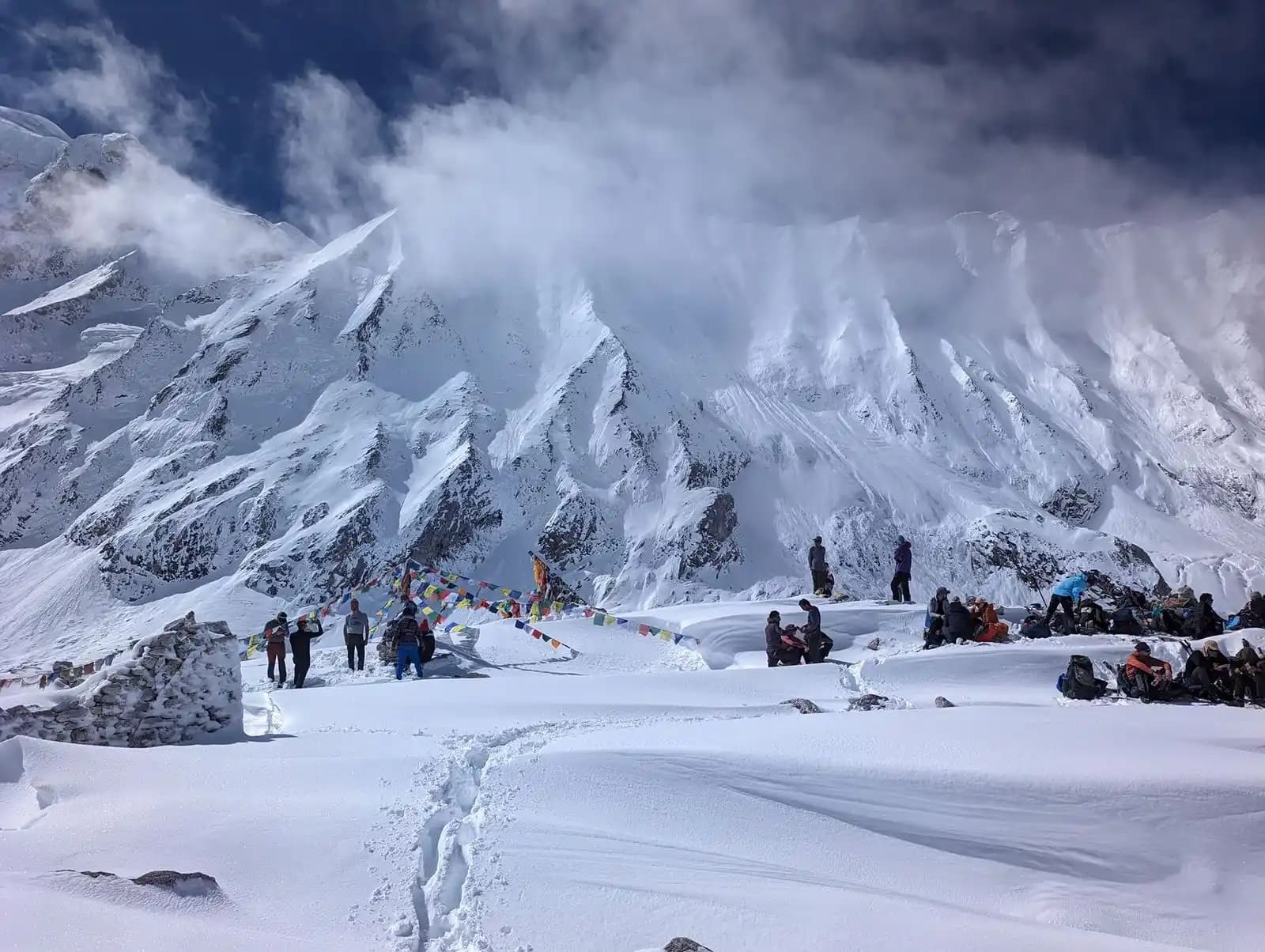
After crossing Larkya La, the trail descends toward Bhimthang.
For many trekkers, reaching Bhimthang feels like a major change.
After the cold and basic conditions of Dharamshala, the teahouses here feel considerably more comfortable. There are several lodges, better dining facilities, and opportunities for hot showers and charging.
The surrounding scenery is also exceptional.
After completing the highest and most demanding section of the Manaslu Circuit, Bhimthang is a place where many trekkers finally relax and enjoy the evening without worrying about the next high-altitude climb.
Tilije
Tilije is generally one of the final overnight stops before leaving the main Manaslu trekking route.
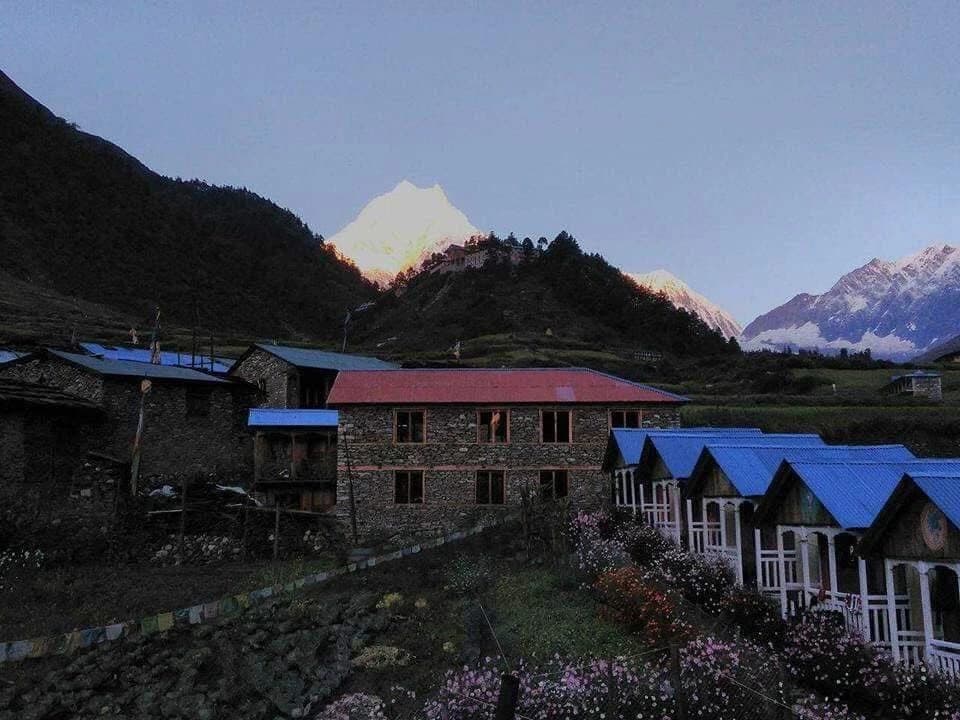
Accommodation is more comfortable than at the high-altitude villages. Local lodges provide basic rooms, dining facilities, and hot showers in many cases.
The environment also changes as the trail descends. The cold alpine landscape gradually gives way to greener valleys, and the atmosphere feels very different from Samdo and Dharamshala.
For trekkers continuing toward Dharapani and onward transportation, Tilije can be a relaxed final night on the circuit.
What Facilities Are Available in Manaslu Teahouses?
Teahouse facilities vary considerably along the route.
Rooms
Twin-sharing rooms are the standard. Most contain simple beds, mattresses, pillows, and blankets.
Private rooms may be available in larger villages, but they cannot always be guaranteed during peak trekking periods.
At higher elevations, rooms become smaller and colder.
Bathrooms
Shared bathrooms are normal on the Manaslu Circuit.
Some better-equipped lodges in larger villages offer attached bathrooms, but these should be viewed as an added convenience rather than something guaranteed throughout the trek.
Hot Showers
Hot showers are available at many lower and mid-altitude teahouses and usually cost extra.
As you climb higher, hot water becomes more limited and expensive.
At Dharamshala, trekkers should be prepared to go without a proper hot shower.
Electricity and Charging
Electricity is available in many villages, but charging devices may cost extra.
At higher elevations, electricity can be limited, and several trekkers may be waiting to charge phones, cameras, or power banks.
Charge whenever an opportunity comes rather than waiting until your battery is empty.
Wi-Fi and Mobile Network
Some teahouses provide Wi-Fi, but the connection becomes less reliable as you gain altitude.
Mobile coverage also varies along the route.
Before leaving Kathmandu, download your important documents, offline maps, music, books, or other files you may need.
The Manaslu Circuit is a place where being disconnected for a while is part of the experience.
Do You Need a Sleeping Bag for the Manaslu Circuit?
Yes. A warm sleeping bag is strongly recommended.
Teahouses normally provide blankets, but the warmth and condition of blankets vary between lodges.
The need becomes more important as you climb toward Samdo and Dharamshala, where nighttime temperatures can be very low.
A suitable cold-weather sleeping bag provides reliable insulation and helps you sleep comfortably after a long day of trekking.
A sleeping bag liner is also useful for hygiene and additional warmth.
Should You Book Manaslu Teahouses in Advance?
If you are trekking with a guide, your trekking agency or guide will normally handle accommodation arrangements.
You do not necessarily need to individually book every teahouse before starting the trek.
However, accommodation requires more planning during the main spring and autumn trekking seasons, particularly at popular overnight stops.
Dharamshala deserves special attention because the number of beds is limited.
Local knowledge is valuable here. A guide can contact teahouses, check availability, and adjust the overnight plan when weather, trail conditions, or lodge capacity affects the itinerary.
Teahouse Trekking or Camping on Manaslu?
For the standard Manaslu Circuit, teahouse trekking is the practical choice.
Local teahouses provide accommodation and meals on the Manaslu trek route, so there is no need to carry a tent, kitchen equipment, fuel, and several days of food.
Camping is still possible for specialized itineraries or groups wanting to travel farther away from trekkers completing the classic Manaslu Circuit; teahouse trekking keeps the trek simpler and follows the established teahouse route. However, it requires additional staff, equipment, food, and logistics.
For most trekkers completing the classic Manaslu Circuit, teahouse trekking keeps the trek simpler and lighter while allowing you to stay in local villages.
Practical Tips for Manaslu Circuit Trek Accommodation
A few simple habits can make your teahouse experience much easier:
- Carry enough Nepalese cash. Do not rely on card payments or ATMs throughout the circuit.
- Charge your devices whenever possible. Electricity becomes less reliable at higher elevations.
- Carry a power bank. It is especially useful above Namrung.
- Take a proper sleeping bag. Do not rely entirely on teahouse blankets.
- Bring warm nightwear. Bedrooms are generally not heated.
- Keep your valuables in your daypack. Carry your passport, money, electronics, and permits with you.
- Respect the lodge routine. Most trekkers eat early and go to bed early.
- Let your guide handle difficult accommodation logistics. Local contacts are particularly useful at busy stops.
- Do not expect luxury at altitude. The higher you go, the more basic the facilities become.
- Keep an open mind. The simplicity of the teahouses is part of the Manaslu trekking experience.
Final Thoughts on Manaslu Circuit Trek Accommodation
Accommodation on the Manaslu Circuit is closely connected to the character of the trek.
In Machha Khola and Jagat, teahouses are relatively comfortable. Around Namrung, Lho, and Samagaon, you begin to experience higher-altitude mountain lodging. By the time you reach Samdo and Dharamshala, simplicity becomes unavoidable.
Then, after crossing Larkya La, reaching Bhimthang feels like a genuine reward.
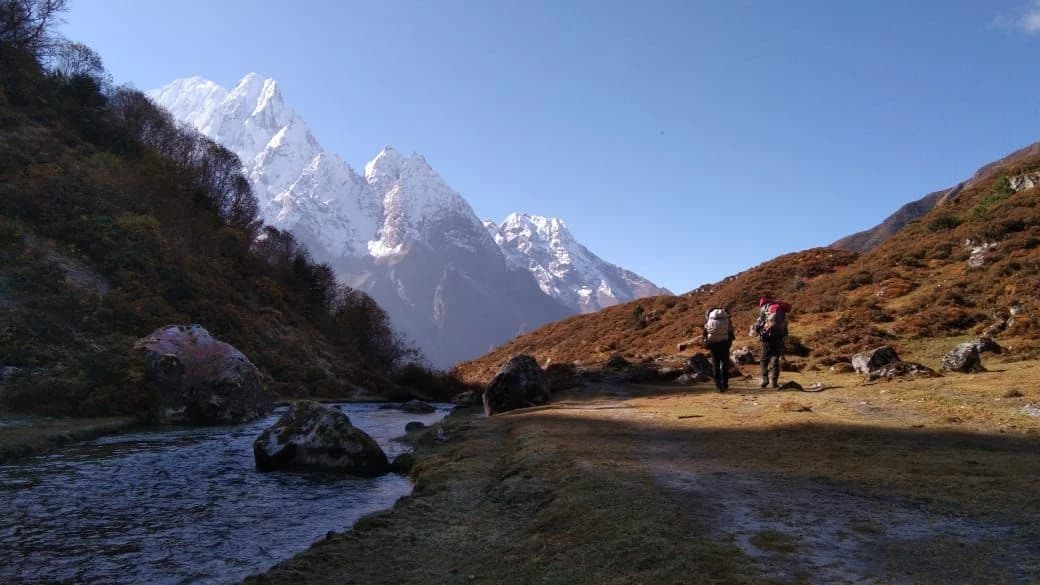
The important thing is to travel with realistic expectations. You are not crossing the Manaslu region to stay in luxury hotels. You are walking through remote Himalayan villages, sleeping in family-run teahouses, eating warm local meals, sharing a dining room with fellow trekkers, and waking up surrounded by some of Nepal's most impressive mountains.
That is what makes teahouse accommodation on the Manaslu Circuit more than simply a place to sleep.
It is part of the journey.
If you are planning your trek, explore our Manaslu Circuit Trek package for the complete itinerary, acclimatization schedule, permits, transportation, meals, accommodation, and trekking arrangements.
About Author
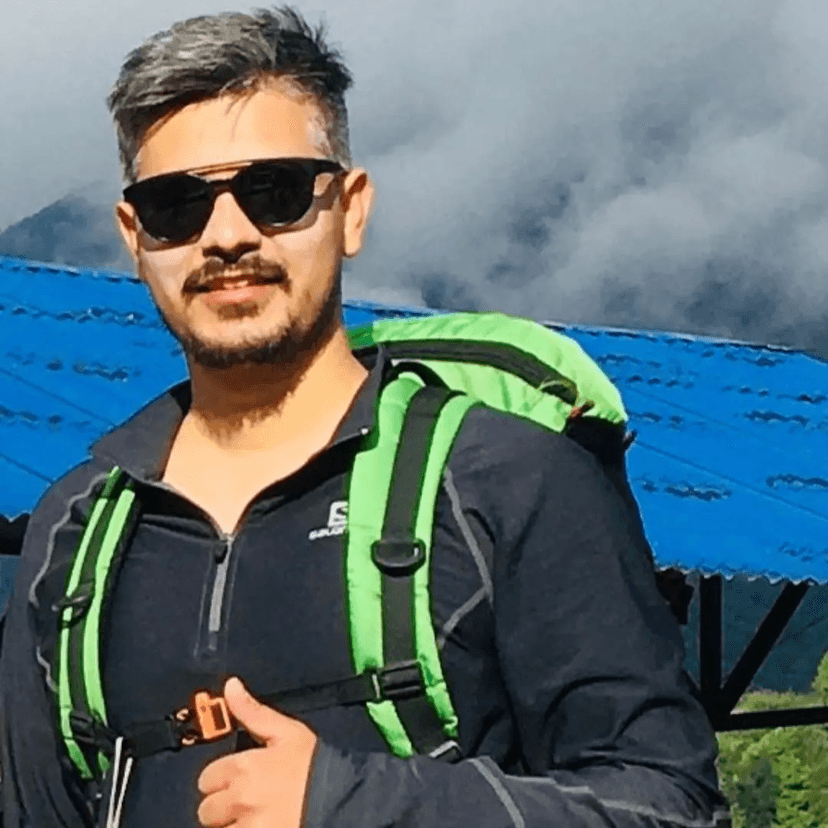
Amir Adhikari is the Founder and Trip Curator of Everest Thrill Trek and Expedition. With 10+ years of experience in Nepal’s competitive tourism sector, he is a recognized expert in designing safe, personalized, and high-thrill Himalayan itineraries. His dedication to responsible travel and creating authentic experiences has positioned Everest Thrill as a leading specialist for Everest, Annapurna, and off-the-beaten-path adventures.


Manaslu Circuit Trek Package - 14 Days
USD 1215/per person