- Home>
- Travel Guide>
- Mera Peak Climbing
Mera Peak Nepal | Height, Location, & Climbing Guide
Mera Peak is a 6,476m (21,247ft) Himalayan mountain in eastern Nepal, located in the Hinku Valley. The journey combines a multi-day high-altitude trek with a mountaineering summit attempt, making it an interesting option for trekkers who want to climb above 6,000 meters.
The usual approach begins with a flight from Kathmandu to Lukla and continues through the Hinku Valley toward the mountain. As the trail gains elevation, the landscape changes from forests and valleys to open alpine terrain.
Mera Peak is less technical than some other popular 6,000m climbing peaks in Nepal, but its altitude shouldn't be underestimated. Long trekking days, cold temperatures, changing weather and the summit effort all require proper preparation.
Mera Peak at a Glance
| Details | Information |
|---|---|
| Elevation | 6,476 m / 21,247 ft |
| Location | Hinku Valley, eastern Nepal |
| Main gateway | Lukla |
| Type | Trekking peak / climbing peak |
| Route | Lukla - Hinku Valley - Mera region |
| Main climbing seasons | Spring and autumn |
| Main challenges | Altitude, endurance, cold and weather |
| Previous experience | Helpful, but suitable preparation is essential for first-time climbers |
| Permits | Special Mera Peak Climbing permit and other applicable permits |
| Accommodation | Teahouses up to Khare and a tented camp at High Camp |
Where Is Mera Peak?
Mera Peak lies in the Hinku Valley of eastern Nepal. Although it is often associated with the wider Everest region, the usual approach follows a different and quieter trail through the Hinku Valley.
Most expeditions begin with the flight from Kathmandu to Lukla. From there, the trail gradually moves toward higher elevations, passing through mountain villages, forests and remote valleys before reaching the alpine environment around Mera Peak.
How High Is Mera Peak?
Mera Peak stands at 6,476 meters (21,247 feet) above sea level.
At this elevation, altitude becomes one of the main considerations of the climb. Walking requires more effort, recovery is slower and the effects of reduced oxygen become increasingly noticeable.
This is why a sensible Mera Peak itinerary allows time for acclimatization instead of focusing only on reaching the summit as quickly as possible. The length and structure of the itinerary can make a significant difference to how the expedition is managed at altitude.
How Difficult Is Mera Peak?
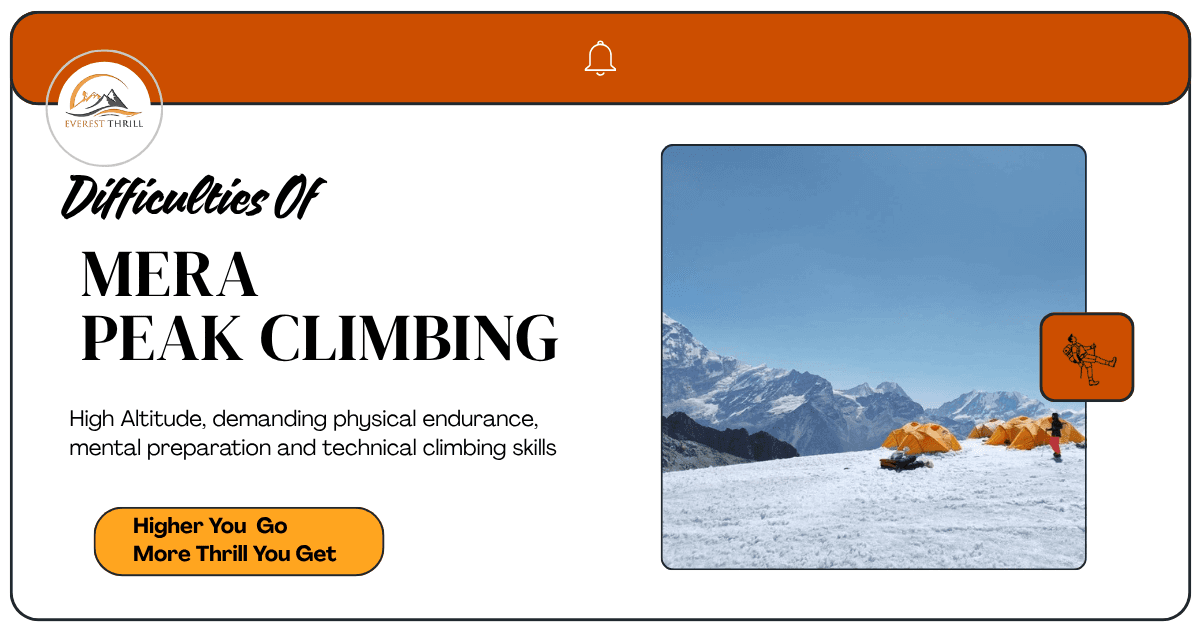
Mera Peak is a demanding high-altitude climb, even though it is generally considered less technical than some other popular 6,000m peaks in Nepal.
For many climbers, the main challenge is the combination of altitude and endurance rather than highly technical climbing. The approach involves several days of walking, while the summit attempt requires a long day in cold and high-altitude conditions.
Previous climbing experience is useful, but it is not the only consideration. Good physical conditioning, appropriate acclimatization and familiarity with basic mountaineering equipment are important for a first-time climber.
For a detailed breakdown of terrain, altitude, technical requirements and preparation, see our Mera Peak Difficulty Guide.
How to Reach Mera Peak?
Mera Peak cannot realistically be treated as a quick climb from Lukla. The journey requires several days of trekking through the Hinku Valley before reaching the higher mountain area.
The complete expedition from Kathmandu includes the flight to Lukla, the approach trek, acclimatization, preparation for the summit, the summit attempt and the return journey.
The exact duration (16 to 20 days) varies according to the itinerary and acclimatization strategy. A well-planned schedule is based not only on distance but also on how the body responds to increasing elevation and how much flexibility is needed for mountain conditions.
See our Mera Peak Climbing Itinerary for the detailed schedule and trip duration.
What Can You See From Mera Peak?
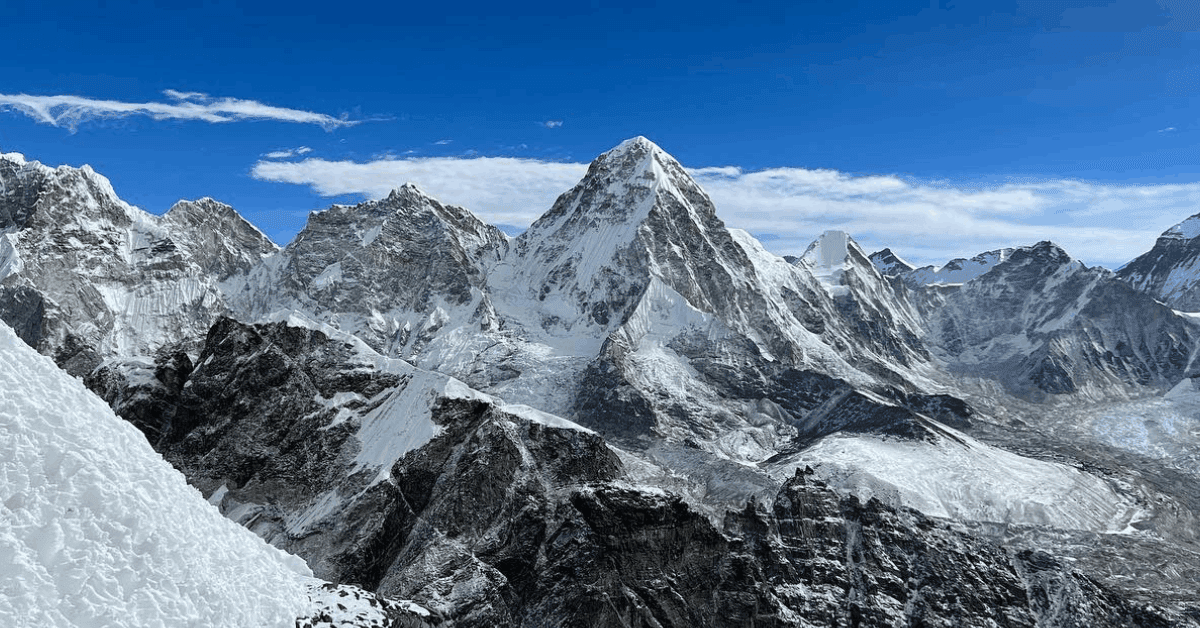
The summit is known for its broad Himalayan panorama. In clear conditions, climbers can see major peaks including Mount Everest, Lhotse and Makalu, along with other mountains of the eastern Himalayas.
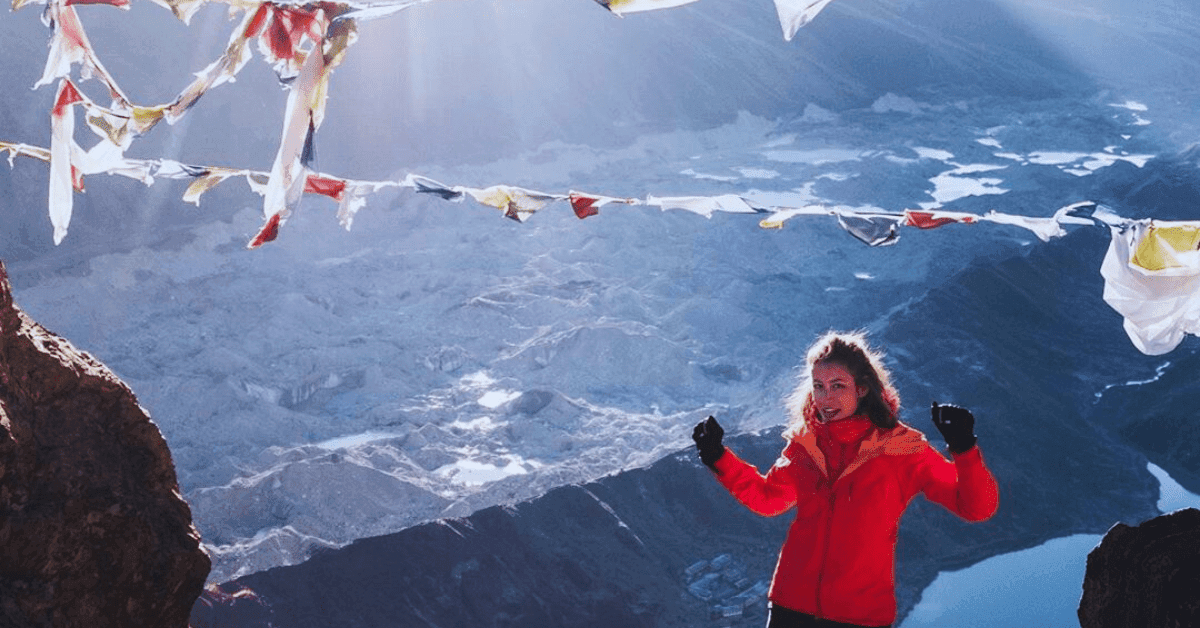
The scenery changes throughout the journey. The lower Hinku Valley is characterized by forests, rivers and mountain settlements, while the upper route opens into a colder alpine landscape.
For many climbers, the summit panorama is a highlight, but the gradual change in landscape along the journey is also part of what makes the Mera Peak journey distinctive.
When Is the Best Time for Mera Peak?
Spring and autumn are the main climbing seasons for Mera Peak.
Spring, from March to May, is a popular period for Himalayan climbing. Autumn, from September to November, is another major season, particularly after the monsoon period.
The summer monsoon can bring more cloud and precipitation, while winter brings much colder conditions at higher elevations.
Temperatures at the summit can range from -5°C to -10°C during the day and freeze to -20°C or below at night.
For detailed seasonal information, see our Best Time to Climb Mera Peak guide.
Mera Peak Climbing in Nepal
Mera Peak offers a natural progression from Himalayan trekking to high-altitude climbing. The Hinku Valley approach, changing alpine landscape and 6,476m summit make it a distinctive mountain experience in Nepal.
Its technical demands may be manageable for a prepared first-time climber, but the altitude and physical demands deserve the same respect as any high Himalayan objective.
For an experienced expedition team, planning Mera Peak is about more than arranging transport and accommodation. The itinerary needs to account for acclimatization, pacing, equipment, weather and the possibility that mountain conditions may require changes to the schedule.
If Mera Peak fits the type of mountain experience you are looking for, explore our Mera Peak Climbing Package in Nepal for the detailed itinerary, inclusions and booking information.


Mera Peak Climbing Package - 17 Days
USD 2355/per person
Explore the Mera Peak Climbing Travel Guides in Detail
Everest Marathon - 15 Days
Everest Expedition