Date Updated:
Manaslu Circuit Trek Permits | Types, Cost & Application 2026/27
Table of Contents
- Manaslu Circuit Trek Permit Cost at a Glance
- Can You Get a Solo Manaslu Permit in 2026/27?
- Why Do Some Websites Still Say Two Trekkers Are Required?
- What Permits Do You Need for the Manaslu Circuit?
- Manaslu Restricted Area Permit (RAP)
- Manaslu Conservation Area Permit (MCAP)
- Annapurna Conservation Area Permit (ACAP)
- Tsum Valley Restricted Area Permit
- Manaslu Restricted Area Permit Cost
- Do You Need a Guide for a Solo Manaslu Trek?
- Why Is Manaslu a Restricted Area?
- Where Is the Manaslu Permit Issued?
- What Documents Are Required?
- How to Get the Manaslu Circuit Trek Permit
- Step 1: Confirm Your Trekking Route
- Step 2: Provide Your Documents
- Step 3: Apply for the Restricted Area Permit
- Step 4: Arrange the Conservation Permits
- Step 5: Check the Permits Before Departure
- Can You Get MCAP and ACAP Online?
- Can You Get the Permit at a Checkpoint?
- Manaslu Permit Rules You Should Know
- Common Manaslu Permit Mistakes
- Our Final Thoughts
The Manaslu Circuit Trek requires a Restricted Area Permit (RAP), a Manaslu Conservation Area Permit (MCAP), and an Annapurna Conservation Area Permit (ACAP) if your route continues toward Besisahar through the Annapurna Conservation Area. If you include Tsum Valley, you also need a separate Tsum Valley Restricted Area Permit.
There is an important change for 2026: a single trekker can now obtain a restricted-area trekking permit without finding another trekker to form a group. However, a solo permit does not mean you can trek Manaslu without a guide. The permit still needs to be arranged through a registered trekking agency, and a licensed guide is required for the restricted-area trek.
This guide explains the current Manaslu permit cost, the permits you need, the 2026 solo-permit rule, required documents, and how the application works.
Manaslu Circuit Trek Permit Cost at a Glance
| Permit | Where it applies | Cost |
|---|---|---|
| Manaslu Restricted Area Permit (RAP) | Manaslu restricted area | USD 100/week + USD 15/day beyond 7 days, Sep-Nov |
| Manaslu Restricted Area Permit (RAP) | Manaslu restricted area | USD 75/week + USD 10/day beyond 7 days, Dec-Aug |
| Manaslu Conservation Area Permit (MCAP) | Manaslu Conservation Area | NPR 3,000 for foreigners |
| Annapurna Conservation Area Permit (ACAP) | Annapurna Conservation Area | NPR 3,000 for foreigners |
| Tsum Valley Restricted Area Permit | Tsum Valley, if included in your Itinerary | USD 40/week + USD 7/day beyond 7 days, Sep-Nov |
| Tsum Valley Restricted Area Permit | Tsum Valley, if included in your Itinerary | USD 30/week + USD 7/day beyond 7 days, Dec-Aug |
The Manaslu RAP fee depends on the season and the number of days covered by the permit. MCAP and ACAP are separate conservation-area entry permits.
Can You Get a Solo Manaslu Permit in 2026/27?
Yes.
The restricted-area permit rules changed in March 2026, allowing an individual trekker to obtain a restricted-area permit without another trekker on the application.
This is particularly useful for travelers who want a private Manaslu trek rather than joining a group.
There is, however, an important distinction:
- Solo permit does not mean independent trekking.
- A solo traveler still needs the required agency and guide arrangements for the restricted section.
In practical terms, a private solo Manaslu trek looks like this:
- 1 trekker + 1 licensed guide + registered trekking agency
You no longer need to find a second traveler simply to meet the previous minimum group requirement.
Why Do Some Websites Still Say Two Trekkers Are Required?
The two-trekker requirement was the previous rule, so many older Manaslu articles still contain it.
You may also find conflicting information online because some government information pages have not yet been updated to reflect the newer rule.
For anyone planning a Manaslu trek in 2026, the March 2026 restricted-area permit update is the relevant change.
If you’d like to understand what makes this route physically demanding and how to prepare, check out our guide for manaslu circuit difficulty.
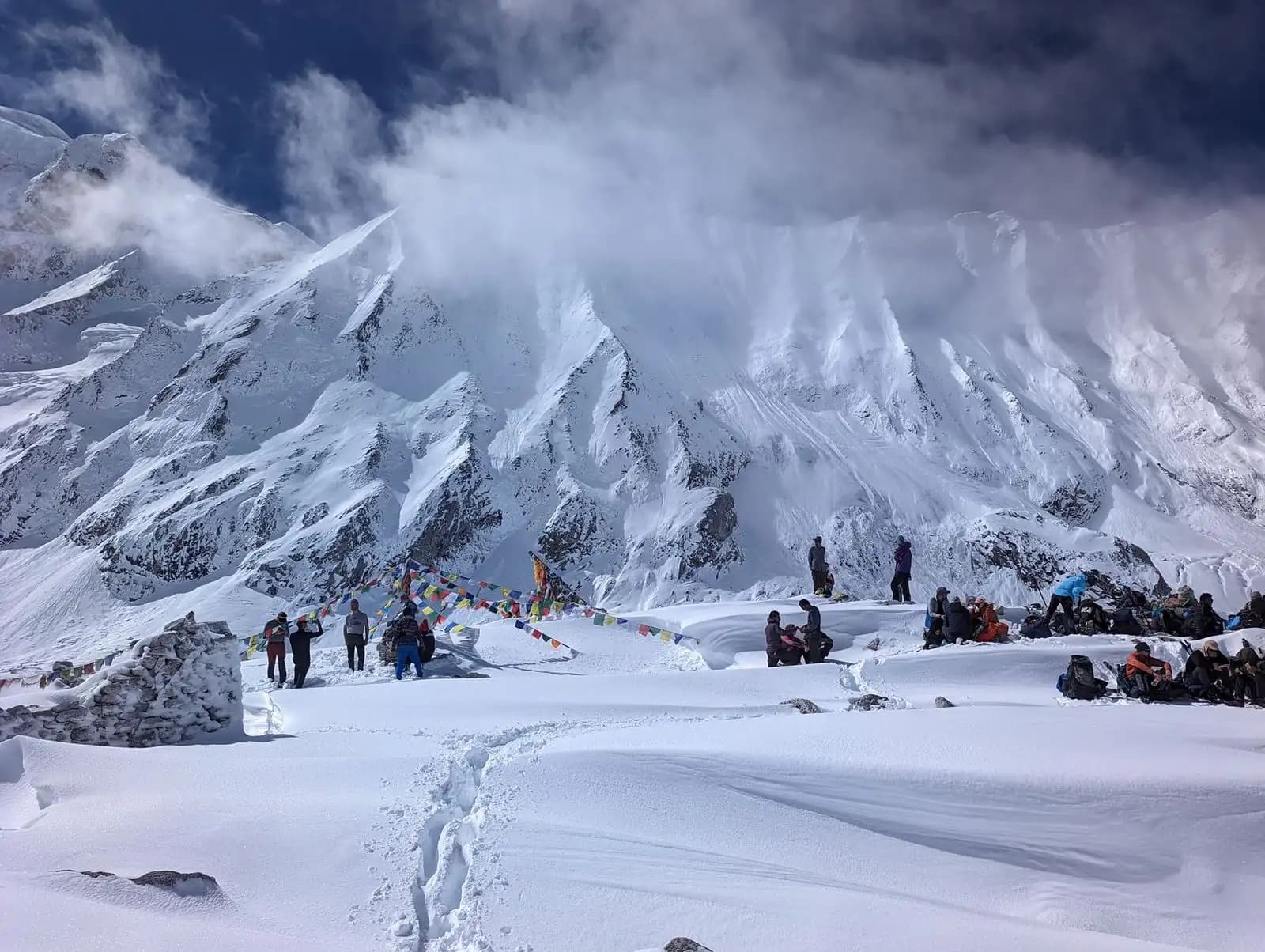
What Permits Do You Need for the Manaslu Circuit?
The permits depend on your exact itinerary.
Manaslu Restricted Area Permit (RAP)
The RAP is required for the designated restricted section of the Manaslu region.
This is the main permit that distinguishes Manaslu from many of Nepal's regular trekking routes. Its cost is based on the Manaslu trekking season and the number of days spent within the restricted area.
Manaslu Conservation Area Permit (MCAP)
MCAP is required for trekking inside the Manaslu Conservation Area.
For foreign nationals, the current entry fee is NPR 3,000. SAARC nationals pay NPR 1,000.
Annapurna Conservation Area Permit (ACAP)
ACAP is required when your itinerary enters the Annapurna Conservation Area, normally after the Manaslu section when continuing toward Besisahar.
It is a separate permit from both the RAP and MCAP.
Tsum Valley Restricted Area Permit
Tsum Valley is an optional addition to the Manaslu itinerary.
If you include Tsum Valley, you need its own restricted-area permit in addition to the other permits required for your route.
Manaslu Restricted Area Permit Cost
The current Manaslu RAP rates are:
| Season | First 7 days | Each additional day |
|---|---|---|
| September-November | USD 100 | USD 15 |
| Decembe-August | USD 75 | USD 10 |
For example, if your restricted-area itinerary covers 10 days in October, the RAP calculation is:
USD 100 + (3 × USD 15) = USD 145 per person
MCAP and ACAP are additional and cost NPR 3000 per person each.
The important point is that the RAP is calculated according to the number of days covered by the restricted-area permit, not the total number of days you spend in Nepal.
Do You Need a Guide for a Solo Manaslu Trek?
Yes.
The 2026 rule change concerns the number of trekkers on the permit. It does not remove the requirement for the restricted-area trek to be arranged with the required agency and guide.
This means you can travel alone as a client without joining another group, but you still trek with a trekking guide.
A porter is optional.
If you are comfortable carrying your own backpack, you can arrange a private trek with a guide only. If you want to carry less, you can add a porter.
Why Is Manaslu a Restricted Area?
The Government of Nepal has designated specific parts of the Manaslu region as restricted trekking areas.
Entry is controlled through a special permit system, and trekkers must follow the route and locations stated on their permit.
For travelers, the practical difference is that you cannot treat the Manaslu Circuit like an unrestricted trekking route where you simply arrive and start walking. The required paperwork needs to be arranged before entering the restricted section.
Where Is the Manaslu Permit Issued?
The Manaslu Restricted Area Permit is processed through the Department of Immigration's trekking-permit system by a registered trekking agency.
The agency submits the required trekker information, itinerary, passport details, insurance documents and guide information.
Once the permit is issued, the agency can download and print it for the trek.
For most trekkers, there is no reason to visit the immigration office personally because the registered agency handles the application.
What Documents Are Required?
Prepare the following information before your permit application:
| Document | Purpose |
|---|---|
| Valid passport | Identification and permit details |
| Valid Nepal visa | Immigration requirement |
| Trekker details | Permit registration |
| Insurance documents | Required for the permit application |
| Detailed itinerary | Confirms the planned route and dates |
| Guide and staff insurance details | Required for the restricted-area application |
For MCAP and ACAP, you also need your passport or valid identification and personal details. Go through our Manaslu Circuit trek packing list guide for a detailed checklist.
How to Get the Manaslu Circuit Trek Permit
Step 1: Confirm Your Trekking Route
First, finalize your itinerary.
Tell your agency whether you are planning:
- Manaslu Circuit
- Manaslu Circuit with Tsum Valley
- Manaslu Circuit continuing toward Besisahar
The route determines which permits you need.
Step 2: Provide Your Documents
Send your passport details, Nepal visa information and other documents requested by the agency.
Your trekking dates should be settled before the restricted-area permit is submitted because the RAP fee depends on the permitted duration.
Step 3: Apply for the Restricted Area Permit
Your registered trekking agency submits the RAP application with your personal information, itinerary, insurance details and guide information.
The permit is then issued through the immigration system.
Step 4: Arrange the Conservation Permits
MCAP and ACAP are arranged separately from the RAP.
These permits can be obtained through the NTNC permit system, including its online service.
Step 5: Check the Permits Before Departure
Before leaving Kathmandu, check your:
- Name
- Passport number
- Dates
- Route
- Permit type
Once everything matches, keep the permits and passport accessible during the trek.
Can You Get MCAP and ACAP Online?
Yes.
The NTNC operates an online permit system for conservation-area entry permits.
For online applications, you can complete the form and pay electronically. The permit is then provided digitally after successful processing.
The current online system also states that a 2.9% payment gateway charge applies to online payments.
If you pay at an entry-permit counter, there is no online payment surcharge.
If you go with a trekking agency, they will handle everything.
Can You Get the Permit at a Checkpoint?
It is better to arrange your permits before reaching the trekking route.
NTNC states that permits issued at check-posts are charged at double the normal fee.
We therefore recommend completing the required paperwork before starting the trek rather than relying on a checkpoint for permit arrangements.
However, the restricted area permits are only issued through a registered trekking company.
Manaslu Permit Rules You Should Know
Keep these points in mind:
- A restricted-area permit must be arranged through a registered trekking agency.
- Since the 2026 rule change, a single trekker can obtain the restricted-area permit without another trekker.
- A solo permit does not remove the guide requirement.
- Carry your passport and permits throughout the trek.
- Follow the route and locations stated on the permit.
- Tsum Valley requires a separate restricted-area permit.
- MCAP and ACAP are separate from the Manaslu RAP.
- Conservation-area permits are non-refundable and non-transferable.
- Register at the designated check-posts along the route.
Common Manaslu Permit Mistakes
Thinking a solo permit means trekking without a guide
This is the biggest misunderstanding following the 2026 rule change.
You can now obtain the restricted-area permit as an individual traveler, but you still need the required agency and guide arrangements.
- Forgetting ACAP: If your itinerary continues into the Annapurna Conservation Area, you need ACAP as well.
- Adding Tsum Valley at the last minute: Tsum Valley has its own restricted-area permit. Include it in your itinerary before the application is submitted.
- Waiting until the last day: Your permit depends on your itinerary and supporting documents. We recommend completing the paperwork before your departure from Kathmandu.
Our Final Thoughts
For the standard Manaslu Circuit, plan for:
Manaslu RAP + MCAP + ACAP
Add the Tsum Valley Restricted Area Permit if your itinerary includes Tsum Valley.
The major change in 2026 is that you no longer need another trekker to obtain the Manaslu restricted-area permit. A traveler can now arrange the permit individually, making a private solo Manaslu trek possible.
However, solo does not mean guide-free. You still need the required registered trekking agency and licensed guide for the restricted-area trek.
At Everest Thrill, we prepare the permit applications, check your passport and itinerary details, and arrange the required guide and documentation before you leave Kathmandu. If you want a private Manaslu circuit trek package, you can travel with your own guide without joining another client group.
About Author
Amir Adhikari is the Founder and Trip Curator of Everest Thrill Trek and Expedition. With 10+ years of experience in Nepal’s competitive tourism sector, he is a recognized expert in designing safe, personalized, and high-thrill Himalayan itineraries. His dedication to responsible travel and creating authentic experiences has positioned Everest Thrill as a leading specialist for Everest, Annapurna, and off-the-beaten-path adventures.


Manaslu Circuit Trek Package - 14 Days
USD 1215/per person