Date Updated:
Manaslu Circuit Trek Difficulty | How Hard Is the Trek?
Table of Contents
- Manaslu Circuit Trek Difficulty at a Glance
- The 4 Stages of Manaslu Circuit Difficulty
- Lower Manaslu
- Mid-Manaslu
- Upper Manaslu
- Larkya La
- Is Manaslu Technically Difficult?
- Why Is Larkya La the Hardest Day?
- The Real Difficulty: Accumulated Fatigue
- What Trekkers Often Underestimate
- How the Difficulty Changes Along the Route
- How Difficult Is Manaslu for a Regular Hiker?
- Does Weather Make the Manaslu Circuit More Difficult?
- Does the Remote Nature of Manaslu Add to the Difficulty?
- What Does an Experienced Guide Watch For?
- Who Is the Manaslu Circuit Trek Suitable For?
- Manaslu Compared With Other High-Altitude Treks
- Is Manaslu a High-Pass Trek in Nepal?
- Our Final Say: How Hard Is the Manaslu Circuit?
The Manaslu Circuit trek is a moderate to challenging high-altitude trek. The standard route does not involve technical climbing, but it requires good endurance, comfortable uphill and downhill walking, and the ability to handle several consecutive days in the mountains.
The difficulty also changes throughout the journey. The lower trail mainly tests your legs, the middle section builds physical fatigue, altitude becomes increasingly important above 3,500 meters, and the Larkya La crossing brings several challenges together in one long day.
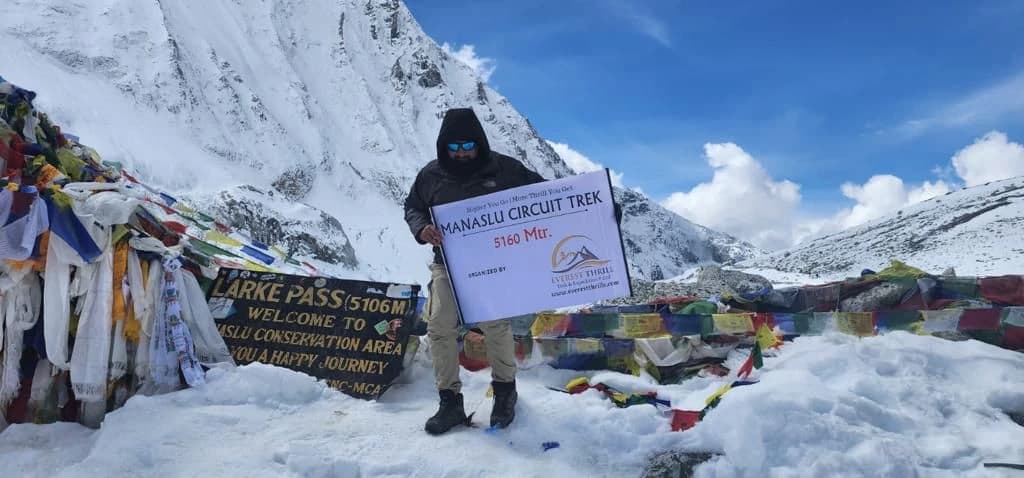
The highest point is Larkya La Pass at around 5,100 meters. Crossing the pass is generally the most demanding stage of the trek, not simply because of the elevation, but because you reach it after several days of walking and then continue with a long descent toward Bimthang.
So, is Manaslu difficult?
Yes, but it is primarily a physically demanding high-altitude trek rather than a technical climbing expedition.
Manaslu Circuit Trek Difficulty at a Glance
| Factor | What to Expect |
|---|---|
| Overall difficulty | Moderate to challenging |
| Highest point | Larkya La Pass, around 5,100 m |
| Typical walking time | About 5-8 hours per day |
| Longest trekking day | Around 8-10 hours |
| Main physical demands | Uphill and downhill walking, altitude and consecutive trekking days |
| Technical climbing | Not required on the standard circuit |
| Most demanding stage | Dharamsala - Larkya La - Bimthang |
| Main altitude section | Samagaun onward |
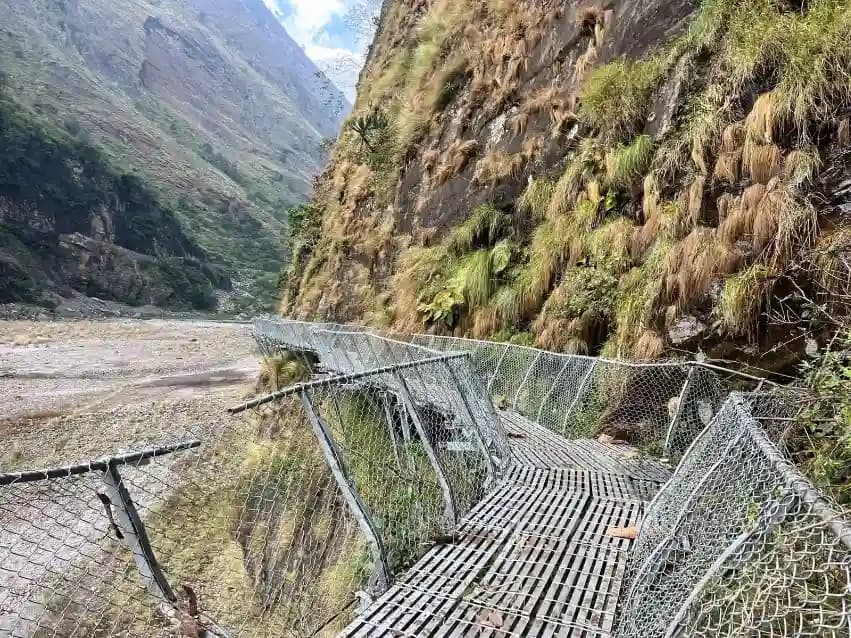
The 4 Stages of Manaslu Circuit Difficulty
One of the best ways to understand this trek is to look at how the challenge develops rather than assigning the whole route one difficulty rating.
Lower Manaslu
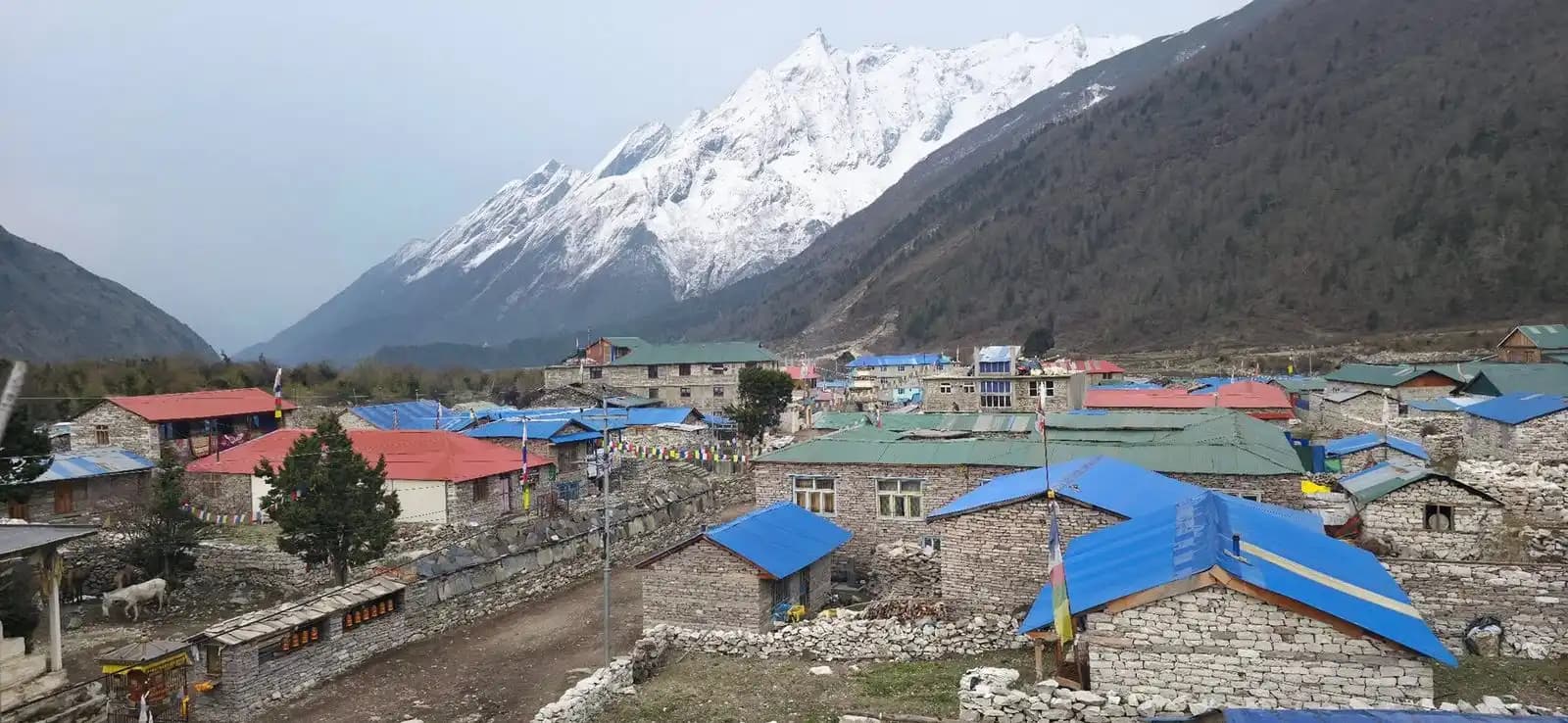
The lower Budhi Gandaki Valley is not particularly high, but that does not mean the walking is easy.
The trail moves between river valleys, suspension bridges, stone steps, forested sections, and repeated climbs and descents. You may climb away from the river only to descend again before the next section.
At this stage, altitude is not the main concern. The constant changes in elevation are what make the walking physically active.
This can surprise trekkers who are used to walking on relatively flat trails. A day with moderate distance can still feel demanding when much of that distance involves climbing and descending.
Mid-Manaslu
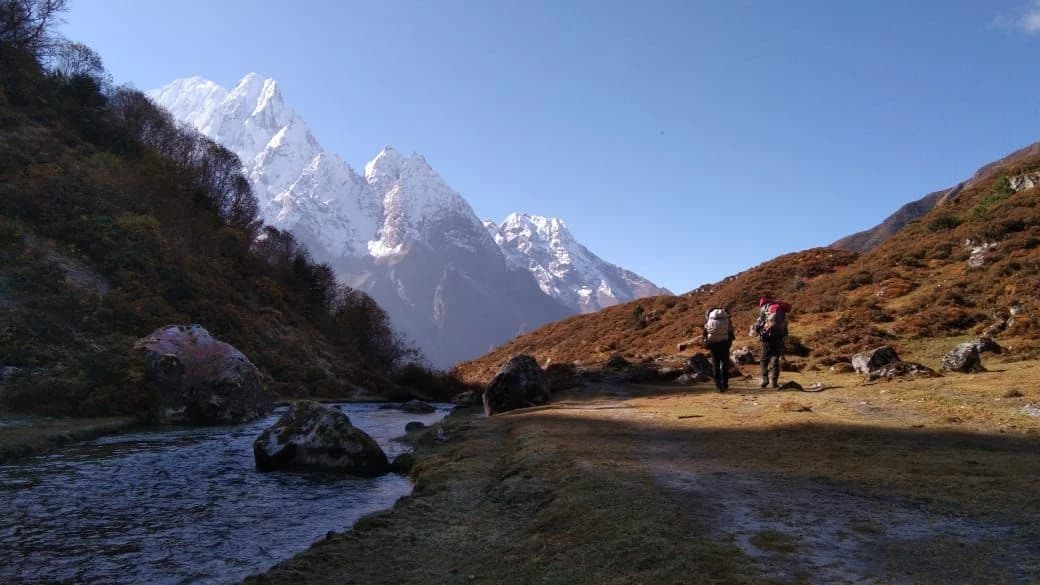
As the route progresses toward Namrung and Samagaun, the trail continues to gain elevation and the walking becomes more sustained.
You are still following a trekking route rather than a technical climbing route, but the combination of uphill sections and consecutive days begins to build fatigue.
This is where pacing becomes important.
Walking too quickly early in the day can leave you unnecessarily tired later. A steady rhythm is usually more useful than trying to cover every section as quickly as possible.
Upper Manaslu
Above Samagaun, altitude becomes one of the main factors affecting the trekking experience.
The trail may not look dramatically harder, but your pace can naturally become slower as elevation increases. A distance that would feel short at a lower altitude can take considerably more effort above 3,500 meters.
This is why altitude should be considered separately from fitness.
Someone can be physically strong and still need time to adapt to higher elevations.
A sensible itinerary and proper acclimatization are therefore important parts of Manaslu circuit trek preparation.
Larkya La
The Larkya La crossing is where the major demands of the trek meet.
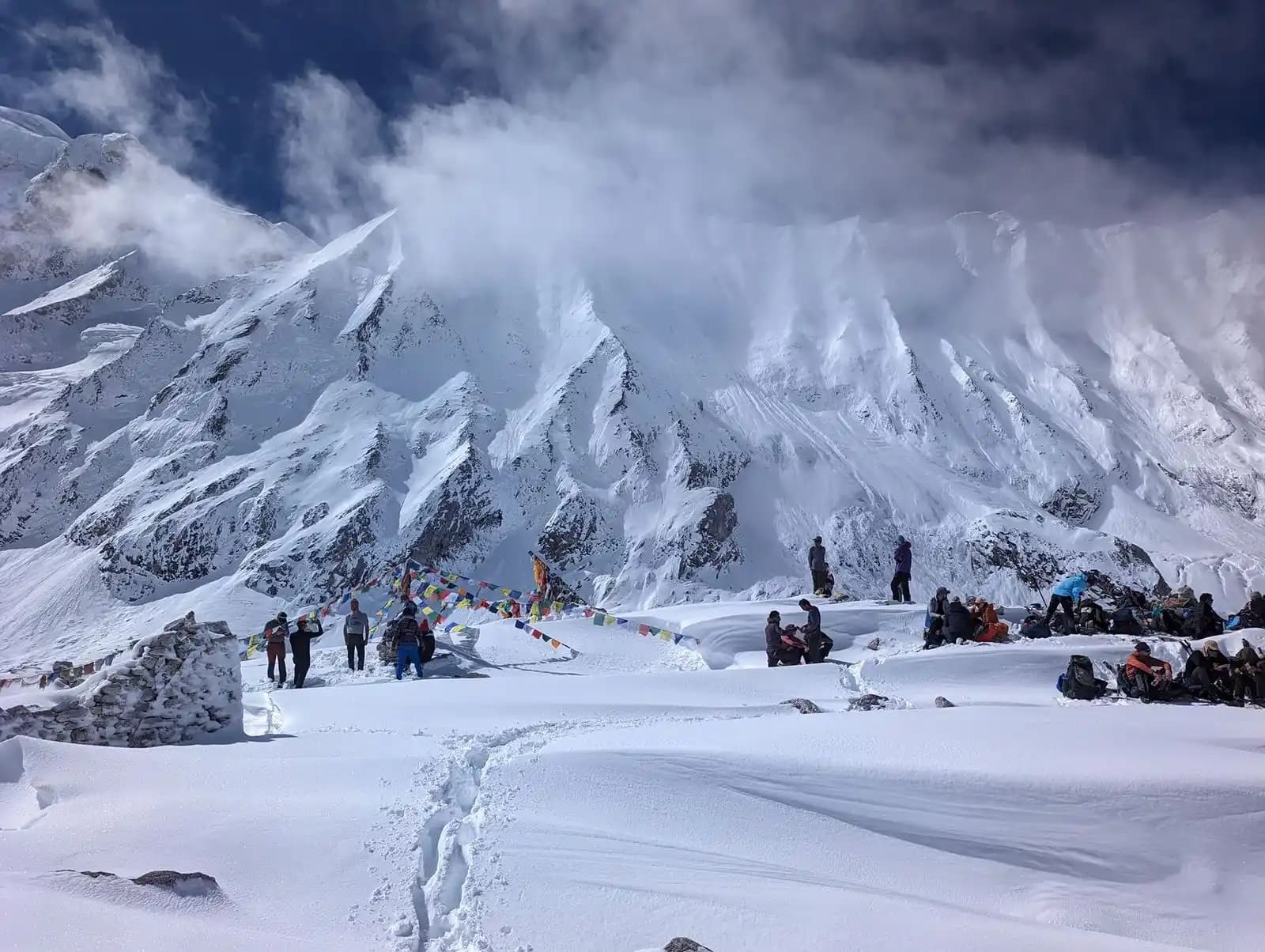
You are walking at very high altitude, starting early in cold conditions, climbing toward the pass, spending time around 5,000 meters, and then continuing down toward Bimthang.
The difficulty is therefore not just the climb.
It is the combination of altitude, cold, distance, terrain and accumulated fatigue.
That is what makes the pass day the most demanding part of the Manaslu Circuit for most trekkers.
Is Manaslu Technically Difficult?
No. Not in the usual mountaineering sense.
The standard Manaslu Circuit does not normally require:
- Technical climbing skills
- Rope work
- Previous mountaineering experience
- Specialist climbing equipment
However, that does not mean the route is easy.
You still need:
- Good physical endurance
- Confidence on uneven mountain trails
- The ability to walk uphill and downhill for several hours
- Patience with a slower pace at high altitude
- Awareness of changing weather and trail conditions
This distinction is important.
Manaslu is primarily a high-altitude trekking challenge rather than a technical climbing one.
Why Is Larkya La the Hardest Day?
Larkya La reaches approximately 5,100 meters and is the highest point of the circuit.
The crossing generally involves an early start from Dharamsala, a gradual ascent toward the pass, time at high altitude, and a long descent toward Bimthang.
Several things make this day different from a normal trekking day:
- You begin at high altitude.
- The air is significantly thinner.
- Temperatures can be very cold, particularly early in the morning.
- The climb becomes slower as you approach the pass.
- Weather can affect visibility and trail conditions.
- Reaching the pass is only part of the day.
- The descent continues for several hours afterward.
The final approach to Larkya La can feel slow. That is normal.
The goal isn't to race to the top. A controlled pace helps preserve energy for the entire crossing and the descent that follows.
The Real Difficulty: Accumulated Fatigue
This is perhaps the most important point to understand about the Manaslu Circuit.
Larkya La does not appear at the beginning of your trek.
You reach it after several days of walking.
By then, you have already dealt with repeated climbs and descents, changing terrain, increasing altitude, and the normal fatigue that comes with a multi-day trek.
That means the pass day should not be judged by distance alone.
A trekker might look at the itinerary and think:
“It is only one long day.”
In reality, it is one long day at the end of several days of physical effort.
This is why the Manaslu Circuit can feel considerably more demanding than a single high-altitude day hike.
What Trekkers Often Underestimate
- The lower section is not necessarily easy: The altitude is relatively low, but repeated climbs, descents, stairs, and uneven terrain can make the first part physically demanding.
- Short distances can take longer at altitude: Above 3,500 meters, walking pace naturally changes. A short section on the itinerary does not always mean an easy section.
- The Larkya La day includes the descent: Reaching the pass is not the end of the day. The descent toward Bimthang is long, and tired legs can make it feel demanding.
- Consecutive days matter: Your body does not start each morning completely fresh. The effort of previous days becomes part of the challenge.
- Weather can change the experience: Cold, snow, wind, and reduced visibility can make a high-altitude section considerably more demanding than it feels in favorable conditions.
How the Difficulty Changes Along the Route
| Trekking section | Main challenge |
|---|---|
| Soti Khola - Machha Khola | Uneven trail, warmth, and repeated ups and downs |
| Machha Khola - Jaga | Steeper sections and stone steps |
| Jagat - Deng | Continuous elevation changes |
| Deng - Namrung | Sustained climbing |
| Namrung - Samagaun | Increasing altitude and longer uphill sections |
| Samdo – Dharamsala | High-altitude walking |
| Dharamsala - Larkya La - Bimthang | Altitude, cold, long duration, pass crossing, and descent |
| Bimthang - Dharapani | Extended descent and tired legs |
Walking times vary according to the itinerary, weather, trail conditions, group pace, and individual fitness.
How Difficult Is Manaslu for a Regular Hiker?
You do not need to be an elite athlete to complete the Manaslu Circuit.
What matters more is whether you are comfortable with several hours of walking, repeated uphill and downhill sections, and consecutive days of physical activity.
Someone who regularly hikes may adapt well to the rhythm of the trek even without previous Himalayan experience.
However, general fitness does not guarantee an easy experience at altitude. Two people with similar fitness can respond differently once they reach higher elevations.
Previous high-altitude trekking experience is helpful, but preparation, acclimatization, pacing, and sensible decision-making are equally important.
Does Weather Make the Manaslu Circuit More Difficult?
Yes.
Weather becomes increasingly important as you move toward the higher sections.
Cold temperatures, strong wind, snow, and poor visibility can affect both comfort and walking speed. Conditions around Larkya La can change, so the pass should never be treated as a completely predictable part of the itinerary.
Choosing the best time for the Manaslu Circuit Trek generally gives you more favorable trekking conditions, although mountain weather can never be guaranteed.
Does the Remote Nature of Manaslu Add to the Difficulty?
It can.
Manaslu has fewer facilities than Nepal's more developed trekking areas. Some sections are remote, and there are fewer opportunities to change plans or access additional services compared with heavily established trekking routes.
This does not automatically make the trek unsafe.
It means planning, pacing, acclimatization, and experienced support become more important.
Accommodation is generally basic in the higher sections. For detailed lodging information, see our Manaslu Circuit Trek accommodation guide.
What Does an Experienced Guide Watch For?
An experienced guide does more than lead the group from one village to another.
At higher elevations, the pace of the group matters. So do rest breaks, weather, trail conditions, hydration, and how individual trekkers are responding to altitude.
Before Larkya La, the priority is reaching Dharamsala with enough energy for the following day's crossing.
During the pass day, maintaining a steady pace is generally more useful than trying to match the fastest person in the group.
A simple principle applies to high-altitude trekking:
Save enough energy for the whole day, not just the climb in front of you.
For professional support throughout the route, see our guide and porter hire in Nepal information.
Who Is the Manaslu Circuit Trek Suitable For?
Manaslu is particularly suitable for trekkers who:
- Enjoy long-distance hiking
- Are comfortable with several consecutive trekking days
- Can manage sustained uphill and downhill walking
- Are prepared for high-altitude conditions
- Prefer quieter and less developed mountain routes
- Are comfortable following a steady trekking pace
It may be less suitable for travelers whose priority is short walking days, extensive facilities, easy road access, or a highly comfortable trekking experience.
The important question is not simply whether Manaslu is “hard.”
It is whether the type of difficulty suits your experience and expectations.
Manaslu Compared With Other High-Altitude Treks
It is common to ask whether the Manaslu trek is harder than the Annapurna Circuit trek or the Everest Base Camp trek.
There is no useful universal ranking because these routes create different types of physical demands.
Manaslu combines a remote setting, gradual altitude gain, consecutive walking days, and the Larkya La crossing. Other major Himalayan routes have different combinations of altitude, terrain, infrastructure, and walking patterns.
Instead of asking which trek is hardest, it is more useful to ask which trekking conditions suit you best.
For a detailed route comparison, see our comparison between the Annapurna Circuit and Manaslu Circuit.
Is Manaslu a High-Pass Trek in Nepal?
Yes.
The route crosses Larkya La at around 5,100 meters, making the Manaslu Circuit one of Nepal's notable high-pass trekking routes.
If you are specifically looking for high-altitude pass crossings, our high-pass treks in Nepal guide covers other routes and their characteristics.
Our Final Say: How Hard Is the Manaslu Circuit?
The Manaslu Circuit is challenging because several manageable demands come together.
It combines long walking days, changing terrain, increasing altitude, remote conditions, accumulated fatigue, and one demanding high-pass crossing.
It does not require you to be a mountaineer.
It does require you to be prepared for a sustained Himalayan trekking experience.
The key is to understand that the difficulty is progressive.
The lower trail tests your legs. The middle section tests your endurance. The upper section tests your ability to adapt to altitude. Larkya La brings those demands together.
That is what makes the Manaslu Circuit challenging and understanding this progression is one of the best ways to approach the trek with realistic expectations.
For the complete itinerary, services, and logistics, explore our Manaslu Circuit Trek package.
About Author
Amir Adhikari is the Founder and Trip Curator of Everest Thrill Trek and Expedition. With 10+ years of experience in Nepal’s competitive tourism sector, he is a recognized expert in designing safe, personalized, and high-thrill Himalayan itineraries. His dedication to responsible travel and creating authentic experiences has positioned Everest Thrill as a leading specialist for Everest, Annapurna, and off-the-beaten-path adventures.


Manaslu Circuit Trek Package - 14 Days
USD 1215/per person