Mera Peak Vs Island Peak | Which Peak Should I Choose?
Table of Contents
- Quick Comparison: Island Peak vs Mera Peak
- Key Differences in Details
- Altitude and Acclimatization in Island Peak and Mera Peak
- Physical Challenges of Island Peak and Mera Peak
- Views and Photography Offered by Island Peak vs Mera Peak
- Itinerary and Duration
- Cost Breakdown
- Costs Common to Both Island Peak and Mera Peak
- Cost that differs in the Mera Peak and Island Peak Expedition
- The Best Time to Climb Island Peak and Mera Peak
- Training Requirements: Island vs Mera Peak
- Technical Skills Requirements: Island vs Mera Peak
- Conclusion: Which Peak Should I Choose?
Island Peak Climbing and Mera Peak Climbing are two famous peak climbs in Nepal. Both of them are widely appreciated and lie in the Everest region.
They are also regarded as ‘trekking peaks’, which means the journey does not require extreme technical skills.
Climbing both peaks gives a unique experience. However, climbing both of them is not possible for many.
That makes it very important to know the better one. This comparison of Island Peak vs Mera Peak climbing will help you decide the right peak for you.
Island Peak is 6,189 meters high. It is also called Imja Tse. The climb is shorter but steeper and comparatively more technical.
You use ropes, crampons and climb on ice. It is great for trekkers who want to try real mountaineering.
Mera Peak is 6,476 meters high. It is the highest trekking peak in Nepal. The climb is not as technical as that of the Island, but it is at a higher altitude and takes more days.
From the top, you can see five of the world’s tallest mountains, including the Kanchenjunga and the Mt. Everest itself.
Quick Comparison: Island Peak vs Mera Peak
| Feature | Island Peak | Mera Peak |
|---|---|---|
| Height | 6,189 m (20,305 ft.) | 6,476 m (21,247 ft.) |
| Location | Everest Region - Imja Valley near Dingboche and Chhukung | Everest Region - Remote Hinku Valley |
| Climbing Style | Shorter, steeper, and more technical | Longer approach, gradual snow slopes, and less technical |
| Technical Difficulty | Moderate to technical | Moderate |
| Physical Challenge | Demands both strength and endurance | Demands high endurance due to long days |
| Approach Duration | Around 5-6 days from Lukla to IP base camp | Around 8-9 days from Lukla to Khare |
| Total Trip Duration | 14-18 days | 18-22 days |
| Peak Permit Cost | 350$ for spring/175$ for other seasons | 350$ for spring/175$ for other seasons |
| Overall Experience | Feels like a real mountaineering climb with steep and exciting sections | Feels like a high-altitude snow trek with incredible panoramic views |
Our detailed guide to which peak to climb in Nepal will help you choose the ideal peak.
Key Differences in Details
Altitude and Acclimatization in Island Peak and Mera Peak
Island Peak is 6,189 meters high. Because it is a bit lower than Mera Peak, the climb is shorter but steeper. You will climb on ice and cross glaciers, so you need some climbing skills.
Even though the height is slightly lower, you still need to be careful and give your body time to get used to the altitude.
Proper rest and slow climbing help to avoid Altitude sickness. Many climbers use Island Peak as an opportunity to learn mountaineering while getting used to high altitudes.
Mera Peak is higher than Island Peak. So, obviously, it takes longer to reach the top because the trail is longer. Because of this, your body needs more time to adjust to the thin air.
This means more days of slow walking and resting at higher camps. Even though the Mera Peak is less technical to climb, it can still feel harder because of its extreme height and longer trek. Climbers must be strong and patient to avoid altitude sickness.
All these make it a great peak for those who want to experience very high mountains without too much technical climbing.
Physical Challenges of Island Peak and Mera Peak
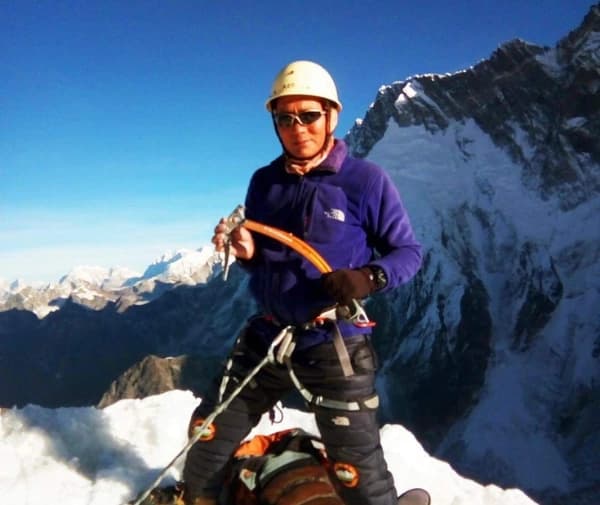
Island Peak requires good strength and endurance because the climb includes steep and technical parts. You must be fit enough to use climbing gear like crampons and ropes.
Basic climbing skills will help, but your body also needs to handle long days of walking and climbing at high altitude. Training before the trip should be considered, as it will make the climb easier and safer.
Mera Peak also needs strong endurance because the trekking days are longer. Due to the higher altitude, your lungs are pressurized to breathe, and your body struggles to stay energized.
Even if you do not require extreme technical skills, the higher camps can be tiring. Good fitness and patience are very important for a successful climb.
Views and Photography Offered by Island Peak vs Mera Peak
Island Peak gives you dramatic, close-up views of some of the tallest mountains. From its summit, you can see the huge south face of Lhotse towering nearby. You also get great views of Everest, Ama Dablam, and Makalu.
Because the peak is close to these giants, your photography will show detailed, striking mountain walls and sharp ridges. The views feel very powerful and intense, perfect for climbers who love being surrounded by huge peaks up close.
On the other hand, Mera Peak offers one of the broadest panoramic views in Nepal. You can see five of the world’s highest mountains: Everest, Lhotse, Makalu, Cho Oyu, and Kanchenjunga from its summit.
This wide and open panorama is just perfect for photographers wanting to capture big mountain landscapes and mesmerizing natural scenes. Additionally, the sunrise and sunset views from Mera Peak’s summit are extraordinarily beautiful and worth waking up early.
Itinerary and Duration
Island Peak climbing trips usually take about 14 to 16 days from start to finish. The journey begins with a short flight from Kathmandu to Lukla.
Anyone who knows the Everest Region knows Lukla as well because it's the main gateway to almost every trekking trail of this region.
From Lukla, climbers of Island Peak trek through beautiful forests and Sherpa villages, including the Namche Bazaar and Dingboche.
The trail is well-traveled due to the popularity of the Everest Base Camp trek and other related treks.
Along the way, trekkers are offered great views of Everest, Ama Dablam, and other peaks along the way.
It usually takes about 4 to 5 days to reach Island Peak base camp at around 5,100 meters. During this time, you also spend several days acclimatizing to the altitude by doing short hikes and resting.
Once you are at the Island Peak base camp, you will prepare your climbing gear and practice climbing skills like using crampons and ice axes.
The summit push usually starts early in the morning and takes 6 to 10 hours. It strongly depends on weather conditions and the pace. Climbers have to cross the glaciers and steep ice walls with fixed ropes.
This part is challenging without a doubt, but it's equally exciting. After reaching the summit, you return to base camp the same day or the next.
The trek back to Lukla generally takes about 3 to 4 days, and in this way, an expedition that balances trekking with technical climbing comes to an end.
Mera Peak expeditions are longer and more physically demanding. A typical journey generally requires 18 and 22 days.
Like Island Peak, the trip starts with a flight from Kathmandu to Lukla. However, the trek to Mera Peak Base Camp is longer and more remote.
You will have to walk 8 to 9 days through quiet Sherpa villages, rhododendron forests, and cross high mountain passes like the Zatrwa La Pass.
This longer trek helps your body slowly get used to the higher altitude, which is very important and an advantage of the longer route.
The Mera Peak base camp sits at around 5,000 meters. If you are not a professional or experienced climber, you should spend several days resting and acclimatizing in the Base Camp. You’ll badly require stamina for the long and cold summit day. So, make sure to recover the stamina by resting.
The route is mostly snow slopes, with just a short rope-assisted section near the top. After summiting, you’ll return to base camp.
Now it's time to retrace your steps down to Lukla, which takes several days, obviously. The longer approach and slower pace make Mera Peak ideal for trekkers who want a serious high-altitude adventure without the steep technical climbing of Island Peak.
Cost Breakdown
Costs Common to Both Island Peak and Mera Peak
Some expenses are the same whether you climb Island Peak or Mera Peak. First, you must pay the climbing permit fee.
You don’t have to worry about the permits as your trekking agency, Like Everest Thrill, will handle them.
However, for your information, the cost for this permit is generally about $350 in spring and $175 in autumn.
This fee was recently updated by the Nepal government (before it was $250 and $125) and is required for all climbers.
Both trips start with a flight from Kathmandu to Lukla. This flight will also be managed by the agency, which costs $230 one way.
Keep in mind: Weather can cause delays, so it’s wise to have extra days in your itinerary and extra money in your wallet.
You’ll also need to pay for food and lodging during the trek. Tea houses and lodges offer meals for $10 to $20 each and rooms for $5 to $15 per night. Both trips follow popular routes with similar accommodation options.
Hiring a guide and porters is common for both peaks to ensure safety and carry heavy gear. Guide fees are usually around $30–$50 per day, with porters costing less. This helps you climb more safely and comfortably.
Cost that differs in the Mera Peak and Island Peak Expedition
Mera Peak can cost more in some areas because the trek to the base camp is longer and more remote. This means you spend more days paying for food, lodging, and guide or porter services.
While Mera Peak is less technical, you still need warm clothes, crampons, and some climbing gear, which can add to rental or purchase costs. Because the trek takes more time, plan your budget accordingly on the trail.
Island Peak has some extra costs related to its technical climb. You need to rent or buy more specialized gear like ice axes, helmets, harnesses, and fixed rope equipment.
Many climbers hire additional climbing guides or Sherpas to help with the ice wall and glacier sections, which increases guide fees. The path is, however, shorter, so food and lodging costs are usually lower than on a Mera Peak.
But even after that, the technical nature of the climb means your gear and guide costs are higher.
The Best Time to Climb Island Peak and Mera Peak
The best times to climb Island Peak and Mera Peak are in the spring and autumn seasons. These months offer the safest weather with clear skies and beautiful views of the Himalayas.
Spring (March to May) is a popular climbing season in Nepal. As winter ends, the weather becomes warmer and the days gradually become longer.
The rhododendron forests along the trekking routes bloom with bright red, pink, and orange flowers.
This makes the trail very beautiful. Yes, there is obviously snow on the trail, but it's not heavy enough to disturb the expedition.
This season attracts many climbers and trekkers to both Mera and Island Peak. So the trails and teahouses can be busy.
The weather is generally stable, but there are also reports of occasional storms, especially in late May.
Autumn (late September to November) is considered the best time if you want clear mountain views. After the monsoon rains end, the air becomes clean and dry, providing perfect visibility.
The skies are clear and allow you to see the world’s tallest peaks like Everest, Lhotse, and Makalu with a great perspective.
The weather is cooler than spring, especially at higher altitudes, so it’s important to have warm clothing. Autumn is also less crowded than spring, making the trekking and climbing experience more peaceful.
Summer (June to August) is the monsoon season in Nepal. Unsurprising, it is the most avoidable season. This season brings heavy rains. So, there’s always the risk of slippery and muddy trails, landslides, and avalanches.
The clouds and fog reduce visibility, hiding the stunning mountain views. Due to all these risks, climbing Island Peak and Mera Peak during the summer is not recommended.
Winter (December to February) brings very cold temperatures and strong winds. Besides, heavy snowfall is undeniable.
The trails can be icy and covered in snow, which makes trekking and climbing harder and more dangerous.
Try this season, only if you are an experienced climber with proper preparation for attempting. For beginner climbers, winter is not a good time to climb these peaks because of the extreme cold and difficult conditions.
Training Requirements: Island vs Mera Peak
When it comes to Island Peak, it demands both strength and endurance. As mentioned repeatedly, the climb is steeper and includes technical sections like ice walls and glacier travel. These sections require strong legs and a solid core.
Understand that you’ll be hiking with a backpack on hills. So, you need prior training. You should do exercises that strengthen your legs, back, and muscles. For your stamina, cardiovascular workouts like running, cycling, or swimming will help.
You can handle long and tiring days at high altitude. Everest Thrill recommends that you train for at least 2 to 3 months before your climb. Doing so will give you the best chance to succeed and enjoy the experience.
Mera Peak also needs very good endurance because the trek to the base camp is longer and higher.
The climb is less technical. But rather than thinking about that, think about the long days walking at high altitude, which can be tiring.
Prepare your body accordingly with appropriate training. You should focus on building stamina through long hikes, stair climbing, and cardio exercises like running or cycling.
Practice walking with a loaded backpack, which will make your legs ready for the Mera Peak trek.
Check our preparation tips for climbing in Nepal below 7000m for details information.
Technical Skills Requirements: Island vs Mera Peak
Island Peak is more technical. So learning basic mountaineering skills before your trip is very crucial. You need to know how to use crampons. If you aren't aware, crampons are the spikes attached to boots for walking on ice.
You should know how to hold and use an ice axe for balance and safety, and understand the mechanism of fixed ropes on steep sections.
This will help a lot. Besides, take a short mountaineering course in Nepal or your home country, which is highly beneficial.
Practicing these skills will help you feel confident and safe during the climb. Your guide will definitely support you, but when you know these techniques, it will make the experience smoother and more enjoyable.
Mera Peak also demands some skills, even though it’s a trekking peak. You should be comfortable walking on snow with crampons and know basic safety techniques. The final part of the climb, which is 'Summit Push', includes a short rope-assisted section.
This is not so difficult if you have a sound fitness, but there’s always an extra advantage for practicing them in advance.
If you have never used crampons or walked on snow before, you must get guidance beforehand. Learning these basic skills will make the climb safer and give you more confidence as you reach the summit.
Conclusion: Which Peak Should I Choose?
Both Island Peak Climb and Mera Peak Climb are fantastic climbing experiences in Nepal’s Everest region. But being honest, they suit different kinds of climbers.
Choose Island Peak if you want a shorter climb that is more technical and challenging. It’s ideal for trekkers who want to learn mountaineering skills.
The climb is steeper and obviously more thrilling. Moreover, you’ll get extremely close-up views of huge peaks like Lhotse and Ama Dablam.
Choose Mera Peak if you prefer a less technical climb but with amazing panoramic views. It’s best for those who want to experience high altitude with easier climbing.
The trek to Mera Peak base camp takes more time and endurance, but ultimately rewards you with one of the widest mountain panoramas in Nepal, including Everest, Kanchenjunga, and Makalu.
At the end, it all depends on what kind of adventure you want. Think about that first. Consider your fitness, experience, and preferences, and choose accordingly.
Everest Thrill genuinely suggests going for Island Peak if you want to learn mountaineering skills and enjoy steep climbs.
Otherwise, Mera Peak is your peak when you want a long, high-altitude trek with gentle slopes and stunning views.
No matter what your choice is, you'll get unforgettable memories and a true taste of Himalayan adventure either way.
About Author
Amir Adhikari is the Founder and Trip Curator of Everest Thrill Trek and Expedition. With 10+ years of experience in Nepal’s competitive tourism sector, he is a recognized expert in designing safe, personalized, and high-thrill Himalayan itineraries. His dedication to responsible travel and creating authentic experiences has positioned Everest Thrill as a leading specialist for Everest, Annapurna, and off-the-beaten-path adventures.