Kala Patthar | Altitude, Trek, Summit and Views
Table of Contents
- How to Get Here?
- Route to Kala Patthar
- Best Time to Wander
- Choosing Between Sunrise And Sunset: Golden Peaks or Fiery Skies?
- Sunrise on Kala Patthar
- The Sunset on Kala Patthar
- Which one should you choose?
- Why Kala Patthar is More Than Just a Side Trip?
- Unmatched Everest View
- A Symbolic Everest Summit for Trekkers
- A Personal Achievement
- Kala Patthar vs. Everest Base Camp: Which Is More Worth It?
- Why does the EBC not provide a full Everest view, but Kala Patthar does?
- If you just want to choose one, which one should it be?
- Battling Altitude And Cold: Common Challenges And Expert Advice
- Altitude Sickness
- Cold Temperature and Hard Wind
- Steep and Rocky Areas
- Low Energy and Fatigue
- Descending in the Dark (for sunset hikers)
- Conclusion: Is The Hike Worth It?
- Frequently Asked Questions About Kala Patthar
Ever wonder about the feeling of encountering Everest face to face with your feet stepping over the highest point possible to ascend? A passionate trekker must have.
Here, the wonder ends as ascending to Kala Patthar is the highest you can get to Everest without climbing it.
The unmatched and uninterrupted views of Everest and its neighboring peaks are something even the base camp fails to provide.
Without having technical climbing skills and extreme fitness, being welcomed at 5,644 meters by a viewpoint like this is truly incredible.
However, it doesn’t mean that it’s easy. Hiking to Kala Patthar is difficult due to high altitude and freezing temperature, but even though the rewards are unmatched, the majestic Everest, bathed in golden light and towers just in front of you.
How to Get Here?
Kala Patthar is above Gorak Shep and is the last destination at the Everest Base Camp (EBC) trek.
Trekkers often make up for it after going to EBC. The hike is steep and challenging, but the fantastic view of Everest makes every step worth it.
Route to Kala Patthar
- Start with Gorak Shep (5,164 m / 16,942 ft): The trip for the Kala Patthar starts early in the morning or late in the afternoon, depending on whether you want to see sunrise or sunset.
- Steep Ascend (1.5 to 2 hours): The climb is short, but physically demanding due to the height. The air here is thin, making it difficult to breathe, and the path can be slippery under icy conditions.
- Reaching the summit (5,644 m / 18,514 ft): Once you’re at the top, your hard work is rewarded with an uninterrupted 360-degree scene of Everest, Nuptse, Pumori, and other peaks.
Best Time to Wander
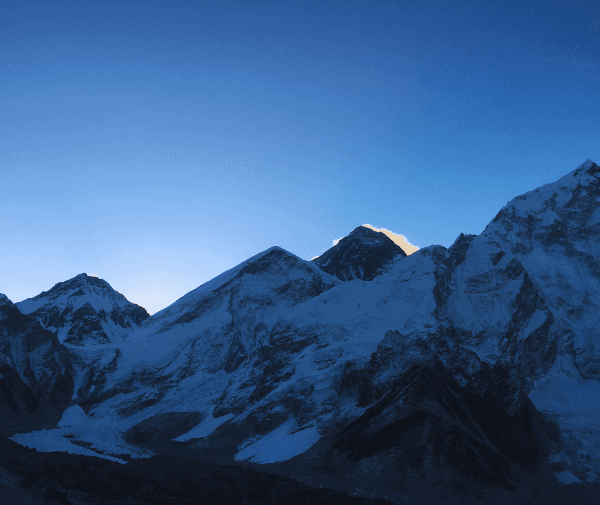
- Morning (sunrise): Offers a view of golden lighting on Everest, but it is extremely cold and windy.
- Evening (sunset): Offers a fantastic glow on the peak with warmer temperatures, but descending can be difficult to do in the dark.
Choosing Between Sunrise And Sunset: Golden Peaks or Fiery Skies?
It’s not easy to decide whether to go for sunrise or sunset. Both give incredible ideas, but each has its challenges and rewards.
Sunrise on Kala Patthar
Benefits:
- Witness Everest taking a bath in Golden lighting when the first light of the day hits the top.
- A clear sky is more common in the morning.
- The air is crisp and provides an opportunity for wonderful photography.
Defects:
✘ Cold temperatures - often fall below -15 ° C (-3 ° F) in the top trekking season.
✘ Harsh wind makes the climb even more difficult.
✘ An initial awakening requires (usually about 3:30 am-4:00 am) in the dark and cold.
The Sunset on Kala Patthar
Benefits:
- Warmer temperature compared to the morning.
- Dramatic glow on tops with a deep orange and pink hue, and you are the witness.
- Fewer crowds than for sunrise.
Defects:
✘ In the afternoon, weather conditions can be unexpected, with clouds forming around Everest.
✘ Ascending in the dark can be challenging, requiring lights and extra care.
Which one should you choose?
- For the best light and visibility, choose sunrise.
- For a more comfortable experience, choose sunset.
If possible, stay an extra day in Gorak Shep to try both and experience the magic of Kala Patthar at different times of the day.
Why Kala Patthar is More Than Just a Side Trip?
While Everest Base Camp (EBC) is the primary goal for most people, Kala Patthar gives something more special - the really amazing view of Mount Everest.
Many people feel slightly underwhelmed by the EBC heli trek as the actual summit of Everest is not visible from the base camp. That’s exactly where Kala Patthar comes in.
Unmatched Everest View
From the top of Kala Patthar (5,644 m), you get a straight, panoramic view of Everest, as well as Nuptse, Pumori, Lotse, and many other gigantic peaks.
The sunrises and sunsets' scenery is even more amazing than any camera can capture perfectly.
A Symbolic Everest Summit for Trekkers
Not everyone can climb Everest, but standing here makes it look like the closest alternative.
At this height, you will find a sense of extreme conditions that climbers meet - thin air, biting cold, and a surprisingly large mountain landscape stretching in all directions.
A Personal Achievement
Reaching the Kala Patthar is not a simple achievement. Steep climbing, high altitude, and cold temperatures make it physically and mentally challenging.
But when you are at the top, look at the world's highest peak in front of you, fatigue just fades, your mind becomes calm, and you feel a deep sense of accomplishment.
Kala Patthar vs. Everest Base Camp: Which Is More Worth It?
The selection between Kala Patthar and Everest Base Camp (EBC) is a common dilemma for trekkers, as both provide memorable experiences in the Everest region.
Why does the EBC not provide a full Everest view, but Kala Patthar does?
Everest Base Camp (EBC) is at a height of 5,364 meters (17.598 ft) and provides a close view of Khumbu Icefall, which is incredible.
However, the entire top of Mount Everest is unclear by Nuptse Ridge, which means you can't get the prestigious view of Everest's EBC summit.
On the other hand, Kala Patthar, which is 5,644 m (18,514 feet), provides a fantastic 360-degree panorama.
From here, you get uncontrolled scenes of Mount Everest's summit, as well as fantastic scenes of Nuptse, Lhotse, and Pumori.
This makes the Kala Patthar the best Everest viewpoint without a doubt.
If you just want to choose one, which one should it be?
If you have limited time or energy, Kala Patthar is definitely a better option for a complete and wonderful view of Mount Everest.
A little walk-up (just a few hours) from Ghorak Shep ensures that you do not miss out on the final Everest view.
However, if you are looking for a full Everest Base Camp experience, the EBC provides a unique experience on Everest's feet, with the historical importance of the site.
Battling Altitude And Cold: Common Challenges And Expert Advice
Reaching the Kala Patthar is a rewarding experience, but no rewards are gained without hard work.
The combination of high altitude, steep climb, and extreme temperatures makes it one of the most difficult parts of the Everest Base Camp Trek.
So, one must be prepared thoroughly to make all the differences in achieving the summit.
Altitude Sickness
Challenge: The Kala Patthar is 5,550 meters (18,209 feet), where the oxygen level is about 50% lower than the sea level. Many trekkers experience headaches, dizziness, nausea, and shortness of breath.
How to overcome it:
- Acclimatize properly - at least two nights in Namche Bazaar and one in Dingboche.
- Stay hydrated with at least 3-4 liters of water per day.
- Climb slowly - take the time to climb and listen to your body.
- Consider altitude medicine (only if prescribed by a doctor).
Cold Temperature and Hard Wind
Challenge: The temperature in the Kala Patthar may fall below - 15 to -20 ° C (-4 ° F) in the top trekking season, and strong winds add harsh conditions to the cold.
How to overcome it:
- Use several layers, jackets, and windproof shells.
- Wear thermal gloves, a warm hat, and neck gaiters to protect from the wind.
Steep and Rocky Areas
Challenge: The last part of the climb is covered with steep, uneven, and loose rocks. The difficulty becomes further intensified by the height.
How to overcome it:
- Use trekking poles to support your balance and reduce stress on the knees.
- Take small, stable steps instead of hastening for the summit.
- Wear strong hiking shoes with a good grip to avoid slipping.
Low Energy and Fatigue
Challenge: When trekkers are in Gorak Shep, they have already been tired by days of trekking. It can cause the last climb to Kala Patthar to become even more boring and exhausting.
How to overcome it:
- Eat high-energy food before the hike, oatmeal soup or dal bhat are good alternatives.
- Take some snacks like energy bars or chocolate for a quick boost.
- Stay mentally strong - break the trek into small sections and focus on reaching one point at a time.
Descending in the Dark (for sunset hikers)
Challenge: If you choose to hike the Kala Patthar for sunset, you will have to descend in the darkness, which can be risky.
How to face it:
- Take a good-quality headlamp with an extra battery.
- Trek with a group or guide for safety.
- As soon as the sun sets, begin your descent to avoid complete darkness.
The key to a successful hike to Patthar is the right acclimatization, motivation, and preparation. With the right mentality and equipment, you can overcome these challenges and experience one of the most amazing hikes in the world.
Conclusion: Is The Hike Worth It?
Standing over Kala Patthar is more than reaching just a high-altitude viewpoint - it is a moment of seeking your accomplishments and appreciating the beauty of nature in pure wonder.
When you look at Everest, wrapped in the golden glow of sunrise or fiery hues of sunset, your exhaustion fades, and hard work gets justice, leaving a deep feeling of fulfillment.
Those who actually try come to find that this climb is not just for the best view of Everest; This is about promoting one's boundaries, embracing the challenge, and experiencing the Himalayas in their most royal form.
While the Everest Base Camp trek is an enduring experience in itself, Kala Patthar is a place where the greatness of the mountain meets the resilience of the human spirit.
Frequently Asked Questions About Kala Patthar
About Author
Amir Adhikari is the Founder and Trip Curator of Everest Thrill Trek and Expedition. With 10+ years of experience in Nepal’s competitive tourism sector, he is a recognized expert in designing safe, personalized, and high-thrill Himalayan itineraries. His dedication to responsible travel and creating authentic experiences has positioned Everest Thrill as a leading specialist for Everest, Annapurna, and off-the-beaten-path adventures.