Date Updated:
Everest Base Camp Trek Training Plan 2026 | Complete 12-Week Guide
Table of Contents
- Does the Everest Base Camp Trek Require Training?
- How Long Should You Train for the Everest Base Camp Trek?
- Step 1: Take the Fitness Self-Assessment (Do This Before You Start Training)
- Test 1 - The Stair Climb Test
- Test 2 - The Sustained Walk Test
- Test 3 - The Recovery Test
- What Does "Mountain Fit" Actually Mean for EBC?
- The 12-Week EBC Training Plan: Complete Week-by-Week Schedule
- Phase 1: Foundation Building (Weeks 1-4)
- Phase 2: Endurance and Strength Building (Weeks 5-8)
- Phase 3: Trek Simulation and Peak Conditioning (Weeks 9-11)
- Phase 4: The Taper (Week 12, the Week Before Departure)
- The Gym-Only Training Plan: For Urban Trekkers Without Trail Access
- The Stair Machine: Your Single Most Valuable Gym Tool
- Incline Treadmill Walking
- The Leg Press and Leg Extension
- Step-Ups
- Weighted Carries
- The Key Exercises for EBC Trek Preparation
- Weighted Step-Ups
- Squats (with and without weight)
- Romanian Deadlifts
- Calf Raises
- Single-Leg Squats (Pistol Squats or Bulgarian Split Squats)
- Plank Variations
- Hill Repeats
- Downhill Walking with Load
- Cardio Training for the EBC Trek: What Actually Works
- Altitude Training: What It Can and Cannot Do
- Mental Preparation: What No One Tells You
- Training Tips for Beginners: A Specific Starting Point
- Weeks -4 to -3: Starting from Zero
- Weeks -2 to -1: Adding Duration and Hills
- Nutrition During Training and on the Trail
- During Training (General Principles)
- On the Trail
- Gear You Need to Train With (Not Just Carry)
- Are You Ready? The Final Fitness Benchmarks Before You Fly
- Preparation Checklist: Everything Beyond Training
- Medical Preparation:
- Gear Checklist:
- Health & Safety on Trail:
- Plan Your Trek with Everest Thrill: Expert Guides, Real Preparation Support
- Frequently Asked Questions
- Do you need to train for Everest Base Camp?
- How long should I train for the Everest Base Camp trek?
- Can beginners do the Everest Base Camp trek?
- How much training is enough for Everest Base Camp?
- Can I train for EBC without access to mountains or hills?
- What is the best exercise to train for Everest Base Camp?
- Does fitness prevent altitude sickness?
- How much water should I drink during training and on trail?
- Should I take Diamox for the EBC trek?
- What should I eat during training?
Most training guides for the Everest Base Camp trek tell you to "hike regularly, build your cardio, and you'll be fine." That advice is not wrong. It is just incomplete, and for the trekkers who arrive underprepared, the gap between "generally active" and "EBC-ready" is felt most acutely above 4,000 metres, when the air thins and the body cannot recover overnight the way it does at sea level.
This guide is built differently. It starts with a fitness self-assessment you can do today, then routes you into one of three training tracks based on where you are actually starting from, not a fictional average.
It gives you a full 12-week Everest Base Camp training plan with specific weekly targets, a gym-only option for urban trekkers without trail access, and the benchmarks our Kathmandu-based guides use to assess whether a trekker is ready before they fly to Lukla.
If you are asking how to train for the Everest Base Camp trek or searching for a complete training program for Everest Base Camp, this is the only guide you need.
How long is the trek to Everest Base Camp? The EBC route reaches 5,545 meters at the iconic Khumbu viewpoint, and you will walk 5-7 hours per day for 12-14 consecutive days over rocky, uneven terrain at an altitude where there is approximately 50% less oxygen than at sea level.
You do not need to be an athlete. But you do need to prepare for the Everest Base Camp trek specifically, not generically, and understanding how to prepare for the Everest Base Camp trek for beginners starts with knowing exactly what the trail demands.
Does the Everest Base Camp Trek Require Training?
Yes. Not negotiably, not "if you want to be comfortable." When trekkers ask "does Everest Base Camp require training," the answer is unambiguous: training for base camp Everest is the difference between trekkers who summit Kala Patthar feeling capable and those who turn back at Gorak Shep feeling defeated, and the two groups are often of similar age and general health.
The EBC trek is classified as moderate to strenuous. It does not require technical mountaineering skills, ropes, or ice axes. What it requires is the ability to walk for long consecutive days at altitude with cumulative fatigue building across two weeks.
That specific type of endurance, sustained aerobic effort over multi-day periods, does not develop from general gym fitness or occasional weekend walks. It develops from specific, progressive, hiking-focused training for Everest Base Camp.
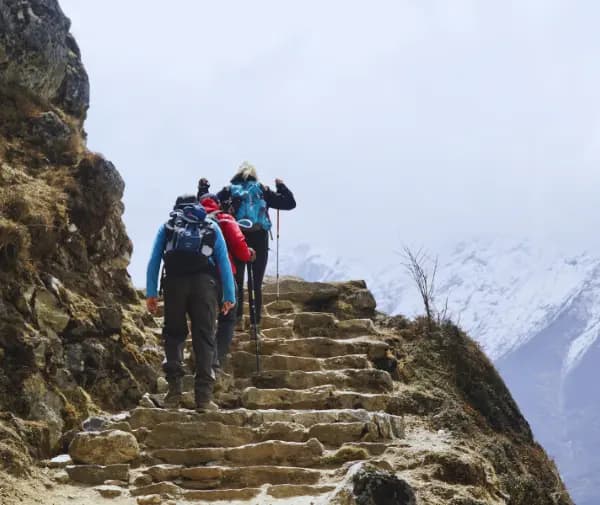
Untrained trekkers are significantly more likely to experience extreme fatigue and muscle failure on descent (when knees take the most load), altitude-related symptoms that are worsened by physical stress, and early evacuation, not because of altitude alone, but because an exhausted body has reduced capacity to acclimatize.
Base Camp Everest training does not immunize you against altitude sickness, which has no correlation with fitness. But it means your body can handle the daily physical load and use the rest days to recover rather than just survive.
The good news: thousands of ordinary people complete this trek every year, including office workers, trekkers well into their seventies, and first-time hikers who have never been above 3,000 meters. What they have in common is not elite fitness. It is deliberate, consistent preparation for the Everest Base Camp trek.
How Long Should You Train for the Everest Base Camp Trek?
One of the most common questions we receive is "how long to train for Everest Base Camp," and the honest answer depends entirely on your starting fitness level. Here is the reality by category:
- Complete beginners (rarely exercise, no hiking background): 16 weeks minimum. This gives your body time to develop the base aerobic capacity and leg endurance without injury risk from overloading. If you are searching for how to prepare for the Everest Base Camp trek for beginners, this is your timeline
- Moderately active (exercise 2-3 times per week, occasional walks): 12 weeks is the standard Everest Base Camp training program duration and is sufficient for most trekkers in this category when training is consistent.
- Already active (regular gym, running, or hiking): 8-10 weeks of EBC-specific training for base camp is typically adequate, focusing on converting general fitness into trekking-specific endurance and practicing with a loaded pack.
The minimum under any circumstances is 8 weeks. When trekkers ask "how much training for Everest Base Camp is enough," the answer is never "as little as possible." Cramming training into the final 4 weeks does not build the aerobic base needed; the body requires progressive overload over time, not intensity spikes.
Step 1: Take the Fitness Self-Assessment (Do This Before You Start Training)
Before you build your Everest Base Camp trek training plan, you need to know where you are starting from. This self-assessment takes 30 minutes and tells you which training track to follow. These are the benchmarks our Everest Thrill guides use when evaluating trekker readiness.
Test 1 - The Stair Climb Test
Find a building with at least 8 floors or a steep hill of equivalent height. Walk up continuously at a brisk pace. If you reach the top comfortably and can hold a conversation: good base. If you are breathing very hard by floor 4 and need to stop: beginner track. If you can repeat it twice without significant rest: intermediate or higher.
Test 2 - The Sustained Walk Test
Walk continuously for 90 minutes at a brisk pace on any terrain. If this feels easy and you could continue: intermediate track. If 60 minutes is your comfortable limit: beginner track. If you can do 90 minutes with a 5kg pack and hills: advanced track.
Test 3 - The Recovery Test
After 45 minutes of brisk walking up inclines, how does your heart rate feel after 5 minutes of gentle walking? If it drops quickly to conversational pace: good cardiovascular base. If it remains elevated and you feel tired for an hour after: beginner track.
Your Training Track:
- 2 or more tests in "beginner" category: follow the 16-week beginner track
- Mostly middle results: follow the 12-week standard track
- All tests in the comfortable/advanced range: follow the 10-week accelerated track
What Does "Mountain Fit" Actually Mean for EBC?
"Mountain fit" is different from "gym fit" and it matters to understand the difference before you design your training for EBC. The EBC trail demands:
- Cardiovascular endurance at sustained moderate intensity: Not burst cardio. The trail is not a sprint. It is 5-7 hours of steady effort at 60-70% of your maximum heart rate. Gym cardio done in short intervals does not build this efficiently. Long, slow distance work does. This is what separates effective EBC trek training from generic gym routines.
- Leg strength for both ascending and descending: Going up is exhausting. Coming down is where knees fail. Most trekkers underestimate the descent the rocky, uneven downhill from Namche to Lukla places enormous repetitive load on quads and knee joints. Training Everest Base Camp sessions must include weighted downhill walking, not just uphill.
- Core stability for uneven terrain: The EBC trail is full of irregular stone steps, loose rocks, and uneven surfaces. A strong core and stable ankles prevent the small slips and stumbles that become injuries at altitude when the body is fatigued.
- Consecutive-day endurance: Your body needs to recover overnight and perform again the next day, for 12-14 consecutive days. This is the specific demand most training plans miss: building the capacity to perform repeatedly, not just in a single long session. This is what proper preparation for Everest Base Camp actually means.
The 12-Week EBC Training Plan: Complete Week-by-Week Schedule
This is the core Everest Base Camp trek training program, suitable for moderately active trekkers. Beginners: add 4 weeks at the front following the Phase 0 foundation block. Advanced trekkers: compress Phase 1 to 2 weeks and extend Phase 3. This EBC training plan has been refined over hundreds of successful treks with Everest Thrill clients.
Phase 1: Foundation Building (Weeks 1-4)
Goal: Establish consistent movement habits, develop base aerobic capacity, begin building leg endurance. No aggressive intensity this phase is about showing up regularly, not pushing hard.
Week 1:
- Monday: 30-minute brisk walk, flat terrain, conversational pace
- Wednesday: 20 minutes stair climbing or hill walking + 15 minutes bodyweight strength (squats, lunges, step-ups 3 sets of 12)
- Friday: 30-minute brisk walk
- Saturday: 60-minute easy hike or long walk, bring a 3kg pack if you have one
Week 2:
- Monday: 40-minute brisk walk, add slight inclines where possible
- Wednesday: 25 minutes stair climbing + strength session (add single-leg squats, wall sits 3 sets)
- Friday: 40-minute walk
- Saturday: 75-minute hike with 4kg pack
Week 3:
- Monday: 45-minute walk with hills
- Wednesday: 30 minutes stair or hill work + strength (add calf raises, glute bridges)
- Friday: 45-minute walk
- Saturday: 90-minute hike with a 4-5kg pack, including some descent
Week 4:
- Monday: 50-minute walk with hills
- Wednesday: 35 minutes stair or hill work + strength (3-4 sets of all exercises)
- Friday: 50-minute walk
- Saturday: 2-hour hike with 5kg pack, practice walking downhill deliberately
End of Phase 1 check: Can you complete Saturday's hike without feeling exhausted for the rest of the day? If yes, proceed to Phase 2. If no, repeat Week 4 before moving on.
Phase 2: Endurance and Strength Building (Weeks 5-8)
Goal: Increase duration and introduce pack weight. Build the leg strength specifically needed for descent. Add back-to-back training days to simulate consecutive trekking days.
Week 5:
- Monday: 60-minute walk with moderate hills, 5kg pack
- Wednesday: 40 minutes hill repeats (find a steep hill, walk up, walk down, repeat 8-10 times) + strength session adding Romanian deadlifts and step-ups with weight
- Friday: 45-minute walk or easy cycle/swim
- Saturday: 2.5-hour hike with 5-6kg pack, deliberately include a long descent section
- Sunday: 45-minute recovery walk (flat, easy pace this starts building consecutive-day capacity)
Week 6:
- Monday: 60-minute hill walk, 6kg pack
- Wednesday: 45 minutes hill repeats (10-12 reps) + strength
- Friday: 45-minute walk or swim
- Saturday: 3-hour hike with 6kg pack
- Sunday: 60-minute recovery walk
Week 7:
- Monday: 70-minute walk with substantial hills, 6kg pack
- Wednesday: 50 minutes hill repeats (12-15 reps) + full strength session
- Friday: 30 minutes easy movement (swim, flat walk, yoga)
- Saturday: 3.5-hour hike with 6-7kg pack
- Sunday: 75-minute moderate walk this is your first real consecutive-day training session
Week 8:
- Monday: 75-minute hill walk, 7kg pack
- Wednesday: Hill repeats + strength maximum effort this session
- Friday: Rest or 30 minutes easy
- Saturday: 4-hour hike with 7kg pack, challenging terrain if available
- Sunday: 90-minute walk consecutive day simulation
End of Phase 2 check: Can you complete a 4-hour hike on Saturday and a 90-minute walk on Sunday without your legs feeling destroyed? That is the Phase 2 pass benchmark.
Phase 3: Trek Simulation and Peak Conditioning (Weeks 9-11)
Goal: Simulate actual EBC conditions as closely as possible. Long days, consecutive days, full pack weight, challenging terrain. This is the hardest phase of your training for mount Everest Base Camp treat it as a dress rehearsal.
Week 9:
- Monday: 90-minute hill walk, 7-8kg pack
- Tuesday: 45-minute recovery walk (you are now training two days in a row regularly)
- Thursday: Hill repeats 15 reps + full strength session
- Saturday: 5-hour hike with 7-8kg pack, as much elevation change as possible
- Sunday: 2-hour moderate hike consecutive day simulation at increasing length
Week 10:
- Monday: 90-minute hill walk, 8kg pack
- Tuesday: 60-minute recovery walk
- Thursday: Hill repeats (15-20 reps) + strength
- Saturday: 6-hour hike, 8kg pack, challenging terrain, practice eating and drinking on the move
- Sunday: 2.5-hour hike this is now a serious back-to-back session
Week 11:
- Monday: 90-minute hill walk, 8kg pack
- Tuesday: 60-minute walk
- Thursday: Final full-strength session
- Saturday: Maximum training day 7-hour hike or walk with 8kg pack and maximum elevation gain you can achieve. This is your final fitness benchmark.
- Sunday: 2.5-hour walk, final consecutive day test
End of Phase 3 check: If you can complete a 7-hour hike on Saturday and walk for 2.5 hours on Sunday without feeling completely broken, you are EBC-ready.
Phase 4: The Taper (Week 12, the Week Before Departure)
Goal: Rest, recover, reduce inflammation, pack appropriately. Most trekkers skip this and arrive tired. Do not.
- Monday: 45-minute easy walk
- Wednesday: 30 minutes light movement yoga, gentle walk, stretching
- Friday: 20-minute walk, final gear check
- Avoid any long or strenuous activity in the final 5 days before you fly
- Sleep well, eat well, hydrate
- Break in any new gear that still needs wearing. Do not wear brand-new boots to Lukla
If you prefer to skip the return flight from Lukla, this is also the week to confirm your logistics for a scenic helicopter descent back to Kathmandu, a popular option among trekkers who want to save their knees on the way out.
The Gym-Only Training Plan: For Urban Trekkers Without Trail Access
If you live in a city with no hills and limited outdoor training options, this is your plan. Many trekkers complete mount Everest Base Camp training entirely in a gym and reach EBC successfully. The key is converting gym exercises into trekking-specific fitness training for Everest Base Camp trek.
The Stair Machine: Your Single Most Valuable Gym Tool
Walk continuously on the stair climber at moderate resistance for 30-60 minutes, increasing duration weekly. Add a weighted pack (use your actual trekking daypack with books or a water bladder) from Week 4 onwards.
Incline Treadmill Walking
Set the treadmill to 8-15% incline and walk at 4-5 km/h. This simulates uphill Himalayan trail sections. Alternate with flat walking at 5-6 km/h for descent simulation. Build to 60-90 minutes of continuous sessions.
The Leg Press and Leg Extension
Build the quad strength needed for descent. Leg press is particularly effective use moderate to heavy weights for 4 sets of 15.
Step-Ups
Use a gym bench or step platform with a weighted pack. Step up and down continuously for 20-30 minutes. This is the closest gym simulation of the stone-step terrain on the EBC trail.
Weighted Carries
Load your daypack to 7-8kg and walk around your neighborhood, up and down stairs in your building, or on the treadmill. Get your body used to carrying weight for extended periods.
Recommended Gym Week (Phase 2+):
- Monday: Stair machine 45 min + leg press 4 sets + step-ups 20 min
- Wednesday: Incline treadmill 60 min + strength (squats, lunges, deadlifts)
- Friday: Rest or easy flat walk
- Saturday: Longest available outdoor walk with pack (even in a city park for 2+ hours)
- Sunday: Building stair climb with pack 30 min continuous
The Key Exercises for EBC Trek Preparation
These are the most important exercises for training for base camp Everest, chosen specifically for what the EBC trail demands not generic gym fitness. Incorporate these throughout your everest base camp trek training plan.
Weighted Step-Ups
The single most trek-specific exercise. Mimics stone step climbing with a load. 3-4 sets of 15 per leg, add weight progressively.
Squats (with and without weight)
Builds quad and glute strength for uphill sections and stabilises knees for descent. Bodyweight first, then add a barbell or dumbbells.
Romanian Deadlifts
Develops hamstring and posterior chain strength essential for long descent days where hamstrings decelerate each step. 3 sets of 12.
Calf Raises
The calves work constantly during the trek on the stone steps and uneven terrain. Weighted calf raises, 3 sets of 20-25.
Single-Leg Squats (Pistol Squats or Bulgarian Split Squats)
Builds the unilateral strength needed for rocky terrain where each leg works independently. Start with bodyweight and progress.
Plank Variations
Core stability for the uneven trail surface. Front plank, side plank, and bird-dog 3 sets of 45-60 seconds each.
Hill Repeats
Walk up a steep hill at a pace, walk back down for recovery, repeat 10-15 times. This is the most effective outdoor exercise for EBC-specific fitness and cannot be replicated by any gym machine as completely.
Downhill Walking with Load
Specifically practise walking down steep terrain with a loaded pack. This trains the eccentric quad strength that prevents knee pain on the 4-day descent from Gorak Shep to Lukla.
Cardio Training for the EBC Trek: What Actually Works
The cardio demand of the EBC trek is sustained moderate-intensity aerobic effort over long duration. This is different from the high-intensity interval training popular in gyms and different from sprint running. Here is what works for fitness training for Everest Base Camp trek and why.
- Hiking is the best cardio preparation: Nothing comes close when you train for Everest Base Camp. It builds hiking-specific fitness, trains the stabilizer muscles in ankles and hips that do not activate on flat surfaces, develops the mental endurance for long sustained effort, and lets you test your gear. Hike as much as possible.
- Incline walking (treadmill or outdoor) is the second-best option: Continuous walking at 6-12% incline for 45-90 minutes builds the specific aerobic base the trek requires. Running at the same heart rate does not build the same muscles.
- Swimming is excellent cross-training: It builds cardiovascular endurance, is low-impact, and gives legs recovery while maintaining fitness. Include 1-2 swimming sessions per week, particularly during heavier training weeks, to reduce joint stress.
- Cycling builds base aerobic fitness: Road cycling or stationary cycling for 45-60 minutes at moderate intensity is useful, particularly in early training phases.
- Running helps, but is not sufficient alone: Running builds cardio but does not build the trekking-specific lower body endurance or the downhill eccentric strength needed. If you run regularly, add weighted hill walking on top of your running do not replace hiking with running.
- Target heart rate zone: 60-75% of your maximum heart rate for sustained sessions. This is the "conversational pace" zone where you can speak in short sentences, but you are clearly working. Training predominantly in this zone develops the aerobic base for long trekking days.
Altitude Training: What It Can and Cannot Do
This is the section most training guides get wrong or skip. Understanding altitude is critical for setting realistic expectations about what your training for Everest Base Camp achieves.
- Training cannot prevent altitude sickness: Altitude sickness (Acute Mountain Sickness, AMS) is caused by ascending too fast, not by insufficient fitness. Elite athletes get altitude sickness on the EBC route. Sedentary trekkers who ascend slowly sometimes do not. Fitness and AMS risk are largely independent variables.
- What training does at altitude: A fit body uses oxygen more efficiently, meaning the reduced oxygen availability at 4,000-5,000m has a less severe effect on energy levels and recovery. A trained trekker at altitude is not comfortable with the thin air, which is felt by everyone, but their body can cope with the daily physical load alongside the altitude stress. An untrained body cannot manage both simultaneously.
- You cannot altitude-train at sea level: Altitude masks from the gym simulate the sensation of restricted breathing but do not trigger the physiological adaptations that actual altitude does. They are not harmful, but are also not the preparation most people believe them to be.
- The real altitude preparation: Move slowly. Drink 3-4 liters of water per day. Follow the acclimatization schedule, do not skip rest days at the renowned Sherpa market town (Namche Bazaar, 3,440m) and Dingboche (4,410m). These are built into the itinerary specifically because the research is unambiguous on their effectiveness. Our dedicated guide team on the Khumbu trail monitors trekkers throughout the route using pulse oximeters. Normal SpO2 readings drop progressively with altitude, and our guides know the thresholds that require action.
- Diamox (Acetazolamide): A prescription medication that assists acclimatization. Not mandatory, but commonly used by EBC trekkers. Consult your doctor before departure, ideally 4-6 weeks before travel to allow time for a prescription and to test for any reactions.
Mental Preparation: What No One Tells You
The mental component of Everest Base Camp preparation is taken seriously by guides and largely ignored by trekking blogs. Here is what our guides have observed across thousands of trekkers.
- The hardest day is rarely what you expect. Most trekkers expect Gorak Shep or Base Camp to be the mental crux. In practice, Day 3 from Namche Bazaar to Tengboche is where many trekkers first encounter the combination of altitude onset, cumulative fatigue, and the reality that the trail is longer and harder than it looked in YouTube videos. Knowing this in advance removes its power.
- The "pole pole" mindset (Swahili for "slowly, slowly" used widely in high-altitude guiding globally) is not a metaphor. It is a specific trekking instruction. The single most common error fit trekkers make on EBC is going too fast in the early days when energy feels good, depleting reserves that are needed in the second week. Your guide will tell you to slow down. Listen.
- The psychological low point for many trekkers occurs on Day 9-11, in the upper Khumbu, when the trail is rocky, cold, and the elevation gain has been accumulating for over a week. Mental resilience at this point is built during training by practicing pushing through the last hour of a long training hike when you are already tired, by doing consecutive training days when your legs want rest, and by showing up to your Wednesday session when motivation is low. The mental muscle that gets you to Base Camp is built the same way as the physical one.
- Sleep disturbance at altitude affects almost all trekkers above 4,000m, including lighter sleep, more vivid dreams, and periodic breathing that can wake you. This is normal and temporary. Knowing it will happen prevents the anxiety of experiencing it for the first time at Dingboche.
Training Tips for Beginners: A Specific Starting Point
If you rarely exercise and are researching how to train for Everest Base Camp from scratch, this is your foundation phase. Add this as 4 weeks before Week 1 of the main plan. The Everest Base Camp trek training program for beginners starts slower and builds more gradually than the standard track, and that is precisely what makes it effective.
Weeks -4 to -3: Starting from Zero
- Walk for 20 minutes every day at a comfortable pace
- Aim for 7 days out of 7; consistency matters more than intensity at this stage
- Do not push to discomfort. The goal is habit formation and joint adaptation
Weeks -2 to -1: Adding Duration and Hills
- Walk for 30-40 minutes, 5 days per week
- Actively seek stairs and inclines, take stairs instead of lifts everywhere
- Do 2 sessions of simple bodyweight exercises: 3 sets of 10 squats, 10 lunges, 10 step-ups
- Start wearing your trekking boots on weekend walks
Can beginners reach Everest Base Camp? Yes, absolutely. The Everest Base Camp trek for beginner trekkers is achievable with preparation. The trekker who started with 20-minute flat walks and built consistently over 16 weeks is more prepared than the gym-regular who trained specifically for only 6 weeks. The mountain rewards consistency above everything. Before some first-timers commit to an EBC departure date, they build confidence by completing gentler introductory Himalayan trails, a smart step if you have the extra time before your trek.
Nutrition During Training and on the Trail
Nutrition during your training period is often the overlooked half of preparation for Everest Base Camp trek. You cannot out-train a poor recovery diet.
During Training (General Principles)
Carbohydrates fuel your long training sessions; do not restrict them during a heavy training week. A pre-hike meal of oats, a banana, and eggs gives lasting energy. Post-training within 45 minutes eat protein (eggs, Greek yoghurt, chicken) alongside carbohydrates to trigger muscle recovery. Hydration during training is critical arrive at every session already hydrated.
On the Trail
Dal bhat is the most important nutritional tip on the EBC route. This Nepali staple of rice, lentil dal, vegetables, and pickle provides complex carbohydrates for sustained energy and comes with unlimited refills at every teahouse stop along the Khumbu route for $5-7. It is what your guide and porter eat every day. Eat it. Avoid the temptation to order Western food (pizza, pasta) higher on the trail; these items are expensive, often made from imported ingredients, and nutritionally inferior for sustained trekking energy.
At altitude, appetite naturally decreases one of the common early signs of altitude adjustment. Eat anyway, particularly at breakfast. Your body needs fuel regardless of what your appetite says. Soups are an effective way to maintain calorie intake when appetite is suppressed.
Gear You Need to Train With (Not Just Carry)
Most training guides list gear separately from training. These items should be integrated into your training for base camp Everest from the start.
- Trekking boots: The single most important piece of gear. They must be broken in completely before you arrive in Nepal not new out of the box, not "mostly broken in." Wear them for all training hikes from Week 3 or 4 onwards. Blisters at 4,500m are not a minor inconvenience; they can end a trek.
- Trekking poles: Use them during training hikes, particularly on descent. They reduce knee load by 20-25% on downhill sections and build your familiarity with the arm-and-leg coordination before the trail.
- Daypack with weight: Train with the actual pack you will carry on the trail, loaded to approximately 5-7kg. This trains your shoulders, core, and balance for the specific demand.
- Merino wool or technical socks: Train in them to identify fit issues and hotspots before Nepal. A sock that causes a blister on a training hike is giving you critical information cheaply.
Are You Ready? The Final Fitness Benchmarks Before You Fly
Use these benchmarks in your final 2 weeks before departure to confirm readiness. These come from our Everest Thrill guides' field experience and represent what preparation tips for Everest Base Camp look like when complete.
You Are Ready If You Can:
- Walk for 6 hours over hilly terrain with a 6-7kg pack without feeling completely exhausted
- Walk for 3 hours the next morning without significant soreness stopping you
- Climb 10 floors of stairs at a brisk pace and hold a conversation at the top within 2 minutes
- Walk downhill for 60 minutes with a loaded pack without significant knee pain
- Your average resting heart rate has dropped from when you started training (a reliable marker of improving cardiovascular fitness)
Watch for These Warning Signs If They Appear on Trail:
- Severe headache not relieved by water and rest → consult your assigned guide and porter team immediately
- Loss of coordination or unusual clumsiness → descend and consult the guide
- Persistent nausea or inability to eat for over 24 hours → this is a medical situation
- Breathlessness at rest (not during exertion) → alert your guide
Our guides carry pulse oximeters and conduct daily health checks. Trust their assessment. The trekker who descends 300m and recovers quickly will be back at altitude the next day. The trekker who ignores symptoms often ends the trek.
Preparation Checklist: Everything Beyond Training
Training for Everest Base Camp is the foundation, but these practical preparation tips for Everest Base Camp matter equally.
Medical Preparation:
- Visit your doctor 6-8 weeks before departure for a general health check
- Discuss Diamox (altitude sickness medication) get a prescription if appropriate
- Ensure vaccinations are current for Nepal (hepatitis A and typhoid are commonly recommended)
- Eye and dental checks: issues at altitude with limited medical access are serious
- Get travel insurance that covers trekking above 5,000m and helicopter evacuation
Before your departure window, make sure all required permits and documentation are arranged well in advance. Our team handles this for booked trekkers. Also factor in the optimal season for your departure when selecting dates; spring (March-May) and autumn (September-November) offer the most stable trail conditions.
Gear Checklist:
- Trekking boots (broken in)
- Down jacket rated to at least -10°C
- Waterproof outer layer (hardshell jacket and trousers)
- Thermal base layers (merino wool preferred for odour management over multiple days)
- Sleeping bag liner (adds warmth to teahouse blankets)
- Sun protection: high-SPF sunscreen, UV-blocking sunglasses, sun hat
- Trekking poles
- Headlamp with spare batteries
- Water purification method (bottle with filter or purification tablets)
- Reusable water bottles (2 litres minimum capacity)
Health & Safety on Trail:
- Personal first aid kit (blister treatment, ibuprofen, antihistamine, antidiarrhoeal)
- Diamox if prescribed
- Water purification tablets as backup
- Electrolyte tablets for hydration management
Plan Your Trek with Everest Thrill: Expert Guides, Real Preparation Support
At Everest Thrill, we have guided trekkers to EBC across every fitness level, every season, and every budget tier. Our guides assess trekker readiness before departure and monitor health daily on the trail, and this guide is built from what we have observed across hundreds of treks, not from a desk.
Whether you are following a complete Everest Base Camp training plan or searching for how to train for the Everest Base Camp trek as a beginner, we can help. If you have questions about whether your current training for Base Camp Everest is on track, want a personalised preparation assessment, or are ready to book your trek, reach out to our planning team directly, and we will respond to every enquiry.
Frequently Asked Questions
Do you need to train for Everest Base Camp?
Yes. The question "Do you need to train for Everest Base Camp?" has one answer: training for base camp Everest is non-negotiable. The EBC trek requires the ability to walk 5-7 hours daily for 12-14 consecutive days at altitude. General fitness is not sufficient preparation; you need specific, progressive training targeting hiking endurance, leg strength, and consecutive-day recovery capacity.
How long should I train for the Everest Base Camp trek?
Minimum 8 weeks for already active trekkers. 12 weeks is the standard recommendation for a complete Everest Base Camp training plan. Beginners should allow 16 weeks. Starting earlier is always better. More preparation time reduces injury risk and builds a more solid base for training for EBC.
Can beginners do the Everest Base Camp trek?
Yes. With 12-16 weeks of consistent, progressive EBC trek training, beginners successfully complete EBC every season. The Everest Base Camp trek for beginner trekkers is entirely achievable with the right Everest Base Camp training program. Beginners need more preparation time, not superhuman fitness.
How much training is enough for Everest Base Camp?
Use this benchmark to answer "how much training for Everest Base Camp is enough": if you can walk for 6 hours over hilly terrain with a 6-7kg pack and then walk the next morning again, you are ready. Build to this standard progressively over 12 weeks. Do not attempt to reach it in the final 2 weeks.
Can I train for EBC without access to mountains or hills?
Yes. A gym-only mount Everest Base Camp training program using the stair machine, incline treadmill, step-ups, weighted carries, and leg strength work is effective. Add the longest outdoor walks you can manage at weekends, even on flat terrain with a loaded pack. Consistency matters more than terrain when you prepare for Everest Base Camp trek.
What is the best exercise to train for Everest Base Camp?
Hiking with a loaded pack is the best single exercise when you train for Everest Base Camp. After that: stair climbing with a pack, weighted step-ups, incline treadmill walking, and hill repeats. These build the specific combination of cardiovascular endurance and leg strength that the EBC trail demands, the foundation of any solid Everest Base Camp trek training plan.
Does fitness prevent altitude sickness?
No. Altitude sickness has no reliable correlation with fitness level. It is caused by ascending too fast, not by insufficient preparation. A fit body handles the combined physical and altitude stress better, but fitness is not a protection against AMS. Slow ascent and proper acclimatisation are the real prevention.
How much water should I drink during training and on trail?
During training: drink enough that your urine is pale yellow, roughly 2-3 liters daily, more on long training days. On trail: 3-4 liters per day minimum. Dehydration at altitude accelerates the symptoms of altitude sickness and fatigue. Drink water before you feel thirsty.
Should I take Diamox for the EBC trek?
Discuss with your doctor before making this decision. Diamox assists acclimatisation and is commonly used by EBC trekkers. It requires a prescription, and some people experience side effects (tingling in fingers and toes, increased urination). Taking it without a doctor's guidance is not recommended.
What should I eat during training?
Fuel long training for EBC sessions with complex carbohydrates (oats, sweet potato, wholegrain bread) and recover with protein (eggs, yoghurt, chicken, legumes). Do not restrict calories during heavy training weeks. On trail, eat dal bhat, it is the most nutritionally effective, cheapest, and most reliably prepared food at every altitude along the Khumbu route.
About Author
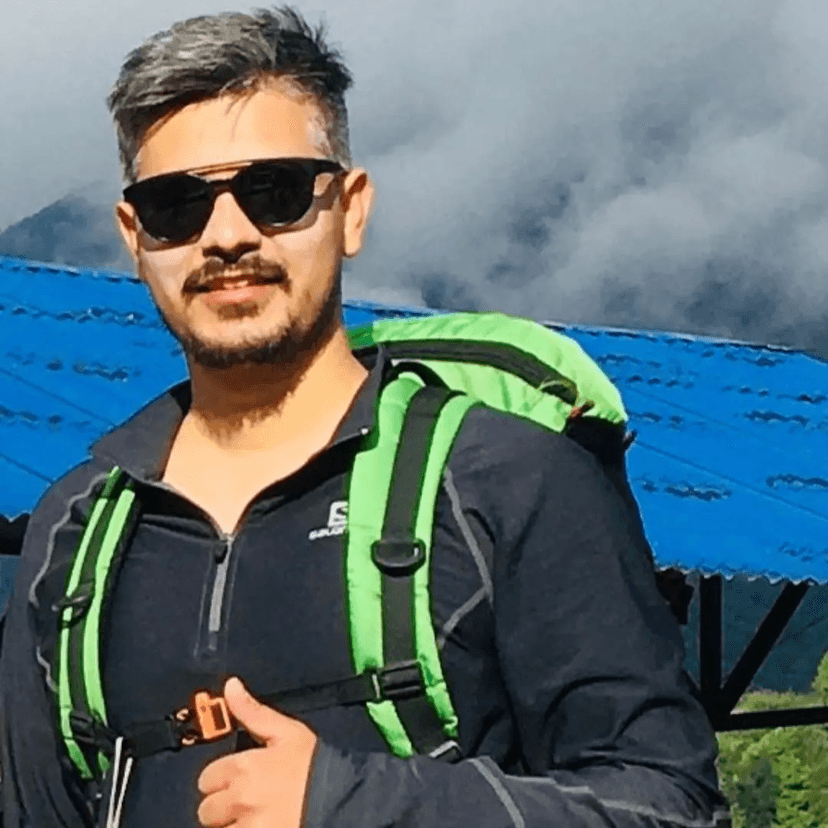
Amir Adhikari is the Founder and Trip Curator of Everest Thrill Trek and Expedition. With 10+ years of experience in Nepal’s competitive tourism sector, he is a recognized expert in designing safe, personalized, and high-thrill Himalayan itineraries. His dedication to responsible travel and creating authentic experiences has positioned Everest Thrill as a leading specialist for Everest, Annapurna, and off-the-beaten-path adventures.


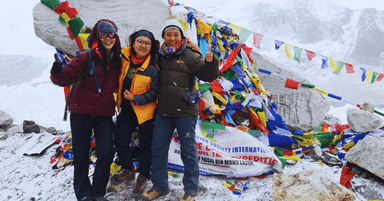
Private Everest Base Camp Trek Package (14 days)
USD 1366/per person