Date Updated:
Everest Base Camp (EBC) Trek Cost 2027/28 | Full Itemized Breakdown
Table of Contents
- Everest Base Camp Trek Cost: Quick Answer for 2027/28
- What Does the Everest Base Camp Trek Price Include and Exclude?
- Everest Base Camp Trek Cost Breakdown
- Nepal Visa: $30-$125
- Trekking Permits: Approximately $40-$45
- Lukla Flights: $430-$512 Round Trip
- International Flights to Kathmandu: $600-$1,800
- Accommodation on the Trail: $5-$150 per Night
- Food and Drinks: $25-$50 Per Day
- Guide and Porter: $45-$80 Per Day Combined
- Trek Insurance: $80-$350
- Gear and Equipment: $0-$600
- Guide and Porter Tips: $150-$300
- Budget, Standard, and Luxury: Which EBC Trek Price Level Fits You?
- Budget Everest Base Camp Trek: $950-$1,200
- Standard Everest Base Camp Trek: $1,250-$2,200
- Luxury Everest Base Camp Trek: $2,500-$5,000+
- How Much Does the Whole Trip to Everest Base Camp Cost? Four Real Scenarios
- Solo Budget Trekker from the UK: November
- Couple from the US/Canada: April
- Group of 4 from Australia: October
- Solo Luxury Trekker from Europe: April
- What Factors Change the Everest Base Camp Trek Cost?
- How Group Size Changes the Everest Base Camp Trek Price
- 12-Day vs 14-Day Everest Base Camp Trek Cost
- How the Season Changes the EBC Trek Cost
- Peak Season: April and October
- Shoulder Season: March and November
- Winter: December-February
- Monsoon: June-August
- Everest Base Camp Trek Cost by Month
- Hidden Costs on the Everest Base Camp Route
- Contingency Budget for Lukla Delays and Emergencies
- Cash, Cards and ATMs on the EBC Trek
- Local Nepal Agency vs International Tour Operator
- Frequently Asked Questions About Everest Base Camp Cost
- What is the Mount Everest Base Camp trek cost?
- What is the Everest Base Camp hike cost for a solo traveler?
- Is it cheaper to book with G Adventures or Intrepid vs a local Nepal agency?
- What is the last ATM before Everest Base Camp and how much cash should I carry?
- How much should I budget for Lukla flight cancellations?
- Is it worth hiring a porter or should I carry my own pack?
- Does the season I trek in affect my total budget significantly?
- Plan Your EBC Trek with Everest Thrill
The Everest Base Camp trek cost can range from around $950 for a basic guided package to $5,000 or more for a premium or luxury itinerary. However, the advertised trek price is only one part of your total Everest Base Camp trip budget.
The actual amount you spend depends on your trekking style, group size, season, accommodation, departure country, equipment and, most importantly, what is included in your trekking package.
For 2027/28, Everest Thrill's Everest Base Camp trek packages are broadly positioned in three price levels:
- Budget EBC Package: $950-$1,200
- Standard EBC Package: $1,250-$2,200
- Luxury EBC Package: $2,500-$5,000+
International airfare, Nepal visa, travel insurance, personal trekking equipment, tips, trail expenses, and contingency funds may be additional unless specifically included in your package.
Everest Base Camp Trek Cost: Quick Answer for 2027/28
For a standard 14-day guided Everest Base Camp trek, it helps to separate the package price from the total trip budget.
| Cost Level | Typical Package Cost | What It Generally Represents |
|---|---|---|
| Budget | $950-$1,200 | Solo open-group trekkers, shoulder season |
| Standard | $1,250-$2,200 | First-time international trekkers, couples, groups |
| Luxury | $2,500-$5,000+ | Private service, premium lodges, helicopter return option |
Important: These are package-price ranges. They should not be interpreted as the amount you will spend from the moment you leave home until you return.
So, how much does it cost to travel to Everest Base Camp?
A guided 14-day Everest Base Camp trek package typically costs around $950-$1,200 for budget trips, $1,250-$2,200 for standard trips, and $2,500-$5,000+ for luxury itineraries. For international travelers, the total trip budget is usually higher after adding international airfare, a Nepal visa, travel insurance, equipment, tips and personal expenses.
For 2027/28, Everest Thrill's published standard 14-day package for groups of 2-4 is $1,266-$1,366 per person, depending on the month. These are Everest Thrill's package prices, not general Nepal market averages.
What Does the Everest Base Camp Trek Price Include and Exclude?
The first thing to establish when comparing an EBC trek price is whether you are comparing like with like.
A typical standard package includes:
- Airport transfers in Kathmandu (arrival and departure)
- Domestic round-trip flights Kathmandu-Lukla (or Ramechhap-Lukla in peak season)
- Sagarmatha National Park Entry Permit (NPR 3000)
- Khumbu Pasang Lhamu Rural Municipality Permit (~$20-$25)
- Licensed, English-speaking guide (full trek duration)
- One porter per two trekkers
- 2 nights in a 3-star hotel in Kathmandu
- Teahouse accommodation throughout (twin sharing)
- Three meals per day on trail (breakfast, lunch, dinner)
- Government taxes and agency service fees
- First aid kit and basic emergency equipment
The exact inclusions vary between operators, so always request the complete itinerary and cost breakdown before paying.
Typically Excluded (Budget for These Separately):
- Nepal visa (on arrival, $30-$125 depending on duration)
- International flights to Kathmandu
- Travel insurance (non-negotiable, see insurance section below)
- Personal trekking gear and equipment
- Guide and porter tips ($150-$300 for a 14-day trek)
- Trail extras: Wi-Fi cards, hot showers, device charging, bottled water
- Alcoholic beverages and non-included snacks
- Contingency costs for Lukla flight delays
- Any pre- or post-trek Kathmandu hotel nights beyond the package
This distinction is important when comparing the Everest Base Camp trekking costs between companies. A cheaper headline price is not necessarily cheaper after all the exclusions are added.
Everest Base Camp Trek Cost Breakdown
The following figures show the individual expenses that make up the overall cost of trekking to Everest Base Camp.
Nepal Visa: $30-$125
Nepal offers a visa on arrival at Tribhuvan International Airport in Kathmandu.
The current options are:
- 15 days: $30
- 30 days: $50
- 90 days: $125
For a 12-14-day EBC itinerary, the 30-day visa is generally the practical option. It leaves time for Kathmandu before and after the trek and provides some flexibility if flights to or from Lukla are delayed.
Indian passport holders do not require a visa for Nepal.
Practical note: Bring two passport-sized photos and download the visa form from the Nepal immigration website to complete before you land; it meaningfully speeds up the arrival queue.
Trekking Permits: Approximately $40-$45
The Sagarmatha National Park Entry Permit costs approximately NPR 3000 for foreign nationals and NPR 1,500 for SAARC nationals.
The Khumbu Pasang Lhamu Rural Municipality Permit costs NPR 3,000.
The TIMS card is no longer required on the EBC route as of 2023. Permit regulations can change, so verify the current requirements before departure.
For travelers calculating the cost of trekking to Everest Base Camp, these permits should be treated as unavoidable baseline expenses unless your trekking package already includes them.
Lukla Flights: $430-$512 Round Trip
The Kathmandu-Lukla flights are one of the largest individual transportation costs on the trek.
For foreign nationals in 2027, return fares are approximately $430-$512 per person, depending on the season and route.
During peak periods, some flights operate through Ramechhap Airport, approximately 4-5.5 hours from Kathmandu by road, depending on conditions.
If your itinerary uses Ramechhap, allow an additional $25-$40 for the road transfer.
Another option is to travel overland to Salleri or Surke and begin trekking from there. This can save approximately $200-$300 per person, but adds 1-2 days to the journey.
International Flights to Kathmandu: $600-$1,800
For international travelers, the flight to Nepal can be one of the largest parts of the total Everest Base Camp hike cost.
Typical 2027 round-trip fares by departure origin are:
- From the US East Coast: $900-$1,400+
- From the UK: $700-$1,100+
- From Australia: $900-$1,500+
- From Western Europe: $600-$1,000+.
Flexible dates can make a significant difference, particularly during the spring and autumn trekking seasons.
Accommodation on the Trail: $5-$150 per Night
EBC trek teahouse prices rise as you gain altitude.
Typical standard accommodation costs are:
- Lower Khumbu (Phakding to Namche Bazaar): $5-$20 per night
- Mid-route (Namche to Dingboche): $10-$30 per night
- Upper route (Dingboche to Gorak Shep): $15-$40 per night.
Premium lodges in Namche Bazaar can cost up to $150 per night for private rooms with attached bathrooms.
One practical detail that first-time trekkers often discover only after reaching the Khumbu is that some teahouses keep room prices low when guests take their meals at the same lodge. During busy periods, eating elsewhere may result in an additional room charge of approximately $15-$30.
Food and Drinks: $25-$50 Per Day
Food becomes more expensive with altitude because supplies have to be transported into the upper Khumbu.
Budget approximately:
- Lukla to Namche: $25-$35 per day
- Tengboche to Gorak Shep: $35-$50 per day.
Dal Bhat is a practical choice throughout the route. It is filling, widely available, and typically costs $5-$8.
Water is another recurring expense. Bottled water can cost $3-$6 per liter at higher elevations.
A purification bottle or purification tablets can substantially reduce this expense.
Guide and Porter: $45-$80 Per Day Combined
A licensed guide costs approximately $25-$50 per day in 2027.
A porter costs approximately $20-$30 per day and carries a maximum of 20-25 kg.
For a solo trekker hiring one guide and one porter for 14 days, the combined staff expense, including food and accommodation, can reach approximately $550-$960.
For groups, these costs are shared across trekkers, which is one reason the per-person EBC trek cost falls as group size increases.
Trek Insurance: $80-$350
Insurance is a particularly important part of your budget because the route reaches 5,364m.
A standard travel policy may not cover trekking at this altitude or emergency helicopter evacuation.
Typical suitable policies cost:
- Basic altitude coverage: $80-$150
- Comprehensive coverage with evacuation to 6,000m+: $150-$350
Before buying a policy, confirm that it specifically covers trekking above 5,000m and emergency helicopter evacuation.
Travel insurance commonly used by international EBC trekkers includes World Nomads, True Traveller and SafetyWing, depending on nationality and policy eligibility.
Gear and Equipment: $0-$600
Your equipment cost depends largely on what you already own.
If you already have suitable hiking boots, waterproof outerwear and warm layers, your additional spending can be relatively low.
For someone starting from scratch, typical purchases include:
- Trekking boots: $100-$200
- A waterproof jacket: $100-$200
- And a down jacket: $150-$300
Sleeping bags, trekking poles, down jackets and other equipment can be rented in Thamel, Kathmandu.
A sleeping bag, down jacket and trekking poles rented for 14 days cost approximately $60-$100. Some trekking companies, including Everest Thrill, provide selected equipment free of charge.
Guide and Porter Tips: $150-$300
Tips should be included in your EBC trekking budget from the beginning.
Normally, hikers give:
- Guides: $15-$20 per day per group
- Porters: $10-$15 per day per porter
For a 14-day trek with one guide and one porter, a reasonable total tip budget is approximately $200-$300.
Tips are normally given in cash at the end of the trek.
Budget, Standard, and Luxury: Which EBC Trek Price Level Fits You?
The three main price categories provide different levels of service rather than three different versions of the mountain.
Budget Everest Base Camp Trek: $950-$1,200
The budget level provides the essential services needed for the trek:
- Licensed guide
- Porter
- Basic teahouse accommodation
- Shared facilities
- Standard meals
- Required permits
This is commonly where solo trekkers joining an open group departure fall.
A quotation should be checked carefully. Ask whether guide wages, porter services, permits, flights, accommodation or emergency arrangements have been excluded.
Standard Everest Base Camp Trek: $1,250-$2,200
This is the package level used by many first-time international trekkers.
Depending on availability, it can provide private or twin rooms, experienced guides, better meal choices, pre-booked teahouses during busy periods, and more comprehensive support.
A 14-day private Everest Base Camp trek costs approximately $1,250-$2,200 at this level.
A 12-day itinerary at the same quality level costs approximately $1,150-$1,800.
The lower price reflects fewer accommodation nights and fewer days of staff services, but the shorter itinerary also gives you less time for acclimatization.
Luxury Everest Base Camp Trek: $2,500-$5,000+
Luxury on the Everest Base Camp route means the highest available comfort at each stage. It does not mean five-star hotels throughout the route because those facilities do not exist above Namche Bazaar.
Luxury services can include:
- Premium lodges
- Private rooms and bathrooms where available
- Hot showers and Wi-Fi
- Private guide
- Higher meal selection
- Private transfers
- Helicopter return
A helicopter return from Gorak Shep costs approximately $700-$1,200 per person.
The walking route remains the same. The additional spending is primarily for comfort, privacy and logistics.
How Much Does the Whole Trip to Everest Base Camp Cost? Four Real Scenarios
The most useful way to understand the EBC trek cost is to look at complete examples.
Solo Budget Trekker from the UK: November
| Cost Item | Amount (USD) |
|---|---|
| Budget 14-day open-group trek | $1,100 |
| Return flights London-Kathmandu | $850+ |
| Nepal visa (30-day) | $50 |
| Travel insurance (World Nomads, altitude cover) | $130 |
| Gear (rented in Thamel for 14 days) | $90 |
| Trail extras (Wi-Fi, charging, hot showers, snacks) | $200 |
| Tips (guide + porter, 14 days) | $200 |
| Contingency buffer | $200 |
| Realistic All-In Total | $2,820+ |
November offers lower demand than the main autumn peak while still providing favorable trekking conditions in many years.
Couple from the US/Canada: April
| Cost Item | Per Person (USD) |
|---|---|
| Standard 14-day package | $1,500 |
| Return flights US East Coast-Kathmandu | $1,100+ |
| Nepal visa (30-day) | $50 |
| Travel insurance (World Nomads, comprehensive) | $160 |
| Gear (own boots + jacket; rent sleeping bag and poles) | $100 |
| Trail extras | $280 |
| Tips (shared guide + shared porter) | $150 |
| Contingency buffer | $250 |
| Realistic All-In Total Per Person | $3,590+ |
Traveling as a pair allows guide and accommodation costs to be shared.
Group of 4 from Australia: October
| Cost Item | Per Person (USD) |
|---|---|
| Standard package with 10% group discount | $1,350 |
| Return flights Australia-Kathmandu | $1,200+ |
| Nepal visa (30-day) | $50 |
| Travel insurance | $150 |
| Gear (mix of own and rented) | $80 |
| Trail extras | $280 |
| Tips (split 4 ways) | $100 |
| Contingency buffer | $200 |
| Realistic All-In Total Per Person | $3,410+ |
The larger group reduces the guide cost per person and qualifies for the stated package discount.
Solo Luxury Trekker from Europe: April
| Cost Item | Amount (USD) |
|---|---|
| Luxury 11-day package with private guide | $3,200 |
| Helicopter returns from Gorak Shep to Kathmandu | $1,000 |
| Return flights Western Europe-Kathmandu | $900+ |
| Nepal visa (15-day) | $30 |
| Travel insurance (comprehensive, evac to 6,000m) | $200 |
| Gear (own kit, quality equipment) | $0 |
| Trail extras (premium lodges, better meals) | $400 |
| Tips (private guide, porter, 11 days) | $300 |
| Contingency buffer | $300 |
| Realistic All-In Total | $6,330+ |
The private guide, premium services and helicopter return account for much of the difference from a standard group trek.
Note: The above mentioned international flight costs are approx. So, please do verrify it with the current flight cost before calculating the whole EBC trip cost.
What Factors Change the Everest Base Camp Trek Cost?
There is no single Everest Base Camp cost because the price is built from several variables. The most important ones are below.
- Group Size: Guide and porter costs can be shared among trekkers. A solo trekker pays the full guide cost, while two or four trekkers divide shared costs. Larger private groups may also qualify for package discounts.
- Trek Duration: A 12-day trek costs less than a 14- or 16-day itinerary because you pay for fewer nights of accommodation and fewer days of staff services.
- Season: April and October are peak months, so demand for flights, guides, porters, and teahouses is higher. Peak-season packages can cost 10-20% more than comparable shoulder-season packages.
- Trekking Style: Independent trekking can reduce the package component by approximately $400-$700, but you take responsibility for accommodation, permits, route decisions, altitude monitoring, and emergency arrangements. Guided trekking costs more but transfers those logistical responsibilities to an experienced local team.
- Comfort Level: Basic teahouses, shared facilities, standard meals, and open groups keep costs down. Private rooms, premium lodges, private guides, better meals, and helicopter transportation increase the total.
- Origin Country: International airfare is one of the largest differences between travelers. A trekker flying from Western Europe may spend $600-$1,000 on flights, while some routes from the US or Australia can cost $1,500 or more.
- Gear: Experienced hikers who already own suitable high-altitude equipment can keep this expense close to zero. First-time trekkers starting from scratch may spend $400-$600 purchasing essential equipment, although many items can be rented in Kathmandu.
How Group Size Changes the Everest Base Camp Trek Price
Group size is one of the most direct ways to reduce the per-person cost.
Two people can save approximately $200-$400 per person compared with traveling alone.
Groups of four or more can typically receive a 10-15% group discount from local agencies.
If you are traveling alone but do not want to pay the full private-guide cost, an open-group departure can provide another option. Our detailed guide for private and group joining Everest Base Camp trek helps you understand more clearly.
12-Day vs 14-Day Everest Base Camp Trek Cost
The length of the itinerary directly affects the price.
A standard 12-day Everest Base Camp trek costs approximately $1,150-$1,800.
A standard 14-day itinerary costs approximately $1,250-$2,200.
The shorter trip saves money because of two fewer nights of accommodation and two fewer days of staff services.
The difference is not only financial, however. A 14-day itinerary allows more time for acclimatization and recovery.
For first-time trekkers, the additional days can be important at high altitude.
How the Season Changes the EBC Trek Cost
The Everest Trek season affects accommodation demand, flights, guide availability and package pricing.
Peak Season: April and October
April and October are among the busiest trekking months.
Packages can cost 10-20% more than equivalent shoulder-season trips.
Shoulder Season: March and November
March and November generally have lower demand.
Teahouse prices can be 15-25% lower, and flight and accommodation availability can be easier.
Winter: December-February
Winter packages are less expensive, but cold temperatures mean you may need additional cold-weather equipment.
Monsoon: June-August
Prices are lower, but rain, cloud and flight disruptions can affect the journey.
Everest Base Camp Trek Cost by Month
| Month | Everest Thrill's Package Price | Typical Trekking Demand |
|---|---|---|
| January | $1266/person | Very Low |
| February | $1266/person | Very Low |
| March | $1366/person | Low-Moderate |
| April | $1366/person | Very High |
| May | $1366/person | High |
| June | $1266/person | Very Low |
| July | $1266/person | Very Low |
| August | $1266/person | Very Low |
| September | $1366/person | Low-Moderate |
| October | $1366/person | Very High |
| November | $1366/person | Moderate |
| December | $1266/person | Very Low |
Pricing note: These are Everest Thrill's package prices for a standard 14-day Everest Base Camp trek for groups of 2-4. Actual prices may change based on group size, departure date, availability, accommodation, inclusions and booking date.
Hidden Costs on the Everest Base Camp Route
Even when the main package is paid, small expenses can accumulate during 12-14 days on the trail.
Typical costs include:
- Wi-Fi cards: $3-$7
- Device charging: $2-$5
- Hot showers: $3-$8
- Bottled water: $3-$6
- Snacks and energy bars: $3-$7
- Extra hot drinks beyond included meals: $2-$4
- Laundry: $3-$6
A realistic 14-day trail-extra budget is:
| Spending Level | 14-Day Trail Extras Total |
|---|---|
| Low-spending trekker | $150-$200 |
| Average trekker | $250-$350 |
| Comfort-oriented trekker | $400-$500 |
For the upper trail, carrying $300-$500 in cash beyond your package cost is a practical approach.
Contingency Budget for Lukla Delays and Emergencies
Weather-related flight disruptions at Lukla Airport are a normal consideration when planning an EBC trip.
A cancelled Lukla flight can result in additional nights in Lukla or Kathmandu, additional meals, transportation costs, or changes to an international flight.
Set aside approximately $200-$300 per person as a contingency.
It is also sensible to leave 1-2 buffer days between your planned return from the mountains and your international flight.
A high-altitude medical emergency can create a much larger expense without insurance. Helicopter evacuation from above 4,000 m can cost approximately $3,000-$8,000 without suitable insurance
Cash, Cards and ATMs on the EBC Trek
The last reliable ATM on the route is in Namche Bazaar at 3,440m.
Above Namche, do not depend on ATMs or card payments.
For the upper part of a trek, withdraw the equivalent of approximately $300-$500 in Nepali rupees before leaving Namche.
You can use this for:
- Additional food and drinks
- Wi-Fi
- Showers
- Charging
- Snacks
- Tips
- Other personal expenses
USD is widely accepted as a backup, although the exchange rate may be less favorable.
In Kathmandu, licensed money exchanges in Thamel generally offer better rates than airport exchange counters.
Local Nepal Agency vs International Tour Operator
The company you book through can make a substantial difference to your package price.
A standard 14-day package from a reputable local EBC trek operator typically costs $1,100-$1,800 depending on group size, season, accommodation and inclusions.
International operators can also fall within the broader mid-range of EBC trekking prices. The higher international price can cover centralized booking, international customer support and brand infrastructure.
A direct local booking can provide:
- Direct communication with the Kathmandu operations team
- More flexibility with the itinerary
- Local logistical support
- Faster communication when conditions change
- Direct access to the team actually operating the trek
When comparing companies, focus on complete inclusions rather than the advertised package price alone
Frequently Asked Questions About Everest Base Camp Cost
What is the Mount Everest Base Camp trek cost?
A guided Everest Base Camp trek package costs approximately $950-$1,200 for budget trips, $1,250-$2,200 for standard trips, and $2,500-$5,000+ for luxury trips.
For an international traveler (depending on their origin), the complete trip can cost approximately $2,000-$7,500 after adding flights, visa, insurance, gear, tips and personal expenses.
What is the Everest Base Camp hike cost for a solo traveler?
A solo trekker generally pays more because the guide cost is not shared. A standard solo package is approximately $1,500-$1,700 per person.
Is it cheaper to book with G Adventures or Intrepid vs a local Nepal agency?
When comparing a local Nepal agency with an international operator, compare the actual inclusions: flights, permits, accommodation, meals, guides, porters, transfers, group size, support, cancellation terms and emergency arrangements. A lower headline price can reflect fewer inclusions rather than a fundamentally different trek.
What is the last ATM before Everest Base Camp and how much cash should I carry?
The last reliable ATM on the EBC route is in Namche Bazaar at 3,440m. Above Namche, ATM and card-payment options become very limited, so trekkers should carry enough Nepali rupees for the upper trail.
Tips: You can withdraw NPR equivalent to $300-$500 in Kathmandu or Namche for your personal expenses. USD is also accepted at most teahouses, but exchange rates are low.
How much should I budget for Lukla flight cancellations?
Set aside $200-$300 per person for possible Lukla flight delays or cancellations. An extra night in Lukla or Kathmandu may cost $20-$80, plus meals and other expenses.
It is also wise to keep 1-2 buffer days before your international flight to allow for weather-related delays.
Is it worth hiring a porter or should I carry my own pack?
Many trekkers choose to hire a porter. A porter costs $20-$30 per day and carries your main pack (up to 20-25 kg), leaving you with a light daypack for water, snacks, and layers.
Over 14 days, this adds $250-$420 to your Everest Base Camp trekking price, and it meaningfully reduces physical strain at altitude, lowers injury risk, and directly supports employment in Khumbu communities. Many trekkers prefer using a porter because carrying a lighter daypack can make the long walking days more manageable, particularly at higher elevations.
Does the season I trek in affect my total budget significantly?
Yes, and the impact is quantifiable. Peak season packages (April, October) run 10-20% higher than shoulder season equivalents.
March and November can offer lower prices and fewer crowds than the busiest spring and autumn periods, although weather conditions can be less predictable.
Winter (December-February) has the lowest prices but requires additional cold-weather gear investment that narrows the savings.
Monsoon (June-August) is the cheapest, but flight disruptions at Lukla and trail conditions make it unsuitable for most trekkers.
Plan Your EBC Trek with Everest Thrill
Everest Thrill is a Kathmandu-based trekking operator with more than a decade of experience organizing Everest Base Camp treks across different seasons, group sizes and service levels.
Our approach to pricing is straightforward: the inclusions and exclusions are clearly provided before you pay a deposit, so you can see what the quoted package covers and what you need to budget separately.
Whether you are planning a solo open-group trek, a private trip for two, a group departure or a more comfortable itinerary, the package can be planned around your dates, group size and preferred level of service.
Explore our Everest Base Camp trek package or contact us for a personalized cost breakdown.
About Author
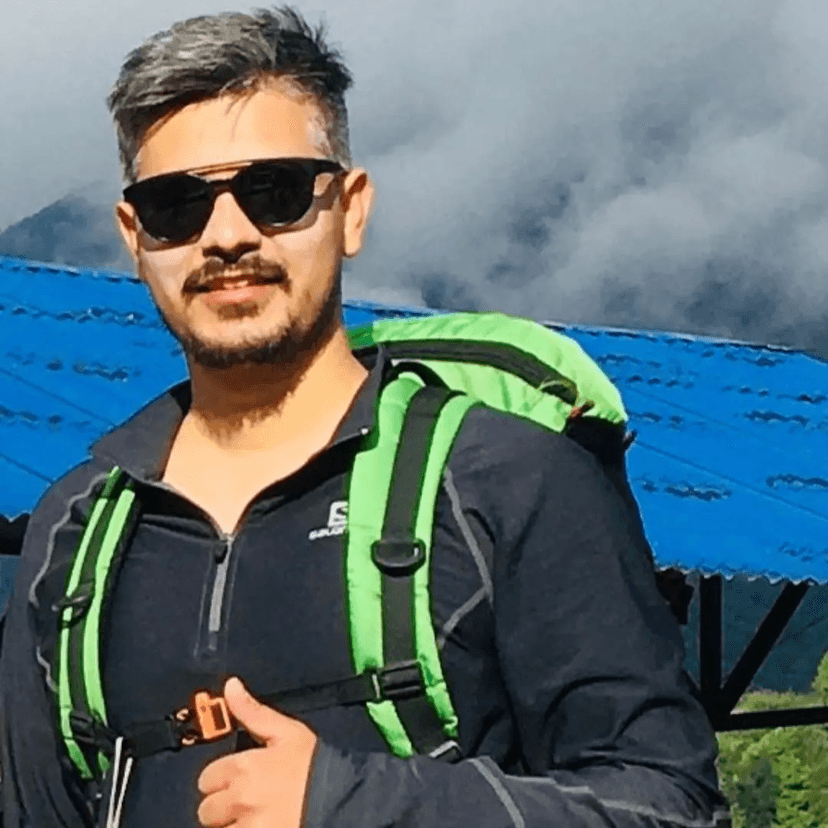
Amir Adhikari is the Founder and Trip Curator of Everest Thrill Trek and Expedition. With 10+ years of experience in Nepal’s competitive tourism sector, he is a recognized expert in designing safe, personalized, and high-thrill Himalayan itineraries. His dedication to responsible travel and creating authentic experiences has positioned Everest Thrill as a leading specialist for Everest, Annapurna, and off-the-beaten-path adventures.


Private Everest Base Camp Trek Package (14 days)
USD 1366/per person