Winter Trekking in Nepal | Best Treks, Weather & Practical Guide
Table of Contents
- Is Winter a Good Time to Trek in Nepal?
- Which Treks Work Well in Winter?
- Ghorepani Poon Hill in Winter
- Langtang Valley in Winter
- Everest View Trek in Winter
- Mardi Himal in Winter
- Annapurna Base Camp in Winter
- High-Pass Treks in Winter
- What Changes When You Trek Nepal in Winter?
- Ice can be more difficult than snow
- Snow changes walking time
- Mornings and afternoons feel different
- Lodges matter more in winter
- Water can freeze
- Daylight affects the itinerary
- The itinerary needs room to change
- December, January or February: What Is Winter Like?
- Trekking in Nepal in December
- Trekking in Nepal in January
- Trekking in Nepal in February
- What We Check Before and During a Winter Trek
- What to Pack for Winter Trekking in Nepal
- Essential winter trekking equipment
- Equipment that depends on the route
- Your sleeping bag matters
- Can You Trek in Nepal Without a Guide/Porter in Winter?
- Winter Trekking in Nepal Cost
- When Winter Trekking May Not Suit You
- Winter Trekking in Nepal FAQs
- Is winter trekking in Nepal safe?
- Which is the best winter trek in Nepal?
- Is January too cold for trekking in Nepal?
- Does it snow on Nepal's trekking routes in winter?
- Can you trek to Everest Base Camp in winter?
- Are teahouses open during winter?
- Do I need special equipment for winter trekking?
- Our Practical Advice for Winter Trekking in Nepal
Winter changes trekking in Nepal in ways that are easy to underestimate until you are actually on the trail.
A stone staircase that feels comfortable in autumn can be slippery after a freezing night. Fresh snow can cover uneven ground and make a familiar section much slower. A sunny afternoon may feel pleasant while walking, but the same temperature can feel very different once you stop at a lodge.
Winter also brings something many trekkers appreciate: quieter trails, cold and clear mountain air, and mornings when the peaks can appear exceptionally sharp.
December, January and February are the main winter months for trekking in Nepal. Conditions get colder as you gain elevation, but the important question isn't simply how cold it will be.
It is how the altitude, terrain, snow, ice, exposure and available daylight will affect the particular trek you are planning.
From our experience organizing treks in Nepal, winter is best approached as a different trekking season rather than simply a colder version of autumn.
Is Winter a Good Time to Trek in Nepal?
Yes, provided you choose the route according to the conditions you are prepared to handle.
Winter can work very well for trekkers who prefer quieter trails and do not mind cold mornings and nights. Many lower and moderate-altitude routes remain practical, while higher sections require more preparation and flexibility.
Winter becomes more demanding as you gain altitude. Snow can slow the trail, shaded sections can remain icy, and high passes can become difficult or unsuitable after significant snowfall or poor weather.
Winter trekking is a good option if you are prepared to:
- Start cold mornings sensibly
- Walk more slowly when snow or ice affects the trail
- Carry appropriate insulation and footwear
- Allow some flexibility in the itinerary
- Adjust plans when mountain conditions change
One point we always consider when planning a winter trek is simple:
A route that works well in October does not necessarily behave the same way in January
Which Treks Work Well in Winter?
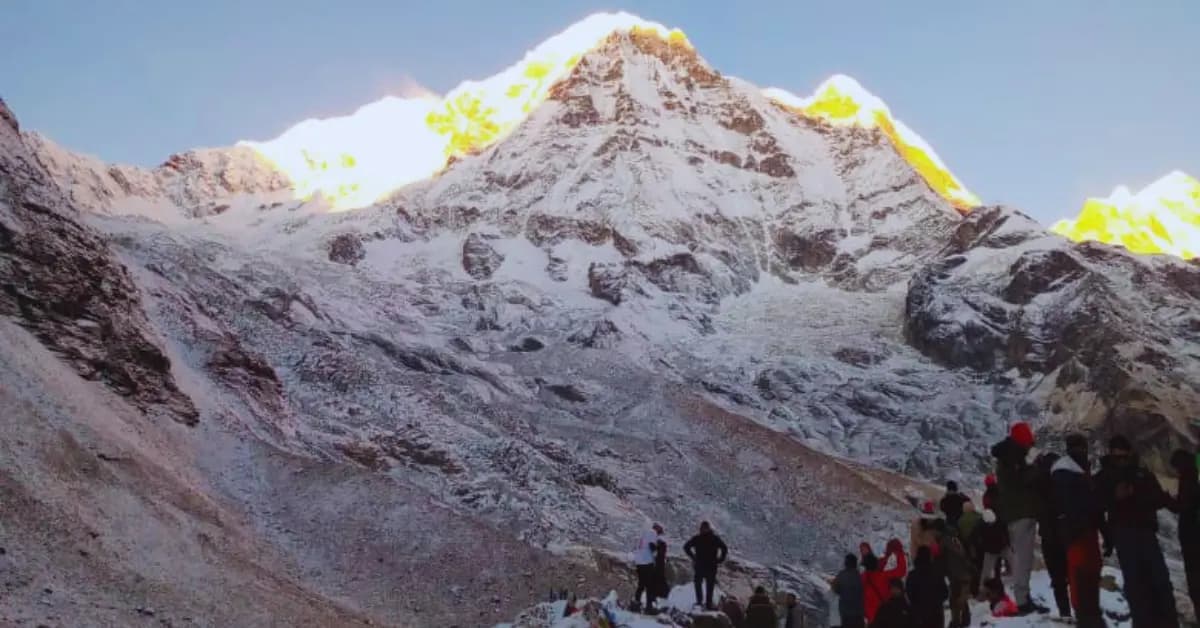
There is no single winter trek that suits everyone. The more useful comparison is how each route behaves when temperatures fall and snow or ice becomes part of the trail.
| Trek | Approx. highest point | Winter conditions | Main consideration |
|---|---|---|---|
| Ghorepani Poon Hill Trek | 3,210 m | Cold mornings, possible ice and snow | Stone steps and early starts |
| Langtang Valley Trek | Around 3,880 m | Colder upper valley, possible snow | Increasing altitude and snow |
| Everest View Trek | Around 3,880 m | Cold alpine conditions | Altitude and exposure |
| Mardi Himal Trek | Around 4,500 m | More exposed and wintry higher up | Snow, ice and visibility |
| Annapurna Base Camp Trek | Around 4,130 m | High-altitude winter conditions | Cold and snow |
| High-pass routes | Often above 5,000 m | Serious winter terrain | Pass conditions and weather |
Ghorepani Poon Hill in Winter
The Ghorepani Poon Hill Trek has a relatively moderate maximum altitude, but winter still changes the trail.
The stone steps around Ghorepani can become icy after cold nights, particularly where the trail remains shaded. Early starts can also be very cold before the sun reaches the walking route.
The advantage is that you can experience a genuine winter mountain environment without spending several consecutive days at very high altitude.
That makes the route particularly practical when the aim is to experience winter conditions without making altitude the main challenge.
Langtang Valley in Winter
The Langtang Valley Trek gradually changes character as you move higher.
The lower valley passes through forests and villages before becoming increasingly alpine toward Kyanjin Gompa.
In winter, snow becomes more likely in the upper valley and can change both the appearance of the trail and the amount of time needed to cover familiar sections.
The lower valley and upper valley should not be treated as having identical winter conditions. Elevation makes a noticeable difference.
Everest View Trek in Winter
The Everest View Trek provides a shorter way to experience the Khumbu and see Everest without following the full Everest Base Camp itinerary.
The route still reaches significant altitude, so cold and altitude need to be considered together.
On clear winter mornings, the mountain views can be excellent. But clear weather should never be treated as guaranteed, particularly when planning an itinerary around higher sections.
Note: The Everest Base Camp trek and Gokyo Lake trek can be done if you are an experienced hiker and the weather permits.
If the purpose of the trek is to experience the Khumbu landscape and mountain views rather than reach Base Camp, there is no need to add extra days simply for the sake of distance.
Mardi Himal in Winter
The Mardi Himal Trek becomes noticeably more demanding in winter as you approach the higher sections.
The terrain is more exposed, while snow and ice can make the trail slower and more difficult to read. Poor visibility adds another consideration on exposed sections.
This is a route where the actual condition of the upper trail matters more than a standard itinerary written for the main trekking seasons.
If winter weather has changed the trail, the walking plan may need to change with it.
Annapurna Base Camp in Winter
The Annapurna Base Camp Trek reaches around 4,130 meters, so winter conditions become more serious in the upper sections.
Snow and cold can affect walking speed, sleeping conditions and how long you comfortably remain outside.
The most useful approach is to keep some flexibility in the itinerary. Reaching Base Camp safely matters more than reaching it according to an inflexible timetable.
High-Pass Treks in Winter
High-pass routes require a different level of winter planning.
At elevations above 5,000 meters, fresh snowfall, strong winds or poor visibility can change the conditions of a pass considerably.
A pass that is manageable in stable weather may require waiting or a route adjustment after a significant change in conditions.
For this reason, a high-pass itinerary should be treated as a plan rather than a promise.
The actual mountain conditions decide whether the pass is crossed.
What Changes When You Trek Nepal in Winter?
This is where winter differs most from trekking in autumn.
The route may be the same, but the way you walk it can be very different.
Ice can be more difficult than snow
Snow is easy to notice.
Ice can be hidden.
Shaded stone steps may remain frozen while exposed sections have already softened in the sun. This is particularly noticeable during early morning starts.
Good trekking boots help, but careful foot placement and a slower pace are equally important.
Snow changes walking time
A section that normally takes three hours may take considerably longer after snowfall.
Snow can cover rocks and uneven ground, making both ascents and descents slower.
This is why winter trekking itineraries need some margin rather than assuming every day will run according to the standard walking time.
Mornings and afternoons feel different
You may leave the lodge feeling extremely cold, become comfortable after an hour of uphill walking and then feel cold again as soon as you stop.
This makes layering particularly useful.
You can adjust your clothing as your body temperature changes instead of walking in all your warm layers from the beginning.
Lodges matter more in winter
During warmer months, a basic room may be perfectly adequate.
In winter, being able to warm up in the dining area, dry clothing and sleep comfortably becomes much more important.
The quality and availability of accommodation can therefore have a greater effect on the experience than many first-time winter trekkers expect.
Water can freeze
At higher elevations, freezing temperatures can affect water bottles overnight.
It is not a major problem when anticipated, but it can become inconvenient when you discover that part of your water supply has frozen in the morning.
Daylight affects the itinerary
Winter is not the season for repeatedly finishing long walking days after sunset.
A sensible itinerary aims to reach the lodge while there is still daylight and leaves enough time for slower sections.
The itinerary needs room to change
A winter itinerary should have some breathing room.
Snowfall, difficult trail conditions or transport delays can affect the schedule. This is particularly important on routes involving high passes or higher-altitude sections.
A spare day can sometimes be more useful than another item in your backpack.
December, January or February: What Is Winter Like?
The three winter months are not identical, but elevation can make a bigger difference than the calendar.
| Month | General winter character | What to keep in mind |
|---|---|---|
| December | Winter becomes established | Higher sections may already have snow |
| January | Deep winter conditions | Cold mornings and frozen sections |
| February | Still winter, with spring approaching later | High routes can remain snowy |
Trekking in Nepal in December
December can be a practical time for trekkers who want genuine winter conditions without specifically choosing the coldest part of the season.
Lower sections may remain relatively manageable, while higher parts can already feel properly wintry.
Do not judge the mountain conditions from Kathmandu or Pokhara. Conditions change considerably as you gain elevation.
Trekking in Nepal in January
January is when the cold becomes harder to ignore.
Early morning starts can be particularly uncomfortable, and shaded trail sections may remain frozen after sunrise.
Good scheduling matters. Starting at a sensible time, maintaining a steady pace and reaching the lodge before late afternoon can make a noticeable difference.
Trekking in Nepal in February
February is still winter, particularly at higher elevations.
Lower areas can begin showing signs of spring later in the month, but higher routes may continue to have snow and freezing conditions.
Do not assume that February means spring conditions everywhere. Check the actual situation on the route you plan to trek.
What We Check Before and During a Winter Trek
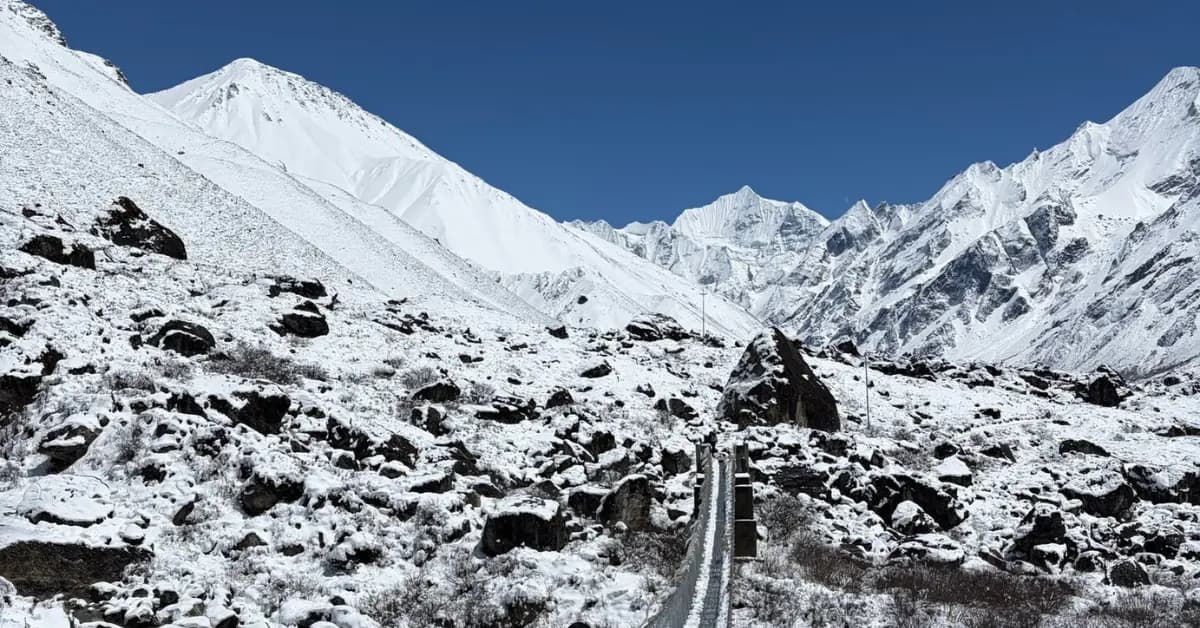
A winter trek cannot always be managed from a fixed itinerary prepared months in advance.
Before and during the trek, an experienced local team needs to pay attention to the conditions actually developing on the route.
This includes:
- Ice on shaded trail sections
- Recent snowfall and its effect on walking time
- Whether the next lodge is operating
- Whether trekkers can reach the lodge before dark
- Conditions on higher sections
- Weather and visibility around high passes
- Whether the following day's itinerary still makes sense
These details can change the practical difficulty of a day's walk.
That is why local experience becomes particularly useful in winter. The job is not simply to follow the itinerary. It is to recognize when the itinerary needs to adapt.
What to Pack for Winter Trekking in Nepal
The aim is not to carry everything you own.
It is to carry the right equipment for the altitude, route and expected conditions.
Essential winter trekking equipment
- Warm base layers
- Insulating mid-layer
- Warm insulated jacket
- Waterproof and windproof outer layer
- Warm gloves
- Hat or beanie
- Proper trekking boots
- Warm sleeping bag suitable for expected conditions
- Headlamp
- Sunglasses
- Sunscreen
- Water bottles
- Personal medication
- Basic first-aid supplies
Equipment that depends on the route
Depending on snowfall and trail conditions, you may also need:
- Gaiters
- Trekking poles
- Traction equipment
- Extra insulation
- Spare gloves
Do not buy specialist equipment simply because the itinerary says “winter.”
The useful question is what the actual route conditions require.
Your sleeping bag matters
Many trekkers focus on staying warm while walking and underestimate the night.
You generate body heat while climbing. You generate much less while lying still for several hours.
A suitable sleeping bag can therefore make a major difference to your comfort.
Can You Trek in Nepal Without a Guide/Porter in Winter?
There are two separate questions here: what current regulations require and what is practical in winter.
Trekking regulations can change, and the requirements for licensed guides and porters can vary by route. Check the current requirements for your particular trek before travelling.
From a practical perspective, winter makes local knowledge more valuable.
A guide who regularly works on a route may notice things that are not obvious to a first-time visitor:
- An icy staircase requiring extra care
- A lodge that is not operating
- Snow that has changed the expected walking time
- Weather that requires a change to the day's plan
- A high section that is no longer suitable under the current conditions
A good winter guide should not simply keep you moving toward the destination.
They should also know when the plan needs to change.
Winter Trekking in Nepal Cost
Winter does not automatically make trekking in Nepal cheaper.
The total cost depends on the route, duration, transportation, permits, accommodation, guide and porter services, meals and equipment.
| Expense | What affects the cost |
|---|---|
| Guide | Number of trekking days and service level |
| Porter | Duration and luggage |
| Permits | Route and nationality |
| Accommodation | Route, altitude and lodge |
| Meals | Duration and location |
| Transportation | Trailhead and finishing point |
| Equipment | What you already own or rent |
| Extra days | Weather, trail and transport delays |
One cost that is easy to overlook is contingency time.
An additional day may seem unnecessary when planning the trek. It becomes useful when snowfall, transport disruption or difficult trail conditions change the schedule.
When calculating your winter trekking cost, consider not only the planned itinerary but also what happens if the trek takes one additional day.
When Winter Trekking May Not Suit You
Winter is not automatically the right season for every trekker if:
- You strongly dislike cold nights: If cold weather is likely to dominate your experience, another season may suit you better.
- Your route depends on a high pass: High passes require flexibility. If conditions become unsuitable, waiting or changing the route may be necessary.
- Your schedule is extremely tight: A high-altitude winter trek with no spare time leaves very little room for weather or trail delays.
- You have never walked on snow or ice: You do not need mountaineering experience for every winter trek. But your first experience on snow and ice should be matched to an appropriate route rather than a remote high pass.
- Actual conditions have changed: This is the most important consideration. If the trail is substantially different from what was expected, change the plan. Turning around is not failing a trek. Sometimes it is the most experienced decision you can make.
Winter Trekking in Nepal FAQs
Is winter trekking in Nepal safe?
It can be done, provided the route matches your experience and you have suitable equipment, preparation and current information about trail conditions. Higher elevations and high passes require considerably more caution.
Which is the best winter trek in Nepal?
There is no single best winter trek for everyone. The useful question is how much altitude, cold, snow and exposure you are prepared to handle. Poon Hill has a lower maximum altitude; Langtang combines valley and alpine sections, Everest View focuses on the Khumbu, while Mardi Himal and Annapurna Base Camp involve more demanding winter conditions.
Is January too cold for trekking in Nepal?
Not necessarily. January is very cold at higher elevations, but prepared trekkers can still enjoy suitable routes. Sleeping altitude, weather and trail conditions matter more than the month alone.
Does it snow on Nepal's trekking routes in winter?
Yes, snow is possible, particularly at higher elevations. The amount varies between routes, elevations and individual winters.
Can you trek to Everest Base Camp in winter?
Yes, the Everest Base Camp Trek in winter is possible. It should be treated as a high-altitude winter trek, with cold temperatures, snow, shorter daylight and changing trail conditions taken into account.
Are teahouses open during winter?
Many trekking routes continue to have accommodation during winter, but individual lodge operations can vary by location and season. Confirm accommodation arrangements rather than assuming every lodge operates exactly as it does during peak trekking months.
Do I need special equipment for winter trekking?
It depends on the route. Lower winter treks may require good insulation, suitable footwear and a warm sleeping bag. Higher and snowier routes may require gaiters, trekking poles, traction equipment and additional insulation.
Our Practical Advice for Winter Trekking in Nepal
If this is your first winter in the Nepal Himalaya, do not measure the success of the trek by how high you climb.
A route with manageable altitude, good mountain views and enough time to respond to changing weather can be far more rewarding than an ambitious itinerary that leaves you rushing toward a pass or arriving at a lodge after dark.
If you already have high-altitude trekking experience and the right equipment, winter can show you a quieter side of Nepal. The trails are generally less busy, the mornings can be exceptionally clear, and the mountains have a different atmosphere.
But winter rewards judgment.
Choose the route for the conditions you are likely to encounter, not the route you would choose in October.
About Author
Amir Adhikari is the Founder and Trip Curator of Everest Thrill Trek and Expedition. With 10+ years of experience in Nepal’s competitive tourism sector, he is a recognized expert in designing safe, personalized, and high-thrill Himalayan itineraries. His dedication to responsible travel and creating authentic experiences has positioned Everest Thrill as a leading specialist for Everest, Annapurna, and off-the-beaten-path adventures.