Top 10 Reasons to Choose the Everest Base Camp Trek
Table of Contents
- 1. An Adventurous Flight To Lukla (Tenzing-Hillary Airport)
- 2. Astonishing Sceneries and UNESCO Biodiversity
- 3. Venturesome Hiking to Kala Patthar (5,550m)
- 4. Exploration of Sherpa Culture and Teahouse Hospitality
- 5. Mesmerizing View of Everest Base Camp – The Foot of the World
- 6. The Vibrant Hub of Namche Bazaar: The Sherpa Capital
- 7. Crossing the Iconic High Suspension Bridges
- 8. Spiritual Peace at Tengboche Monastery
- 9. The Ultimate Test of Physical and Mental Grit
- 10. Unrivaled Astrophotography and Night Skies
- Conclusion
- Ready to Begin Your Himalayan Adventure?
- Frequently Asked Questions
For adventure seekers, the Everest Base Camp (EBC) trek in the Khumbu region is one of the most iconic adventures in the world.
Known for its breathtaking Himalayan scenery, Sherpa culture, and the challenge of high-altitude trekking in Nepal 2026, this journey leads you through Sagarmatha National Park up to the famous Everest Base Camp altitude of 5,364 meters.
Most travelers complete the Everest Base Camp trek 14 days itinerary, which includes acclimatization days for safe altitude gain.
1. An Adventurous Flight To Lukla (Tenzing-Hillary Airport)
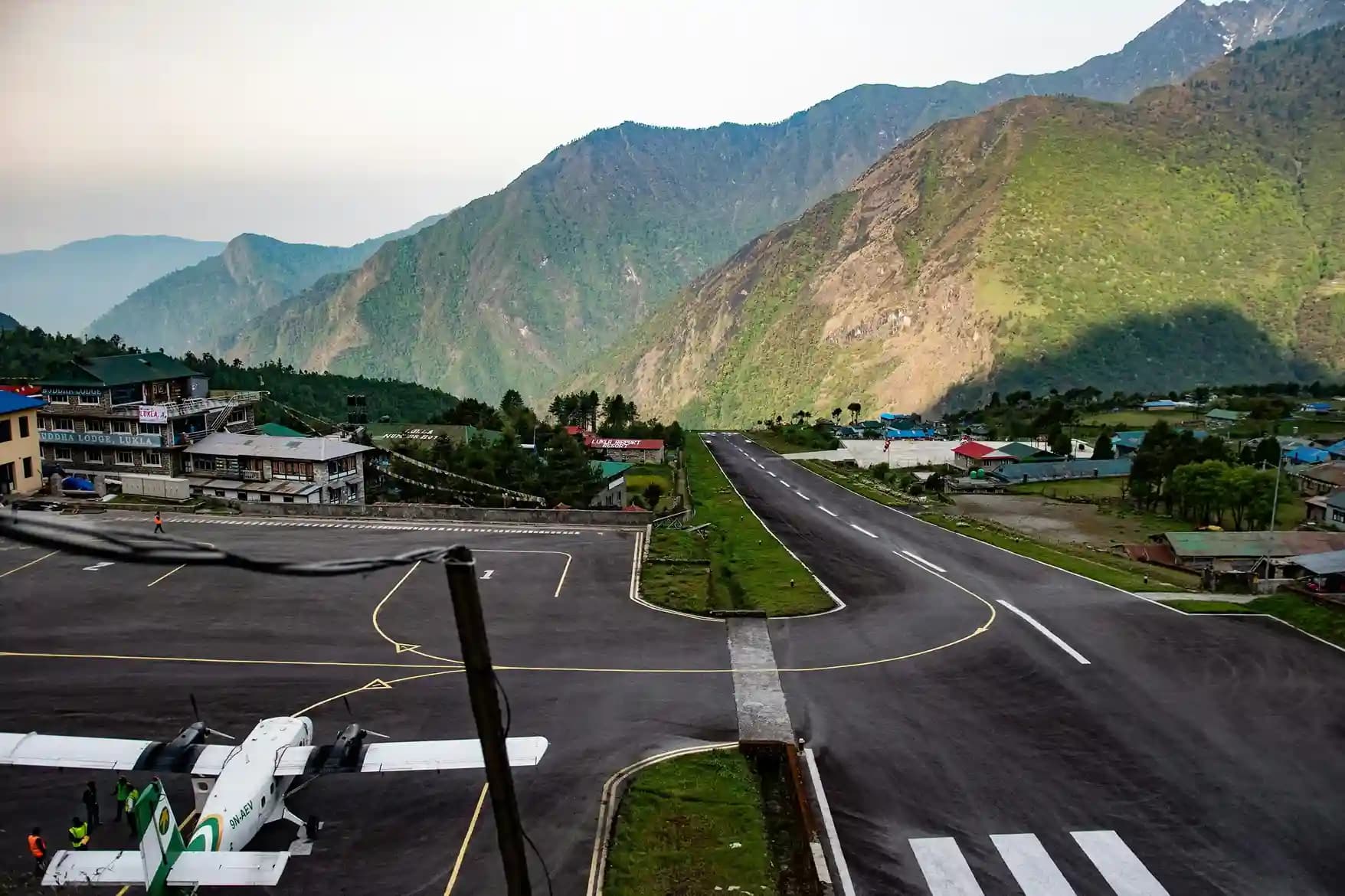
The adventure begins with the famous Lukla flight, one of the most thrilling starts to the Everest Base Camp trek 14 days itinerary, landing at Lukla Airport.
- The Technical Feat: Boarding a small 16-seater Twin Otter or Dornier plane, you embark on a 35-minute journey that offers a cinematic preview of the jagged, snow-capped giants you are about to encounter. The runway is perched on a literal mountainside at 2,860 meters. It is famously short (only 527 meters), tilted at a 12% gradient to assist deceleration, and ends abruptly with a steep drop-off into the valley below.
- The Adrenaline Hit: The precision required for landing here is world-class. As the pilot maneuvers through narrow mountain passes, the moment the wheels touch down on that narrow strip of asphalt, the adrenaline hit is immediate. It is the ultimate "welcome to the mountains" moment that perfectly sets the high-stakes tone for the rest of your expedition.
2. Astonishing Sceneries and UNESCO Biodiversity
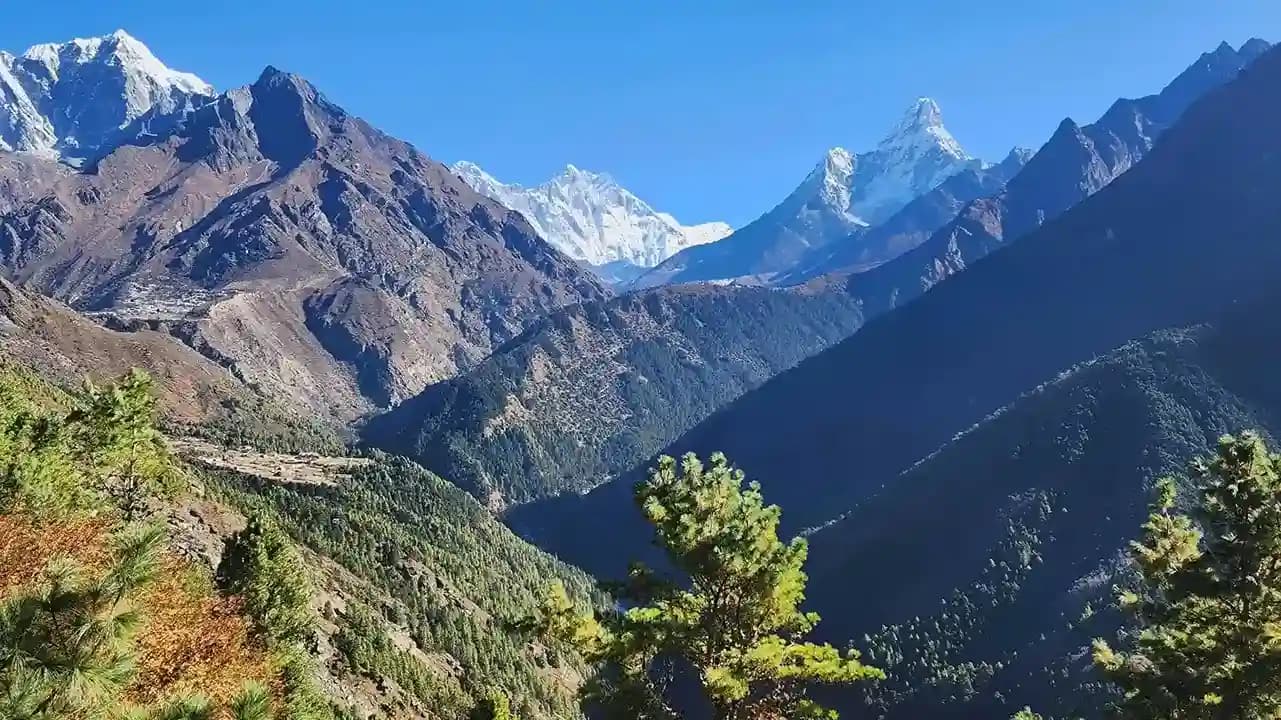
The EBC trek is a visual symphony that evolves with every step you take.
Your journey takes you through the heart of Sagarmatha National Park, a UNESCO World Heritage site that protects a fragile and unique ecosystem.
- Diverse Eco-Zones: The trail begins in lush, temperate lowlands where you cross swaying suspension bridges like the famous Hillary Suspension Bridge draped in colorful prayer flags. As you gain altitude, the landscape undergoes a dramatic transformation:
- Alpine Forests: You’ll wander through towering forests of rhododendron (the national flower of Nepal), birch, and giant pines. These woods are often home to rare wildlife such as the Red Panda, Himalayan Tahr, and the vibrant Danphe (Impeyan Pheasant).
- The High Desert: Above the tree line (roughly 4,000m), the air thins, and the greenery gives way to a rugged, moon-like terrain. Here, only the toughest shrubs and mosses survive against the biting winds.
- Glacial Moraines: As you approach the Base Camp, you enter a world of raw rock and ancient ice. The Khumbu Glacier, the highest glacier on Earth stretches out beside you, creating a landscape so alien and vast it makes you feel like you've stepped onto another planet.
3. Venturesome Hiking to Kala Patthar (5,550m)
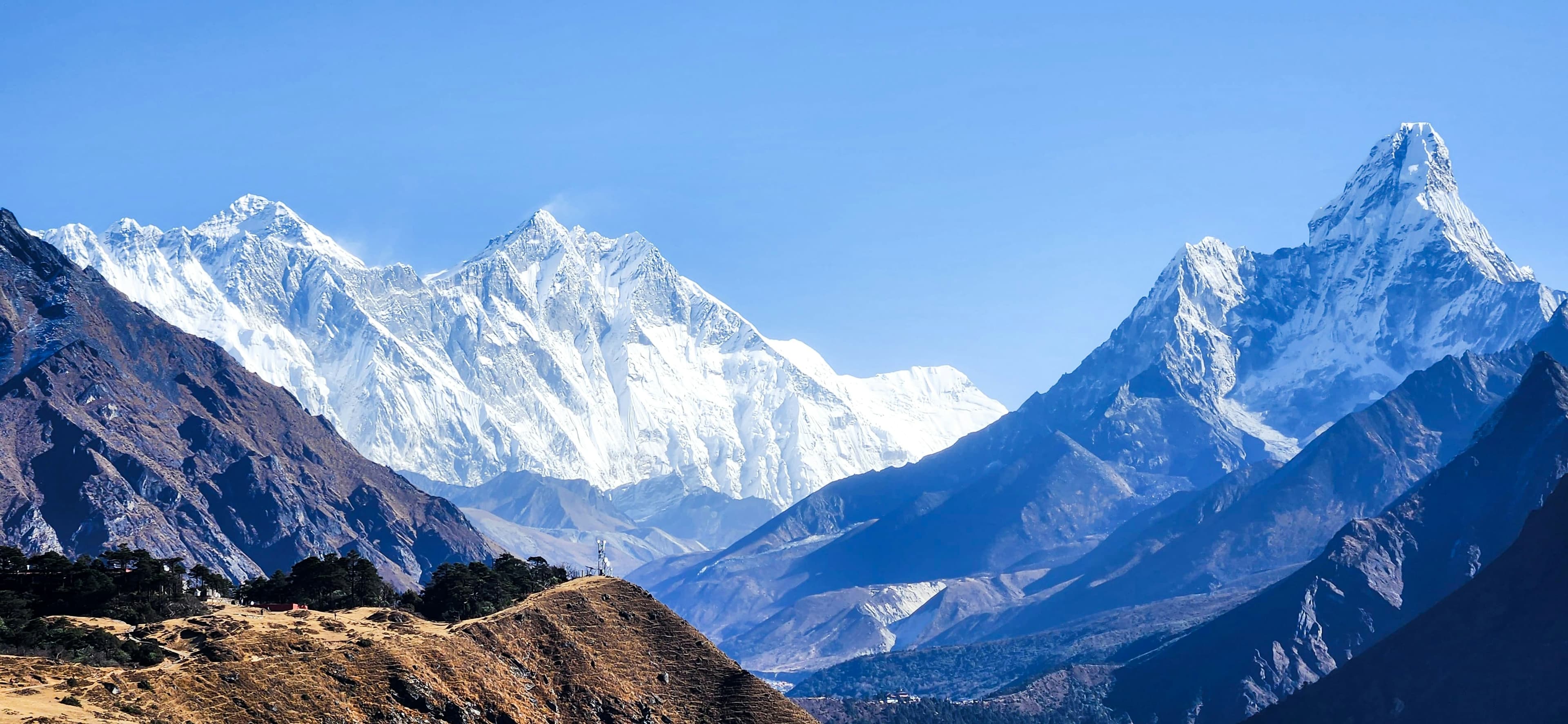
While reaching the Base Camp is the technical goal, Kala Patthar is the emotional and photographic crescendo of the entire trek.
Due to the massive scale of the surrounding peaks, the actual summit of Mount Everest is largely hidden behind the Lhotse-Nuptse ridge when you are standing at the Base Camp itself.
Kala Patthar is the highest viewpoint of the trek and offers the closest visual experience of Mount Everest and the Everest base camp height perspective without climbing the mountain itself.
- The Iconic View: To see the "King of the Mountains" in its full, unobstructed glory, you must tackle the steep, venturesome climb up Kala Patthar. Most trekkers begin this ascent in the dark, pre-dawn hours, battling the freezing cold and the "thin air" of the high alpine zone.
- A Spiritual Sunrise: The reward is the most famous 360-degree view in the Himalayas. Watching the first light of the sun hit the peaks, turning the white snow of Everest's black pyramid summit into a glowing, molten gold (Alpenglow), is a spiritual experience. It makes every gasping breath and every sore muscle entirely worth the effort.
4. Exploration of Sherpa Culture and Teahouse Hospitality
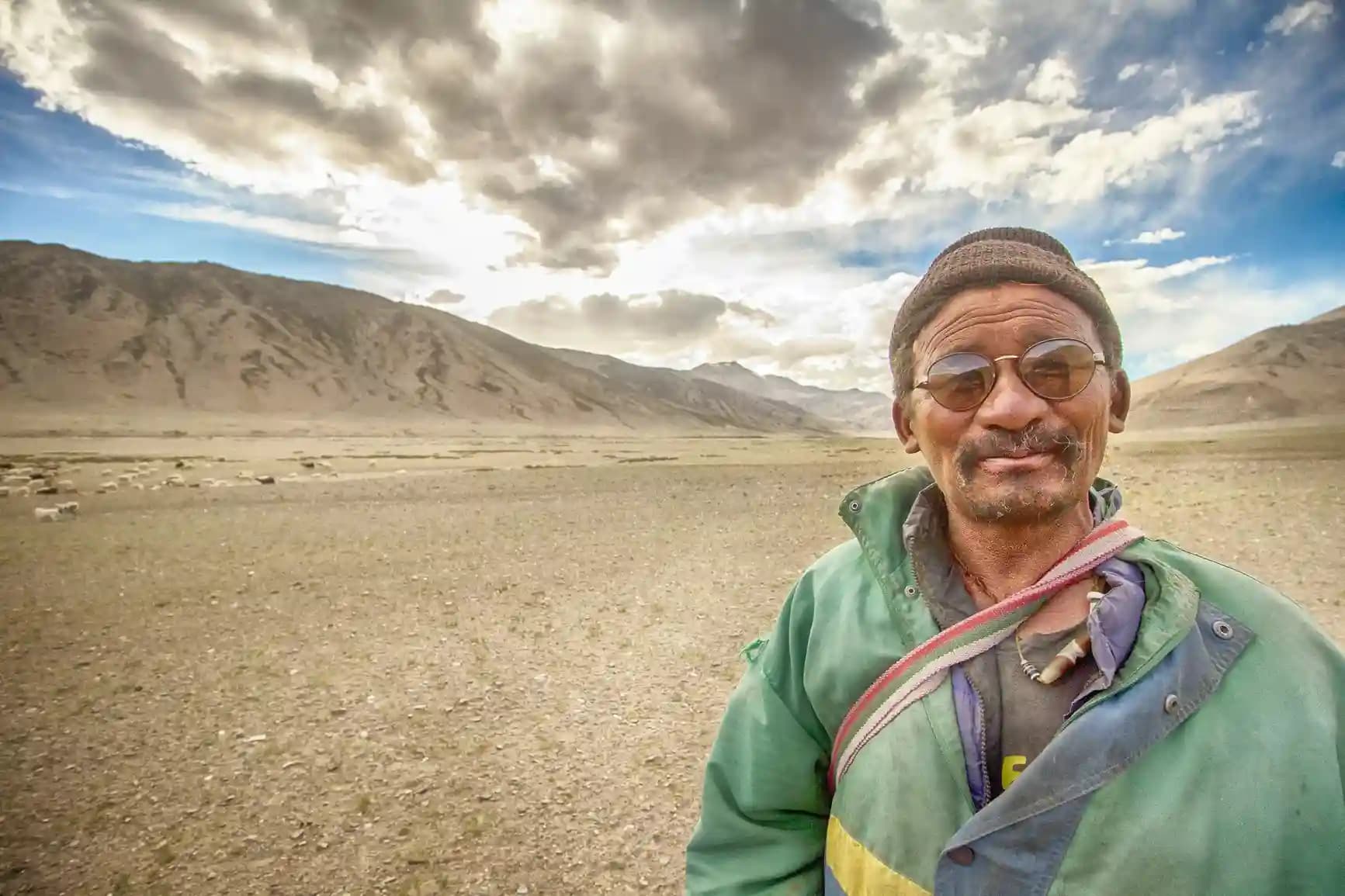
The human element of the EBC trek is just as captivating as the geography.
One of the most unique aspects of this journey is the "Teahouse" culture, which allows trekkers to experience the mountains without the need for heavy camping gear.
- Sherpa Heritage: The Sherpa people are world-renowned for their strength, mountaineering prowess, and incredible kindness. Spending your evenings huddled around a central yak-dung-fueled stove in a local lodge offers a rare glimpse into a culture shaped by the mountains for centuries.
- Living Buddhism: The trail is a living museum of Tibetan Buddhism. You will pass ancient monasteries most notably the Tengboche Monastery where the deep chants of monks and the scent of juniper incense fill the air. You’ll also encounter Mani stones (hand-carved prayer stones) and spinning prayer wheels that offer a sense of peace and protection.
- The Fuel: To keep your energy high, you will fall in love with "Dal Bhat Power." This traditional meal of lentil soup, rice, and vegetable curry is the ultimate fuel for high-altitude trekking as the local saying goes: "Dal Bhat Power, 24 Hour!"
5. Mesmerizing View of Everest Base Camp – The Foot of the World
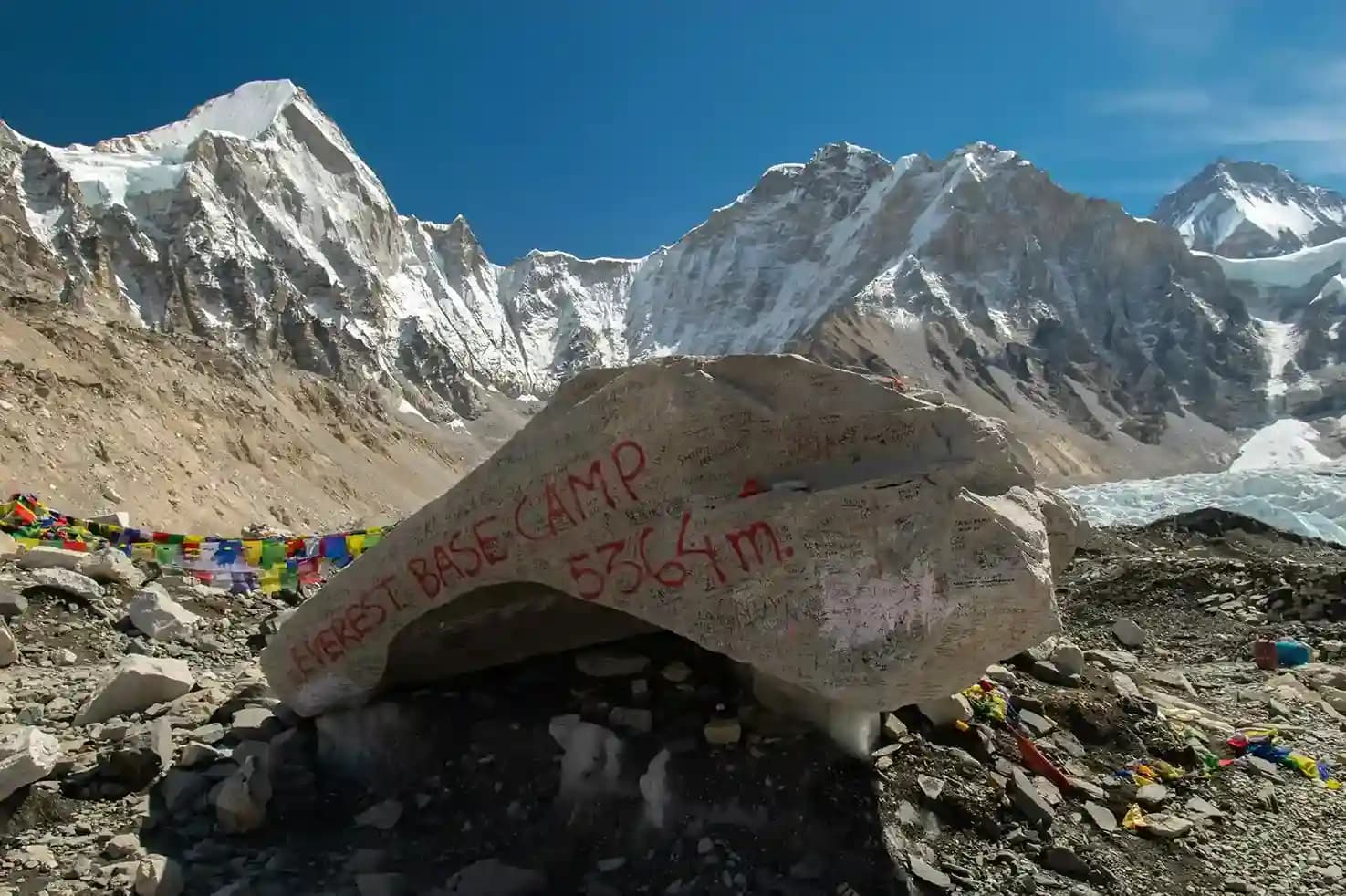
Standing at Everest Base Camp altitude of 5,364 meters (17,598 ft) on the shifting ice of the Khumbu Glacier is a moment of profound achievement.
At this altitude, trekkers experience the raw power of high-altitude trekking conditions and expedition environments. At this point, you are no longer just looking at the mountains from a distance; you are standing in the "Theater of Giants."
- The Gateway to the Summit: You are surrounded by the colossal walls of Nuptse and Lhotse, and you stand at the base of the Khumbu Icefall, a terrifyingly beautiful river of giant ice towers (seracs).
- The Atmosphere: In the spring, the area is transformed into a bustling city of bright yellow tents as elite climbing teams prepare for their summit bids. Year-round, the atmosphere at Base Camp is one of raw power and history. Touching the spray-painted rock that marks the official "Base Camp" and looking up at the route taken by legends like Sir Edmund Hillary and Tenzing Norgay is a badge of honor that signifies your place in the history of Himalayan exploration.
6. The Vibrant Hub of Namche Bazaar: The Sherpa Capital
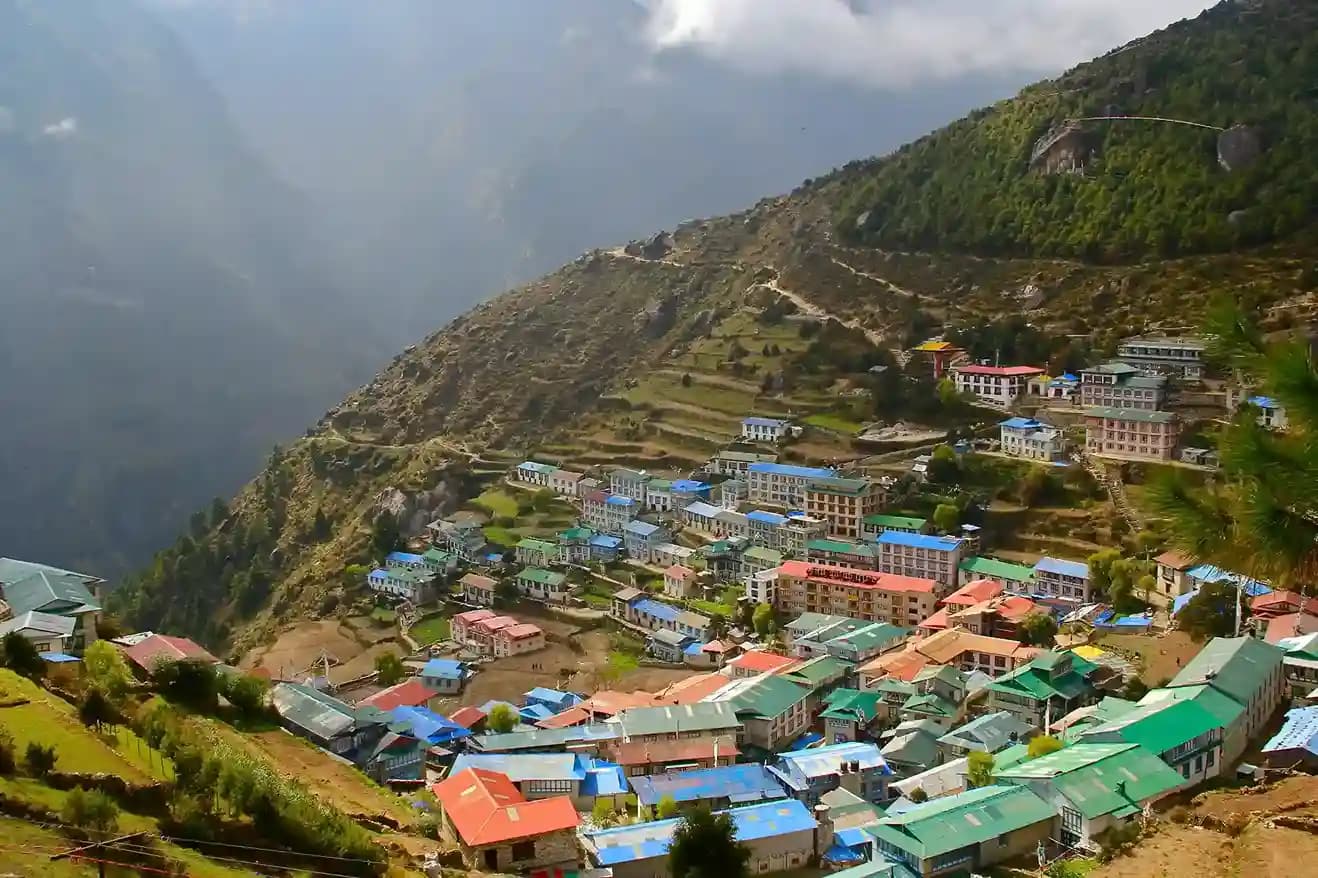
Known as the "Gateway to Everest," Namche Bazaar (3,440m) is much more than a mere pitstop; it is a thriving Himalayan metropolis built into a natural mountain amphitheater.
As the highest trade hub in the world, Namche serves as the final pulse of civilization before trekkers head into the remote high-altitude wilderness.
- The Last Taste of Luxury: This is your final chance to enjoy a fresh croissant at the Hermann Helmers Bakery or a pint at the world’s highest Irish Pub. For many, the "Namche buzz" is a highlight where the smell of roasting coffee beans mixes with the scent of burning juniper.
- A Hub for Acclimatization: Most itineraries include two nights here to adjust to the thinning air. This isn’t "rest" in the traditional sense; trekkers typically hike up to the Everest View Hotel or the twin villages of Khumjung and Khunde to follow the "climb high, sleep low" rule.
- The Saturday Market: If your timing is right, you’ll witness the weekly market where traders from the lowlands bring up grain and supplies on the backs of mules to trade with local Sherpas. It is a colorful, chaotic, and authentic glimpse into the ancient trade routes that once connected Nepal and Tibet.
7. Crossing the Iconic High Suspension Bridges
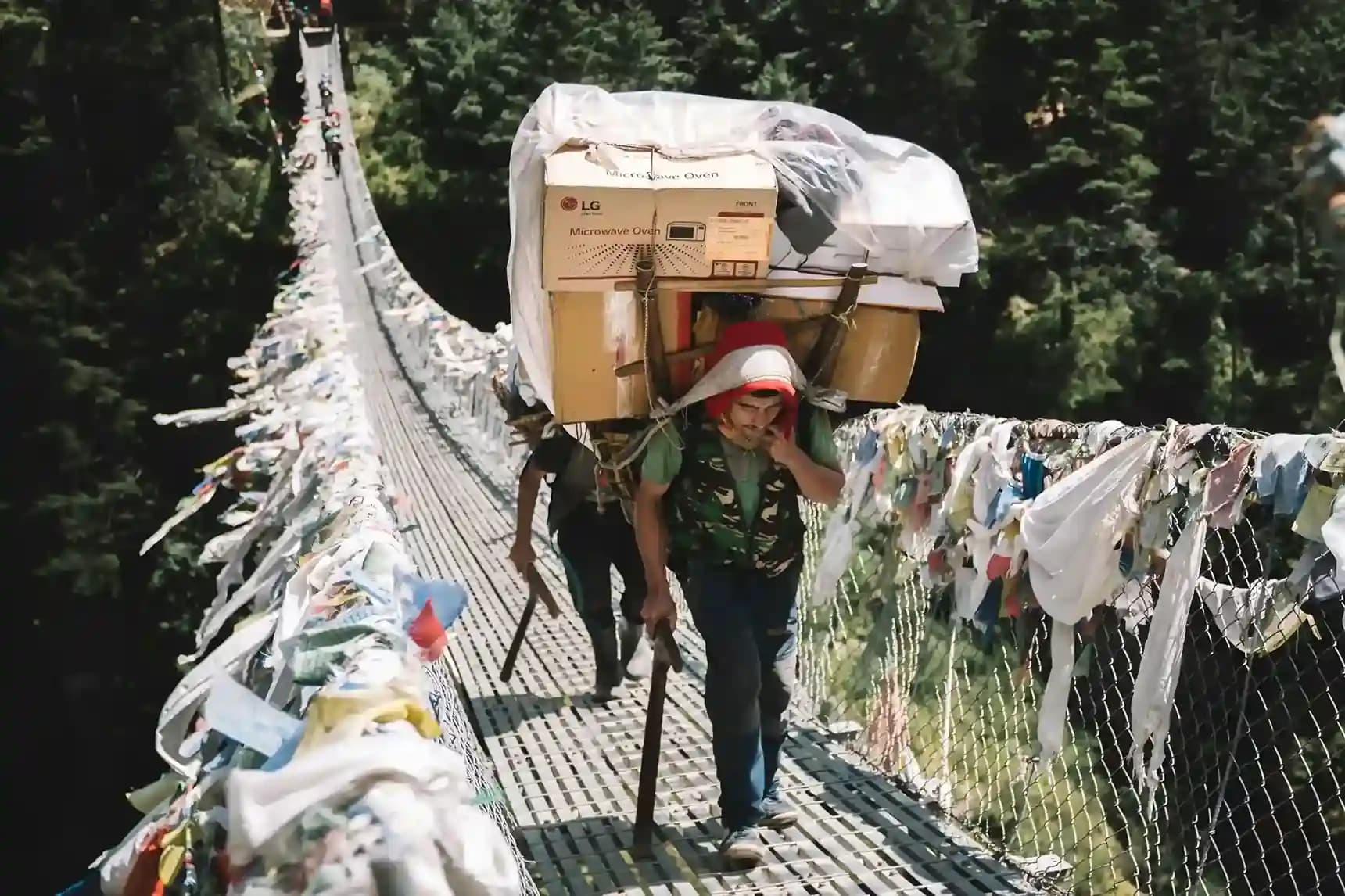
One of the most visceral and adrenaline-pumping experiences on the trail is crossing the massive suspension bridges that span the Dudh Koshi River gorge.
These steel structures are engineering marvels, designed to withstand the high winds and heavy weight of trekking groups and animal caravans.
- The Hillary Suspension Bridge: The most famous of these is the "Lower" and "Upper" Hillary Bridges. Hanging hundreds of feet above the milky-blue glacial water, the upper bridge is draped in thousands of colorful Buddhist prayer flags. As you walk, the wind whistles through the cables, and the bridge sways gently a true test of nerves for those with a fear of heights.
- The "Yak Jam": There is a strict rule of the trail: Yaks always have the right of way. Standing on a narrow bridge as a caravan of yaks with tinkling bells passes you by is a quintessential EBC moment. It forces you to pause, look down into the roaring river below, and realize just how deep into the Himalayas you truly are.
8. Spiritual Peace at Tengboche Monastery
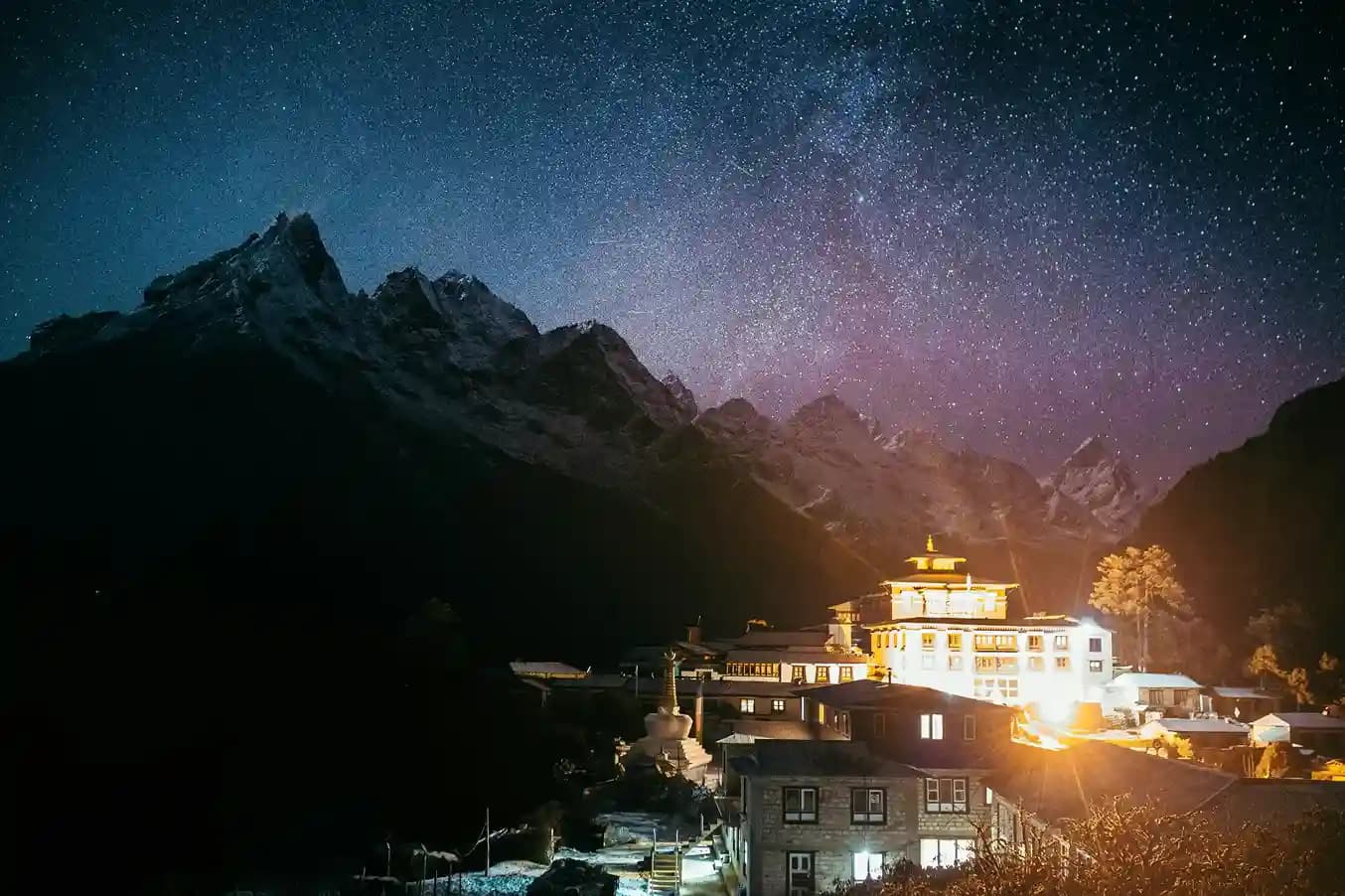
At 3,867 meters sits Tengboche Monastery (Dawa Choling Gompa), the spiritual heart of the Khumbu region.
After a grueling climb through pine and rhododendron forests, emerging onto the wide meadow of Tengboche feels like entering a sanctuary.
- The View of Ama Dablam: The monastery is framed perfectly by Ama Dablam, often cited as the most beautiful mountain in the world. The sight of the monastery’s golden roof against the sharp, icy spire of the "Mother’s Necklace" is arguably the best photo opportunity of the entire trek.
- The Sound of Devotion: Visitors are often invited to observe the afternoon prayers. Sitting on a woven rug inside the dimly lit, ornate hall surrounded by silk thangkas and golden Buddha statues while monks chant in deep, rhythmic tones and play long copper horns (Dungchen) is a soul-stirring experience.
- Cultural Significance: This monastery is the site of the famous Mani Rimdu Festival in autumn. It serves as a reminder that for the Sherpa people, these mountains aren't just rocks; they are the abodes of deities, and the trek is as much a pilgrimage as it is a hike.
9. The Ultimate Test of Physical and Mental Grit
Alt text for Image: A trekker taking a deep breath and looking out over the Himalayan horizon, symbolizing personal growth and achievement.
The Everest Base Camp trek is often described as a "walk in the park," but for most, it is the hardest physical challenge they will ever face.
SEO metrics show that "EBC Difficulty" is a top-searched term, and for good reason, this journey is a profound test of human resilience.
- The Battle with Altitude: Starting from Lukla, the oxygen levels begin to drop significantly. By the time you reach Gorak Shep, you are breathing roughly 50% of the oxygen available at sea level. Every step requires a conscious effort of will.
- Mental Fortitude: It’s not just about the legs; it’s about the mind. Pushing through the "Khumbu cough," the cold nights in unheated teahouses, and the sheer exhaustion of 6–8 hour trekking days builds a level of mental toughness that stays with you long after you return home.
- The Reward of Transformation: There is a unique camaraderie that forms between strangers on the trail. You share stories, oxygen, and encouragement. When you finally see the prayer flags of Base Camp, the sense of accomplishment is overwhelming it is a "reset button" for your perspective on life's everyday stresses.
10. Unrivaled Astrophotography and Night Skies
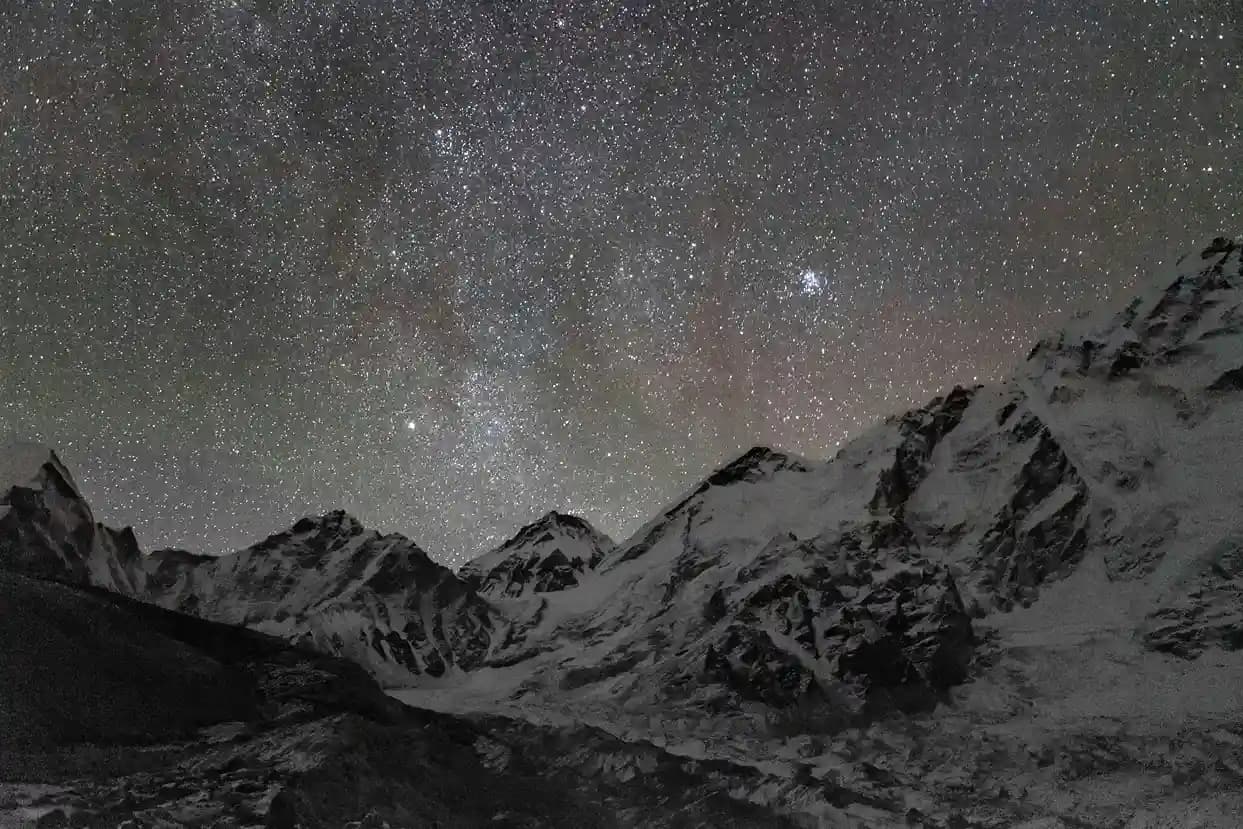
While the daytime views are legendary, the night sky on the EBC trail is a hidden gem that many trekkers aren't prepared for.
Because you are thousands of meters above the "thick" part of the Earth's atmosphere and hundreds of miles from the nearest city lights, the clarity of the cosmos is staggering.
- The Milky Way in 4K: From high-altitude stops like Dingboche or Gorak Shep, the Milky Way doesn't just look like a faint cloud; it looks like a glowing, structured river of stars. The "Great Rift" and distant nebulae are visible to the naked eye.
- Himalayan Silhouettes: For photographers, the opportunity to capture a "Star Trail" or a long exposure of the Milky Way arching over the summit of Everest, Lhotse, or Nuptse is a career-defining shot. The peaks catch the starlight and glow with an eerie, silvery light that feels otherworldly.
- A Lesson in Humility: Standing outside your teahouse at 2:00 AM in sub-zero temperatures, looking up at a billion stars while the silence of the mountains surrounds you, is a humbling experience. It reminds you of your tiny, yet significant, place in the universe.
Conclusion
The Everest Base Camp trek is far more than just a trekking adventure; it is a life-changing journey through the heart of the Himalayas.
From the thrilling flight to Lukla and the breathtaking sunrise at Kala Patthar to the warm hospitality of the Sherpa people and the unforgettable landscapes of the Khumbu region, every step on the trail creates memories that last a lifetime.
Whether you are seeking adventure, personal achievement, cultural discovery, or the dream of standing beneath the world’s highest mountain, the Everest Base Camp Trek remains one of the greatest trekking experiences on Earth.
The combination of natural beauty, spiritual atmosphere, and physical challenge makes this journey truly unforgettable for trekkers from around the world.
The Everest Base Camp trek cost varies depending on whether you choose budget or premium Everest Base Camp trek packages, which include flights, permits, guides, and accommodation.
If you are planning your Everest Base Camp Trek in 2026, choosing the right itinerary, acclimatization schedule, and local trekking team can make all the difference in your overall experience and safety.
Ready to Begin Your Himalayan Adventure?
Let our experienced local guides help you plan a safe, memorable, and fully customized trekking experience in Nepal. Whether you are trekking for the first time or chasing your lifelong dream of reaching Everest Base Camp, Everest Thrill is here to make your journey unforgettable.
Explore our expertly guided Everest Base Camp Trek packages and start planning your adventure to the foot of Mount Everest with Everest Thrill.
Frequently Asked Questions
About Author
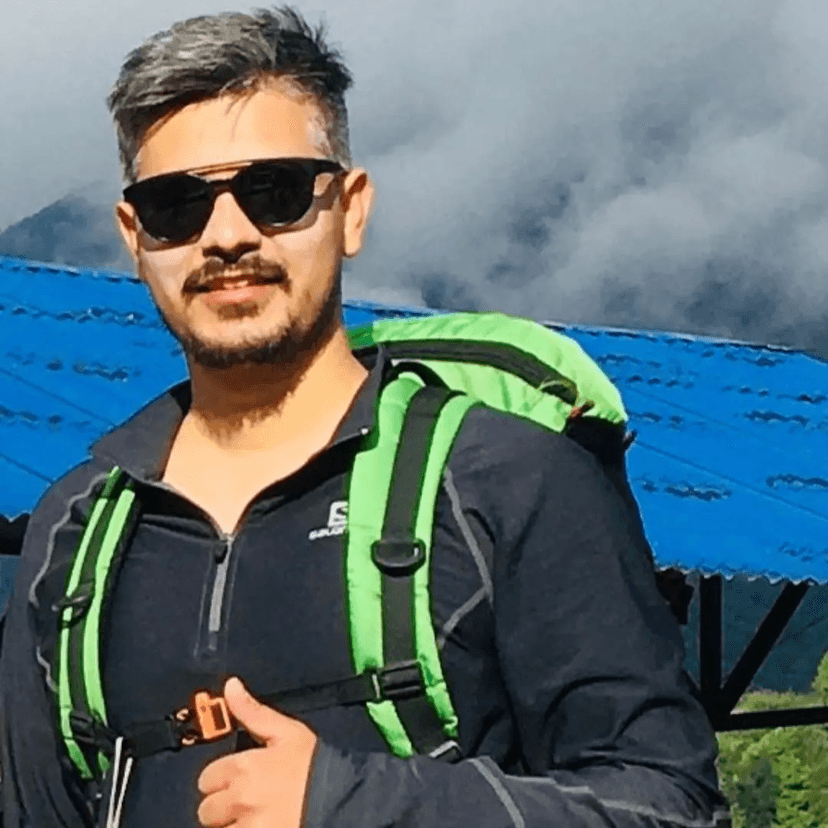
Amir Adhikari is the Founder and Trip Curator of Everest Thrill Trek and Expedition. With 10+ years of experience in Nepal’s competitive tourism sector, he is a recognized expert in designing safe, personalized, and high-thrill Himalayan itineraries. His dedication to responsible travel and creating authentic experiences has positioned Everest Thrill as a leading specialist for Everest, Annapurna, and off-the-beaten-path adventures.