Nepal Trekking Permit Guide 2026 | Cost, Requirements & Application Process
Table of Contents
- Which Trekking Permit Do You Need in Nepal?
- Why Are Trekking Permits Mandatory in Nepal?
- Trekker Safety and Emergency Support
- Conservation of Nature and Trails
- Protecting Local Culture and Restricted Regions
- Can You Trek in Nepal Without a Permit?
- Types of Trekking Permits in Nepal
- Restricted Area Permit (RAP)
- National Park Entry Permit
- Conservation Area Permit (CAP)
- Rural Municipality and Local Area Permits
- Important Note About TIMS Card Nepal
- Quick Summary of Nepal Trekking Permits
- Nepal Trekking Permit Cost (2026 Updated Guide)
- Restricted Area Permit Cost in Nepal
- National Park Permit Cost in Nepal
- Conservation Area Permit Cost in Nepal
- Local Municipality Permit Cost
- Quick overview of Nepal Trekking Permit
- How to Save Time on Nepal Trekking Permit Preparation
- How to Get a Trekking Permit in Nepal: Application Process & Requirements
- Step 1: Identify the Permits Required for Your Trek
- Step 2: Prepare the Required Documents
- Step 3: Apply Through the Right Process
- Where Can You Apply for Trekking Permits in Nepal?
- Kathmandu
- Pokhara
- Trekking Entry Points
- Can You Get Trekking Permits Without an Agency?
- Our Advice Before Applying for a Nepal Trekking Permit
- Recent Updates and Important Things to Know About Nepal Trekking Permits
- Important Updates and Practical Points Every Trekker Should Know
- Common Mistakes Trekkers Should Avoid
- Frequently Asked Questions About Nepal Trekking Permits
- Do I need a trekking permit to trek in Nepal?
- How much does a trekking permit cost in Nepal?
- Where can I get a trekking permit in Nepal?
- Can I apply for Nepal trekking permits online?
- Is TIMS Card still required for trekking in Nepal?
- Can I get a trekking permit after reaching the trail?
- Can a solo traveler get the trekking permit in Nepal?
- Plan Your Nepal Trek With Hassle-Free Permit Support
At Everest Thrill, one of the most common questions we receive from trekkers is: "What trekking permit do I need for my Nepal trek?"
The answer depends on your destination, trekking route, and the protected or restricted areas you plan to enter. Nepal has different permit requirements for regions like Everest Base Camp, Annapurna, Langtang, Manaslu, Upper Mustang, Dolpo, and Kanchenjunga.
Over the years, we have helped trekkers from different parts of the world arrange their Nepal trekking permits and understand the changing regulations. We know that the permit process can sometimes feel confusing because each region follows different rules, fees, and application procedures.
This guide explains everything you need to know about trekking permits in Nepal, including required permits by region, permit costs, application procedures, required documents, and recent updates. Whether you are planning your trek independently or looking for professional assistance, this information will help you prepare properly before starting your Himalayan journey.
Which Trekking Permit Do You Need in Nepal?
The permit requirements depend entirely on your trekking route. Some popular trekking areas require only a conservation or national park entry permit, while restricted regions need additional authorization and specific arrangements.
Here is a quick overview of the permits required for Nepal's major trekking destinations:
| Trekking Routes | Required Permits |
|---|---|
| Everest Base Camp trek | Sagarmatha National Park Permit + Local Municipality Permit |
| Annapurna base Camp / Circuit trek | Annapurna Conservation Area Permit (ACAP) |
| Langtang Valley trek | Langtang National Park Permit |
| Manaslu Circuit trek | Restricted Area Permit + Manaslu Conservation Area Permit + Annapurna Conservation Area Permit |
| Upper Mustang trek | Restricted Area Permit + Annapurna Conservation Area Permit |
| Nar Phu Valley trek | Restricted Area Permit + Annapurna Conservation Area Permit |
| Upper Dolpo trek | Restricted Area Permit + Shey Phoksundo National Park Permit |
| Kachenjunga trek | Restricted Area Permit + Kanchenjunga Conservation Area permit |
Important: Permit requirements can change depending on government regulations, seasonal updates, and route conditions. We always recommend checking the latest requirements before your trek begins.
Why Are Trekking Permits Mandatory in Nepal?
From our experience organizing Himalayan treks, we believe trekking permits are not just paperwork they are an important part of responsible mountain tourism.
Nepal's trekking permits serve three main purposes: trekker safety, environmental protection, and sustainable tourism management.
Trekker Safety and Emergency Support
Remote Himalayan trails can be challenging, and unexpected situations can happen. Permit registration helps authorities maintain trekker records, making it easier to coordinate assistance and search-and-rescue operations during emergencies.
Conservation of Nature and Trails
Many trekking routes pass through protected areas, national parks, and conservation zones. Permit fees contribute to:
- Maintaining trekking trails
- Protecting wildlife and biodiversity
- Managing waste in mountain regions
- Preserving fragile Himalayan ecosystems
Protecting Local Culture and Restricted Regions
Some areas of Nepal have unique cultural traditions and sensitive environments. Restricted Area Permits help control visitor numbers and ensure tourism develops responsibly in places like Upper Mustang, Manaslu, Dolpo, and Nar Phu Valley.
Can You Trek in Nepal Without a Permit?
No. Trekking without the required permit is not allowed in Nepal.
During your trek, permits may be checked at national park entrances, conservation checkpoints, and local trail stations. Traveling without proper documentation may result in:
- Fines or penalties
- Being stopped or removed from the trekking route
- Problems entering protected or restricted areas
- Difficulties with travel insurance during emergencies
At Everest Thrill, we always recommend preparing your permits before starting the trek. Having the correct documents allows you to focus completely on the trail, mountains, and experience ahead.
Types of Trekking Permits in Nepal
Nepal does not have one universal trekking permit that covers every destination. The permits you need depend on your trekking route, protected areas, conservation zones, and whether your journey enters a restricted region.
From our experience at Everest Thrill, most trekkers need one or more of the following permits depending on their chosen adventure:
- Restricted Area Permit (RAP)
- National Park Entry Permit
- Conservation Area Permit (CAP)
- Local Municipality or Rural Area Permit
Understanding your permit requirements before arriving in Nepal helps you avoid unnecessary delays at checkpoints and enjoy a smooth trekking experience.
Restricted Area Permit (RAP)
Some of Nepal's most remote and culturally unique trekking destinations are classified as restricted areas. These regions require a special Restricted Area Permit (RAP) because they contain fragile ecosystems, unique traditions, and sensitive geographical locations near international borders.
At Everest Thrill, we regularly arrange restricted area permits for trekkers exploring remote regions such as Manaslu, Upper Mustang, and Dolpo. These areas offer some of Nepal's most rewarding trekking experiences, but they also require careful preparation due to their special regulations.
Which Treks Require a Restricted Area Permit?
A Restricted Area Permit is required for:
- Manaslu Circuit Trek
- Nar Phu Valley Trek
- Tsum Valley Trek
- Upper Dolpo Trek
- Humla and Limi Valley Trek
- Kanchenjunga Trek
Important Requirements for Restricted Area Permits
Restricted regions have stricter requirements compared to standard trekking routes.
Generally:
- Permits must be processed through a government-registered trekking agency.
- A licensed trekking guide is required in most restricted areas.
- Trekkers need valid passport details, visa information, itinerary details, and trekking information.
Regulations for restricted areas can change, so we always confirm the latest requirements before arranging permits for our guests.
Why Are Restricted Area Permits Important?
These permits help Nepal manage tourism responsibly by:
- Protecting traditional Himalayan communities
- Preserving fragile mountain environments
- Controlling visitor numbers in sensitive regions
- Supporting safety management in remote areas
National Park Entry Permit
Many of Nepal's famous trekking routes pass through protected national parks. If your trekking route enters a national park, you must obtain a National Park Entry Permit before entering the area.
These permits support conservation activities, biodiversity protection, trail maintenance, and responsible tourism management.
Popular National Parks Requiring Trekking Permits
Sagarmatha National Park Permit
Required for:
- Other Everest region adventures
This permit supports the protection of the world's highest national park, home to Mount Everest and unique Himalayan wildlife.
Langtang National Park Permit
Required for:
- Gosaikunda Trek
- Helambu Trek
The permit supports conservation efforts around the Langtang region's forests, wildlife, and mountain landscapes.
Shey Phoksundo National Park Permit
Required for:
- Upper Dolpo Trek
- Lower Dolpo Trek
This permit helps protect the remote Himalayan environment and unique cultural heritage of the Dolpo region.
Other protected areas requiring national park permits
Include:
- Makalu Barun National Park
- Rara National Park
Where Can You Get a National Park Permit?
Depending on the trekking route, permits can be obtained through:
- Nepal Tourism Board offices
- Authorized trekking agencies
- National park entry checkpoints
For most international trekkers, arranging permits through a registered trekking company is the easiest option because multiple permits can often be prepared together before the trek starts.
Conservation Area Permit (CAP)
Nepal's conservation areas protect some of the country's most beautiful landscapes, diverse wildlife, and traditional mountain communities. Trekkers entering these areas require a Conservation Area Permit (CAP).
Many of Nepal's most popular trekking routes fall within conservation areas, making CAP one of the most common permits required by international trekkers.
Major Conservation Areas Permits
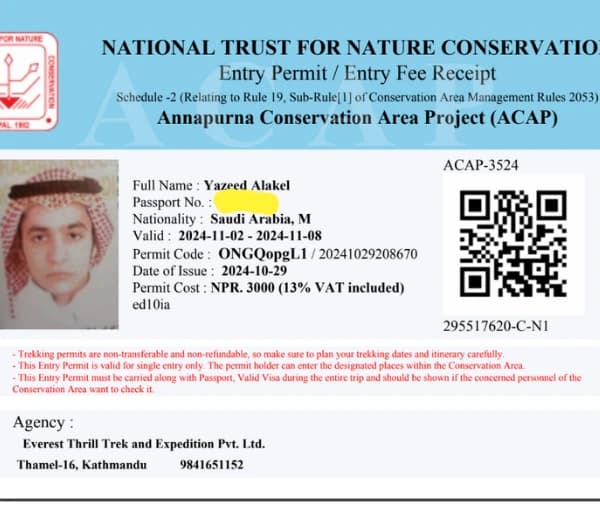
Annapurna Conservation Area Permit (ACAP)
Required for:
- Khopra Danda Trek, etc.
The Annapurna Conservation Area is Nepal's largest protected area and one of the most popular trekking destinations in the country.
Manaslu Conservation Area Permit (MCAP)
Required for:
The Manaslu permit supports conservation and sustainable tourism around the remote Manaslu region.
Other Conservation Areas
Conservation permits are also required for:
- Gaurishankar Conservation Area
- Makalu-Barun Conservation Area
Why Are Conservation Area Permits Required?
The fees collected from these permits contribute to:
- Protecting Himalayan biodiversity
- Maintaining trekking trails
- Supporting local communities
- Preserving cultural heritage
- Managing sustainable tourism activities
Where Can You Obtain a Conservation Area Permit?
You can obtain conservation permits from:
- Nepal Tourism Board offices in Kathmandu or Pokhara
- Registered trekking agencies like us
- Authorized checkpoints (depending on the trekking region)
Rural Municipality and Local Area Permits
In addition to national-level permits, some trekking destinations require local entry permits managed by rural municipalities.
These permits support tourism development in remote mountain communities by funding local infrastructure, trail improvement, and waste management programs.
Khumbu Pasang Lhamu Rural Municipality Permit
Required for:
- Everest Region trekking routes
Trekkers entering the Everest region may need this local permit in addition to the Sagarmatha National Park Permit.
Why Are Local Permits Required?
Local permit fees help support:
- Trail maintenance
- Waste management
- Local tourism facilities
- Community development projects
These permits are usually collected at local checkpoints along the trekking route.
Important Note About TIMS Card Nepal
The TIMS (Trekkers' Information Management System) Card was previously one of the most common trekking requirements in Nepal. It was introduced to maintain trekker records and improve safety management on trekking routes.
However, TIMS requirements have changed, and it is not currently mandatory for all trekking routes.
Whether you need a TIMS Card depends on your selected trekking route and the latest government regulations. At Everest Thrill, we always check the current requirements before your trek and arrange the necessary permits based on your destination.
Quick Summary of Nepal Trekking Permits
| Permit Type | Required For | Main Purpose |
|---|---|---|
| Restricted Area Permit (RAP) | Manaslu, Upper Mustang, Dolpo, Nar Phu, Kanchenjunga | Protect sensitive and restricted regions |
| National Park Permit | Everest, Langtang, Dolpo, Makalu regions | Conservation and protected area management |
| Conservation Area Permit (CAP) | Annapurna, Manaslu, Kanchenjunga regions | Environmental protection and community support |
| Local Municipality Permit | Everest and selected remote areas | Local tourism development |
Choosing the correct permit depends on your trekking route. At Everest Thrill, we help trekkers identify the required permits, prepare documents, and complete the process correctly so they can begin their Himalayan journey with confidence.
Nepal Trekking Permit Cost (2026 Updated Guide)
Understanding the trekking permit cost in Nepal helps you plan your Himalayan adventure without unexpected expenses. The total permit cost depends on your trekking route, the protected areas you enter, the season, and whether your trek requires a restricted area permit.
At Everest Thrill, we help trekkers prepare the correct permits based on their itinerary before the trek begins. Since Nepal has different permit systems for different regions, there is no single fixed trekking permit fee for all destinations.
Below is an overview of the main permit costs you may need for popular trekking routes in Nepal.
Restricted Area Permit Cost in Nepal
Restricted areas require special permission because they are environmentally sensitive, culturally important, or located near international borders.
The cost of a Restricted Area Permit (RAP) varies depending on the trekking destination and duration of your stay.
Approximate Restricted Area Permit Cost
- Upper Mustang: Around USD 50 per day (minimum required days apply)
- Manaslu Region: Varies depending on trekking season and number of days in the restricted section
- Nar Phu Valley: Depends on the season and duration
- Dolpo and Kanchenjunga: Based on government regulations and trekking period
Restricted permit fees are usually higher than standard trekking permits because they help regulate tourism in fragile and remote regions.
Important: Restricted Area Permits must be processed through a registered trekking agency in Nepal, and trekkers need to follow the required guide regulations.
National Park Permit Cost in Nepal
If your trekking route enters a national park, you need to pay an entry permit fee.
Most national park entry permits for foreign trekkers generally range from USD 20-50 per person. You can check national park and Local permit details for the Everest Base Camp trek to get a better idea.
The exact fee depends on the specific national park and current government regulations.
Conservation Area Permit Cost in Nepal
Many of Nepal's famous trekking routes pass through conservation areas. A Conservation Area Permit (CAP) is required for entry.
For most conservation areas: Around USD 20-30 per person
Local Municipality Permit Cost
Some trekking destinations have introduced local entry permits to support tourism infrastructure and mountain communities.
For example: Khumbu Pasang Lhamu Rural Municipality Permit which cost 2000 Nepali rupees.
Quick overview of Nepal Trekking Permit
| Top Treks | Required Permits Cost |
|---|---|
| Everest Base Camp trek | Khumbu Local Permit Cost = 15 USD per person / National Park Permit Cost = 20 USD per person |
| Annapurna Base Camp Trek | ACAP Permit Cost = 20 USD per person |
| Langtang Valley Trek | National Park Permit Cost = 20 USD |
| Manaslu Circuit trek | Restricted Area Permit Cost = 100 USD per person per week and 15 per person per day (Beyond 1 week) in September to November, 75 USD per person per week and 10 USD per person per day (beyond 1 week) in December to August / ACAP Permit Cost = 20 USD per person / MCAP Permit Cost |
| Annapurna Circuit Trek | ACAP Permit Cost = 20 USD per person |
| Upper Mustang Trek | Restricted Area Permit Cost = 50 USD per person per day / ACAP Permit Cost = 20 USD per person |
| Upper Dolpo Trek | Restricted Area Permit Cost = 50 USD per person per day |
| Kanchenjunga Base Camp Trek | Restricted Area Permit Cost = 20 USD per person per week for the first four weeks and 25 USD per person per week after four weeks / Kanchenjunga Conservation Permit Cost = 20 USD per person |
Note: The above mentioned Permit fees are according to NTB available data and can change according to Nepal government decisions. Permit cost might different for Indian Passport. Always confirm the latest rates before your trek.
How to Save Time on Nepal Trekking Permit Preparation
From our experience organizing treks, many travelers lose valuable time trying to understand different permit requirements for different regions.
A smoother approach is:
- Confirm your exact trekking route first
- Check the required permits before arrival
- Prepare passport and visa details in advance
- Work with a registered trekking agency for restricted regions
- Keep copies of all documents during the trek
At Everest Thrill, we manage the required permits based on your trekking itinerary, ensuring everything is prepared correctly so you can focus on enjoying Nepal's Himalayan landscapes.
How to Get a Trekking Permit in Nepal: Application Process & Requirements
Getting a trekking permit in Nepal is an important step before starting your Himalayan adventure. However, the process is not the same for every trek. The permits you need depend on your destination, the conservation area or national park you enter, and whether your route falls under a restricted trekking region.
At Everest Thrill, we arrange trekking permits for trekkers from around the world, and one thing we have learned is that most permit problems happen because travelers do not know the exact requirements for their route. Preparing the correct documents and applying through the right channel makes the process much easier.
Step 1: Identify the Permits Required for Your Trek
Before applying, first confirm your trekking route and required permits.
For example:
- Everest Base Camp Trek requires Sagarmatha National Park Permit and Khumbu Pasang Lhamu Rural Municipality Permit.
- Annapurna Base Camp Trek requires Annapurna Conservation Area Permit (ACAP).
- Langtang Valley Trek requires Langtang National Park Permit.
- Manaslu Circuit Trek requires Restricted Area Permit, Manaslu Conservation Area Permit, and Annapurna Conservation Area Permit.
- Upper Mustang Trek requires Restricted Area Permit and Annapurna Conservation Area Permit.
Choosing the correct permit before your trek helps you avoid delays at checkpoints and ensures a smooth trekking experience.
Step 2: Prepare the Required Documents
The document requirements depend on the trekking region, but most trekking permits require:
- Valid passport copy
- Nepal visa details
- Passport-size photographs
- Trekking itinerary
- Personal information and emergency contact details
For restricted trekking areas, additional documents are required, including:
- Licensed guide details
- Registered trekking agency information
- Restricted area application details
We recommend keeping both digital and printed copies of your important documents during the trek, as remote checkpoints may request verification.
Step 3: Apply Through the Right Process
The permit application process depends on the type of trekking area.
For popular trekking destinations such as Everest, Annapurna, and Langtang, permits are generally arranged through:
- Nepal Tourism Board offices
- Authorized trekking agencies like us
- Designated entry points (depending on the route)
Routes such as Manaslu, Upper Mustang, Nar Phu, Dolpo, and Kanchenjunga require a different process.
Restricted Area Permits must be arranged through a registered trekking agency because they involve additional verification, documentation, and guide requirements.
At Everest Thrill, we handle these procedures for our guests so they do not have to manage multiple offices or changing permit rules during their preparation.
Where Can You Apply for Trekking Permits in Nepal?
Kathmandu
Kathmandu is the main center for many trekking permit arrangements, especially for:
- Restricted area permits
- Various conservation and national park permits
Pokhara
Pokhara is a convenient permit location for trekkers heading toward:
- Annapurna Base Camp
- Mardi Himal
- Other Annapurna-region treks
Trekking Entry Points
Some permits can also be checked or issued at trail entry checkpoints depending on the trekking destination such as Langtang Region treks and Everest Region treks.
However, we recommend completing your permit arrangements before starting your trek whenever possible to avoid unexpected delays.
Can You Get Trekking Permits Without an Agency?
For some standard trekking routes, independent trekkers may be able to arrange permits through authorized offices.
However, restricted trekking areas have stricter requirements and generally require:
- A registered trekking agency
- A licensed guide
- Proper permit documentation
For remote regions, working with an experienced local trekking company can save time and prevent mistakes that may affect your trekking schedule.
Our Advice Before Applying for a Nepal Trekking Permit
Based on our experience organizing Himalayan treks, the easiest way to avoid permit issues is:
- Confirm your exact trekking route first
- Check current permit requirements
- Prepare documents in advance
- Use authorized channels only
- Carry permit copies throughout your trek
A trekking permit is not just a travel document; it is part of responsible trekking in Nepal. With the right preparation, the process is simple, and you can focus on enjoying the mountains, culture, and adventure ahead.
Recent Updates and Important Things to Know About Nepal Trekking Permits
Nepal's trekking permit system continues to improve as the country focuses on safer, more organized, and sustainable mountain tourism. Regulations can change depending on trekking regions, conservation policies, and government decisions.
At Everest Thrill, we regularly work with updated permit requirements while organizing treks across Nepal. From our experience, staying informed before your journey is the best way to avoid confusion, delays, or unexpected problems on the trail.
Important Updates and Practical Points Every Trekker Should Know
- Trekking Regulations Are Becoming More Organized
- Guide Requirements Depend on Your Trekking Region, especially in restricted areas
- Restricted Area Permits Require Advance Preparation
- Permit Checks Are Common During Trekking
- Permit Fees Support Sustainable Tourism
Common Mistakes Trekkers Should Avoid
Based on our experience helping international trekkers, these are some common permit-related mistakes:
- Choosing the Wrong Permit
- Waiting Until the Last Minute
- Ignoring Regulation Changes
- Not Carrying Permit Copies
- Using Unauthorized Services
Frequently Asked Questions About Nepal Trekking Permits
Planning a trek in Nepal often comes with questions about permits, costs, documents, and regulations. Based on our experience helping trekkers from around the world, these are the most common questions travelers ask before starting their Himalayan adventure.
Do I need a trekking permit to trek in Nepal?
Yes, most trekking routes in Nepal require one or more permits before entering the trail. The required permit depends on your trekking destination.
How much does a trekking permit cost in Nepal?
The cost depends on your trekking route and the type of permit required. Standard trekking permits usually cost less, whereas restricted-area permits are more expensive because they entail special regulations and limited access.
Where can I get a trekking permit in Nepal?
Trekking permits can be obtained from authorized sources, including:
- Nepal Tourism Board offices in Kathmandu and Pokhara
- Registered trekking agencies
- Official entry points or checkpoints (depending on the trekking region)
For restricted trekking areas, permits must be arranged through a registered trekking agency.
Can I apply for Nepal trekking permits online?
Yes, you can get a standard permit online if you are a independent traveler. However, Restricted Area Permits generally require processing through an authorized trekking agency because they involve additional documentation and approval.
Is TIMS Card still required for trekking in Nepal?
The TIMS (Trekkers' Information Management System) Card was previously a common requirement for many trekking routes. However, TIMS requirements have changed, and it is not currently mandatory for all trekking destinations.
Can I get a trekking permit after reaching the trail?
Some permits may be available at entry checkpoints depending on the trekking route. However, relying on last-minute permit arrangements is not recommended. Missing the correct permit can cause delays or prevent entry into certain areas. Preparing your permits before starting the trek is the safer option.
Can a solo traveler get the trekking permit in Nepal?
Yeah, a solo traveler can easily get the trekking permit in Nepal.
Plan Your Nepal Trek With Hassle-Free Permit Support
Trekking permits are an important part of every Himalayan journey in Nepal. While the process may look simple, choosing the wrong permit, missing updated regulations, or preparing incomplete documents can create unnecessary problems during your trek.
At Everest Thrill, we understand that every trekking route has different requirements. From popular adventures like Everest Base Camp and Annapurna Base Camp to remote journeys such as Manaslu, Upper Mustang, and Dolpo, our team helps trekkers arrange the correct permits according to their itinerary.
With our local experience, we take care of:
- Identifying the permits required for your trekking route
- Checking the latest permit regulations
- Preparing necessary documents
- Arranging restricted area permits when required
- Coordinating the permit process before your trek begins
Our goal is simple: make your trekking preparation smooth so you can focus on experiencing Nepal's mountains, culture, and landscapes.
Whether you are planning your first Nepal trek or returning for another Himalayan adventure, our team is ready to help you with reliable permit guidance and professional trekking support.
Contact Everest Thrill today to plan your Nepal trekking adventure with the right permits prepared before you hit the trail.
About Author
Amir Adhikari is the Founder and Trip Curator of Everest Thrill Trek and Expedition. With 10+ years of experience in Nepal’s competitive tourism sector, he is a recognized expert in designing safe, personalized, and high-thrill Himalayan itineraries. His dedication to responsible travel and creating authentic experiences has positioned Everest Thrill as a leading specialist for Everest, Annapurna, and off-the-beaten-path adventures.