Altitude Sickness in Nepal: Symptoms, Treatment, and How to Stay Safe on High-Altitude Treks
Table of Contents
- What Is Altitude Sickness?
- The Three Types of Altitude Sickness: AMS, HAPE, and HACE
- How Common Is Altitude Sickness on Nepal Treks?
- At What Altitude Does Sickness Start?
- Altitude Thresholds Across Popular Nepal Trek Routes
- Can You Get Altitude Sickness Below 3,000 Metres?
- Does the Season Affect Altitude Sickness?
- Recognizing the Symptoms of Altitude Sickness
- Symptoms of Acute Mountain Sickness (AMS)
- Emergency Symptoms: When AMS Becomes HAPE or HACE
- Other Symptoms Trekkers Often Miss: Ear Pain and Blood Pressure Changes
- Who Is at Risk and What Causes Altitude Sickness?
- Risk Factors That Increase Your Chances
- The Fitness Myth Why Being Fit Does Not Protect You
- How to Prevent Altitude Sickness on a Nepal Trek
- The Golden Rule Ascend Slowly and Never Skip Rest Days
- Acclimatization Stops on the Manaslu Circuit, EBC, and Annapurna Circuit
- Hydration, Diet, Alcohol, and Lifestyle Tips on the Trail
- Altitude Sickness Medication Diamox, Dexamethasone, and Natural Options
- How Diamox (Acetazolamide) Works and Who Should Take It
- Diamox Dosage, Side Effects, and How to Test Before Your Trek
- Can You Buy Altitude Sickness Medicine in Nepal?
- Other Medications and Natural Remedies
- How to Treat Altitude Sickness on the Trail
- First Aid for Mild AMS Stop, Rest, and Assess
- Emergency Treatment for HAPE and HACE
- The Lake Louise Score How to Assess Your Own Condition
- Helicopter Evacuation in Nepal What Every Trekker Must Know
- Altitude Sickness on the Manaslu Circuit Trek
- Why the Manaslu Circuit Demands Extra Altitude Caution
- The Samagaon and Samdo Acclimatisation Protocol
- What to Do If You Develop AMS Near Larkya La Pass
- How Long Does Altitude Sickness Last and What to Expect During Recovery
- Long-Term Effects of Repeated Altitude Sickness
- Special Circumstances Pregnancy, Pre-Existing Conditions, and Older Trekkers
- Frequently Asked Questions
Stepping onto the historic trekking trails of Nepal is an unforgettable experience, but the towering elevations of the Himalayas demand respect. Whether you are aiming for the iconic trails of Everest or the rugged loops of the Manaslu Circuit, altitude sickness is a common, manageable, and largely preventable challenge that every trekker must prepare for.
This comprehensive guide covers everything you need to cross high-altitude passes safely, from recognizing early warning signs and dosing Diamox to navigating route-specific acclimatization protocols and organizing emergency mountain responses. With the right preparation, a solid itinerary, and a clear understanding of your body's limits, you can minimize your risks and focus entirely on the jaw-dropping vistas around you.
What Is Altitude Sickness?
Altitude sickness is a physiological condition that occurs when the human body is exposed to low oxygen levels at high elevations, typically triggered by an ascent rate that outpaces the body's natural ability to adapt.
When exploring what altitude sickness is, the underlying cause of altitude sickness traces back to a drop in atmospheric pressure rather than a change in the air's actual oxygen percentage. As you climb higher in the Himalayas, the air pressure decreases, which spreads oxygen molecules further apart and makes the air "thinner."
This environment forces your body to operate under hypoxic (low-oxygen) conditions. Ultimately, the true altitude sickness meaning is a biological distress signal, a clear warning from your heart and lungs that you are ascending faster than your circulatory system can acclimatize.
The Three Types of Altitude Sickness: AMS, HAPE, and HACE
The Three Types of Altitude Sickness: AMS, HAPE, and HACE
- Acute Mountain Sickness (AMS): The most common and mildest form of altitude sickness. It acts as the body's early warning system and typically causes symptoms such as headache, nausea, fatigue, dizziness, and difficulty sleeping.
- High Altitude Pulmonary Edema (HAPE): A severe and potentially fatal condition caused by fluid buildup in the lungs. Symptoms include shortness of breath, persistent coughing, chest tightness, and extreme fatigue.\
- High Altitude Cerebral Edema (HACE): The most dangerous form of altitude sickness, caused by swelling of the brain due to low oxygen levels. Symptoms include confusion, loss of coordination, slurred speech, hallucinations, and loss of consciousness.
How Common Is Altitude Sickness on Nepal Treks?
You should never view experiencing symptoms as a personal failure or a sign of poor health; it is an incredibly common biological reaction to an extreme environment. Statistics collected by Himalayan rescue organizations show that approximately 40% to 50% of all individuals on the altitude sickness Everest Base Camp with Island Peak Climbing route experience at least mild symptoms of AMS after crossing the 3,500-meter threshold.
The data reinforces a vital trail truth: no one is inherently immune to the effects of thin air. Your age, gender, and level of physical fitness do not protect your body from the physical realities of drop in atmospheric pressure, meaning that elite marathon runners and casual day-hikers walk the trail with a similar baseline susceptibility.
At What Altitude Does Sickness Start?
A common question among trekkers is: At what altitude does altitude sickness begin? Clinical data shows that the first physiological changes can start as low as 2,500 meters (8,200 feet). While symptoms are uncommon below this level, ascending too quickly can trigger mild Acute Mountain Sickness (AMS).
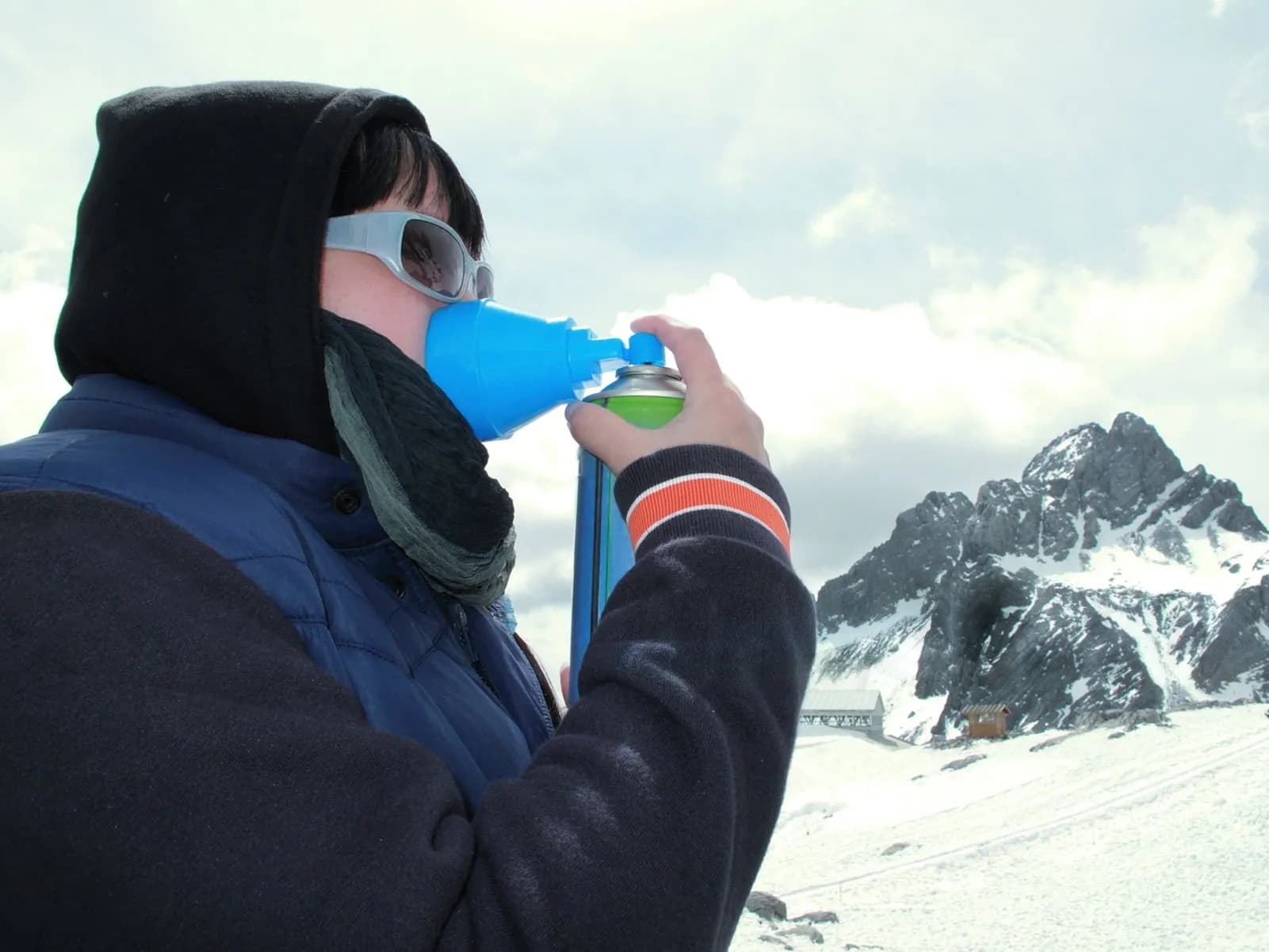
Understanding altitude sickness height thresholds is important when planning a trek in Nepal:
- Below 2,500m: Symptoms are rare.
- 2,500m-3,500m: Mild AMS can develop if the ascent is rushed.
- Above 3,500m: Risk becomes moderate in places like Namche Bazaar.
- Above 4,000m: The air contains roughly 40% fewer oxygen molecules, significantly increasing the risk of altitude sickness.
Even lower-altitude routes such as the Poon Hill Trek (3,210m) can cause mild AMS if trekkers ascend too quickly without allowing time for proper acclimatization.
Altitude Thresholds Across Popular Nepal Trek Routes
To help you visualize your upcoming journey and plan your safety strategy accordingly, the table below outlines the maximum elevations and corresponding risk profiles across Nepal’s most iconic trekking routes.
| Trek Route | Highest Point (Metres) | Highest Point (Feet) | Altitude Sickness Risk Level |
|---|---|---|---|
| Poon Hill Trek | 3,210m | 10,531 ft | Low to Moderate |
| Langtang Valley Trek | 3,870m (Kyanjin Gompa), 4,773m (Kyanjin Ri) | 12,696 ft | Moderate |
| Annapurna Base Camp | 4,130m | 13,549 ft | Moderate to High |
| Everest Base Camp | 5,364m (Kala Patthar: 5,545m) | 17,598 ft (18,192 ft) | High |
| Annapurna Circuit | 5,416m (Thorong La Pass) | 17,769 ft | High |
| Manaslu Circuit | 5,106m (Larkya La Pass) | 16,752 ft | High |
Understanding these specific route thresholds before you depart allows you to make informed decisions regarding your daily itinerary, pack the appropriate medical gear, and choose an operator that values acclimatization over a rushed schedule.
Can You Get Altitude Sickness Below 3,000 Metres?
While the vast majority of medical cases are documented above the 3,000-meter mark, it is technically possible to feel the early stages of mild AMS as low as 2,500 meters if you climb too rapidly.
However, addressing the specific search query regarding whether you can get altitude sickness at 4 000 feet (approximately 1,220 meters), the short answer is a definitive no. At 4,000 feet, the partial pressure of oxygen is more than adequate for human physiology, and any symptoms like headaches or dizziness felt at this height are almost certainly caused by dehydration, heat exhaustion, or jet lag rather than the elevation itself.
Does the Season Affect Altitude Sickness?
Yes. While elevation is the primary trigger, seasonal weather conditions heavily influence temperature, trail conditions, hydration, and emergency logistics. Breaking down the trekking year into a clean list shows how your risk profile changes by season:
Spring (March-May)
- Risk Level: Moderate
- The Good: Stable weather, mild temperatures, and long daylight hours support comfortable, gradual acclimatization.
- The Risk: Heavily crowded trails, especially on the route to Everest Base Camp, can tempt trekkers to stick to aggressive, rigid itineraries or rush their ascent to secure teahouse rooms, increasing the likelihood of AMS.
Autumn (September-November)
- Risk Level: Moderate to Low
- The Good: Clear skies, crisp air, and highly predictable conditions provide the absolute best environment for smooth acclimatization.
- The Risk: Because weather-related delays are rare, there is almost no operational pressure to skip your built-in rest-day schedules.
Winter (December-February)
- Risk Level: Moderate to High
- The Good: Quiet, empty trails and pristine alpine views.
- The Risk: Extreme freezing temperatures force your cardiovascular system to work twice as hard to keep you warm, amplifying physical stress and rapid dehydration. Heavy snow can lock down high passes like Thorong La or Larkya La, making emergency helicopter evacuations incredibly difficult.
Monsoon (June-August)
- Risk Level: Moderate
- The Good: Low-altitude valleys are lush and green.
- The Risk: Cool temperatures and high humidity frequently cause trekkers to underestimate daily hydration needs. Frequent flight cancellations can also squeeze travel timelines, tempting hikers to compress their itineraries and ascend too quickly once the weather clears.
Recognizing the Symptoms of Altitude Sickness
Developing the skill to accurately spot early changes in your physical well-being is the single most valuable safety asset you can possess on the trail. The early signs of mountain illness are frequently subtle, quiet, and incredibly easy to misattribute to regular trail wear-and-tear, like a long day under the sun or mild dehydration.
If you ignore these minor indicators, you risk letting a highly manageable case of mild AMS transform into an emergency. Treating any unusual physical change above 2,500 meters as a potential altitude issue until proven otherwise is the safest approach on the trail.
Symptoms of Acute Mountain Sickness (AMS)
The onset of Acute Mountain Sickness typically occurs between 6 to 10 hours after arriving at a new, higher elevation, and it frequently peaks during the night when your breathing rate naturally slows down. The most common altitude sickness symptoms to watch for include:
- Throbbing Headache: This is the primary and earliest indicator of AMS; it is typically centered behind the forehead or temples and can intensify when bending over or exerting yourself.
- Nausea or Vomiting: A persistent feeling of an upset stomach, a total distaste for food, or an inability to keep fluids down.
- Loss of Appetite: Looking at a plate of warm dal bhat and feeling an uncharacteristic wave of food aversion.
- Fatigue even at Rest: Feeling completely drained of physical energy, heavy-limbed, or exhausted while simply sitting in a teahouse.
- Dizziness or Lightheadedness: A mild sensation of room instability or floating when standing up quickly.
- Difficulty Sleeping: Waking up frequently throughout the night, experiencing vivid dreams, or feeling a sensation of breathless awakening.
- General Malaise: A vague, overarching feeling that something is fundamentally wrong with your physical baseline.
Trail Tip: AMS feels almost identical to a severe, dehydrating alcohol hangover. If you or your trekking partner wake up in a high-altitude village feeling like you mixed your drinks the night before, treat it as AMSdo not assume it is just a lack of sleep.
Emergency Symptoms: When AMS Becomes HAPE or HACE
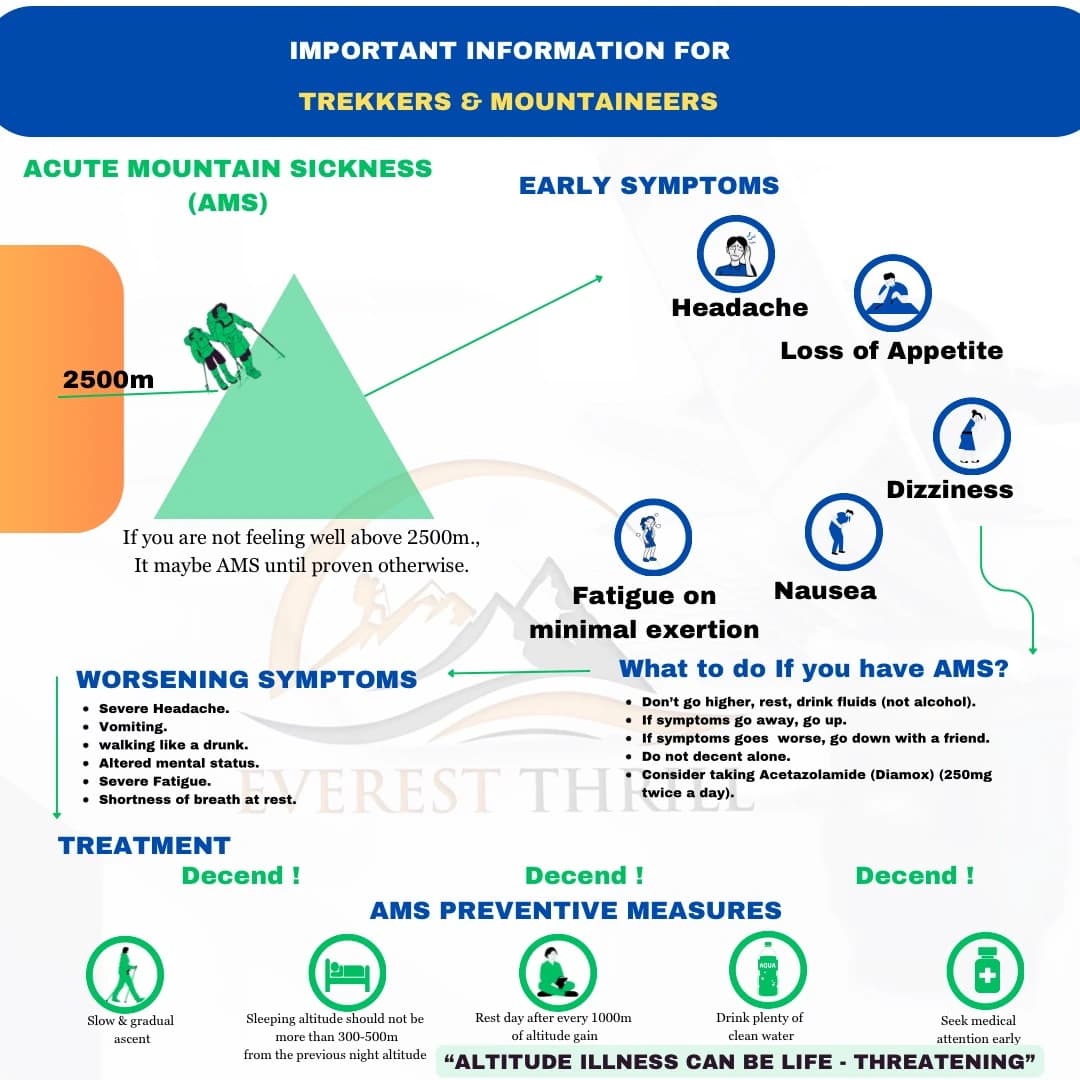
When your body fails to adapt and you continue to push higher, mild AMS can transition into life-threatening conditions. Recognizing the progression to severe altitude sickness requires watching for clear, undeniable red-flag symptoms that warrant an immediate evacuation.
For High Altitude Cerebral Edema (HACE), which involves dangerous swelling of the brain tissue, look for:
- Ataxia: An absolute inability to balance or walk a straight line heel-to-toe without stumbling.
- Confusion and Slurred Speech: Difficulty answering basic questions, disorientation regarding time or location, or acting out of character.
- Extreme Lethargy: Becoming entirely unresponsive or refusing to get out of a sleeping bag.
- Hallucinations: Seeing or hearing things that are not present on the trail.
For High Altitude Pulmonary Edema (HAPE), which involves fluid accumulating in the lungs, watch for:
- Breathlessness at Rest: Gasping for air or panting heavily while sitting completely still.
- Persistent Dry Cough: A irritating cough that gradually progresses to produce a frothy, pink, or blood-tinged phlegm.
- Cyanosis: A distinct blue or gray discoloration appearing around the lips, tongue, or under the fingernails.
- Rattling Chest Sounds: Hearing a distinct gurgling or bubbling sound inside the chest when breathing deeply.
The Ataxia Test: If you suspect a companion is developing HACE, perform the heel-to-toe test. Draw a straight line in the dirt; if they cannot walk along it without swaying or falling over, treat it as a medical emergency. Descend immediately. Do not wait for daybreak.
Other Symptoms Trekkers Often Miss: Ear Pain and Blood Pressure Changes
Hidden Symptoms: Ear Pain and Cardiovascular Changes
Beyond the standard warning signs, thin air can trigger several less common physical reactions that frequently catch trekkers off guard. Breaking these down into a quick checklist helps you monitor your body without getting overwhelmed by walls of text:
- Altitude Sickness Ear Pain (Barotrauma): Many hikers are surprised by sharp ear discomfort on the trail. This is rarely a direct symptom of AMS; instead, it stems from Eustachian tube dysfunction or mild barotrauma. As you ascend through rapidly changing atmospheric gradients, the pressure differential between your middle ear and the mountain environment causes painful ear stretching. How to manage it: Yawning, chewing gum, or swallowing to self-equalize the pressure.
- Altitude Sickness Blood Pressure Spikes: Mountain exposure initially triggers a noticeable temporary spike in your baseline blood pressure. This happens because your sympathetic nervous system kicks into overdrive, forcing your resting heart rate to increase so it can pump blood faster to compensate for lower oxygen levels.
- Altitude Sickness Low Blood Pressure & Dizziness: Conversely, some individuals experience sudden, temporary bouts of low blood pressure or orthostatic dizziness (feeling faint when standing up quickly) during their first 24 hours at a new height. This is typically driven by rapid fluid shifts across cell membranes and mild trail dehydration.
The Bottom Line: Neither vascular response indicates an underlying heart defect. They are simply your cardiovascular system navigating its initial, completely normal adaptation phase in the sky.
Who Is at Risk and What Causes Altitude Sickness?
The baseline physiological altitude sickness reason is hypoxia, a severe drop in the delivery of oxygen to your vital organs and tissues. When your body is exposed to a rapid drop in barometric pressure, it triggers a cascade of chemical responses: your blood vessels constrict, fluid balances shift across cell membranes, and your brain signals your lungs to breathe faster.
If the rate of your physical ascent drastically outpaces your bone marrow's ability to manufacture new red blood cells, your system enters a state of metabolic distress, leading directly to the primary altitude sickness causes we observe on the trail.
Risk Factors That Increase Your Chances
While individual genetic predisposition plays a significant role in how smoothly your body adjusts to thin air, there are several distinct, controllable behavior choices and situational risk factors that dramatically increase your likelihood of falling ill:
- Speed of Ascent: Rushing your itinerary and gaining more than 500 meters of sleeping elevation per night is the single most controllable trigger for mountain sickness.
- Prior History of AMS: If you have suffered from severe altitude sickness on past trips, your biological baseline means you are statistically more likely to experience it again.
- Flying Directly to High Altitude: Landing via plane or helicopter directly into high-altitude hubs, such as taking a flight from Kathmandu (1,400m) straight into Lukla (2,860m), deprives your body of a gradual walking ascent.
- Dehydration and Alcohol Consumption: Drinking alcohol or using sedatives on the trail suppresses your respiratory drive, compounding your oxygen deficit.
- Pre-Existing Lack of Acclimatization: Pushing past 3,000 meters without building in early rest days to let your blood chemistry catch up with the altitude change.
The Fitness Myth Why Being Fit Does Not Protect You
One of the most persistent and dangerous myths whispered in Kathmandu gear shops is that if you are in peak physical shape, you do not need to worry about the altitude. This is entirely false. Excellent cardiovascular conditioning allows you to carry a heavy pack uphill with less muscle fatigue, but it provides zero protection against hypoxia.
The blood vessels of an elite marathon runner and an unconditioned, first-time trekker react to atmospheric pressure drops in the exact same manner. In fact, highly fit individuals are occasionally at a higher risk because their strong muscles allow them to push up the trail too quickly, masking the early warning signs of AMS until they are dangerously high.
How to Prevent Altitude Sickness on a Nepal Trek
When preparing for a high-altitude expedition, your primary goal should always be avoiding illness entirely. Designing a conservative itinerary and adhering to proper trail hygiene are your best tools for preventing altitude sickness. Best of all, these strategies cost nothing but patience, careful planning, and a commitment to respecting the natural limits of human biology.
The Golden Rule Ascend Slowly and Never Skip Rest Days
The foundation of safe mountain travel is a simple rule: once you pass the 3,000-meter threshold, limit your net sleeping elevation gain to no more than 300 to 500 meters per 24-hour period. Additionally, you should build a dedicated acclimatization rest night into your schedule for every 1,000 meters of vertical altitude gained.
To optimize these rest days, guides recommend using the "climb high, sleep low" strategy. This approach involves hiking 300 to 400 meters above your village during the afternoon to expose your body to a higher hypoxic stress level, before returning to your lower teahouse to sleep. This method jumpstarts your body's natural production of erythropoietin (EPO) without subjecting your organs to prolonged oxygen deprivation overnight.
Acclimatization Stops on the Manaslu Circuit, EBC, and Annapurna Circuit
A properly organized itinerary ensures that rest stops are placed at key geographic transition zones where the risk of AMS spikes. The table below illustrates the non-negotiable safety stops built into standard itineraries across Nepal’s three major trekking routes.
| Trek Route | Key Acclimatisation Stop | Elevation | Why It Matters / Trail Strategy |
|---|---|---|---|
| Manaslu Circuit | Samagaon | 3,530m | Essential buffer before pushing higher; used for a day hike to Manaslu Base Camp (4,800m). |
| Manaslu Circuit | Samdo | 3,860m | A critical, frequently skipped safety night that provides a final buffer before the remote Larkya La Pass. |
| Everest Base Camp | Namche Bazaar | 3,440m | The first major altitude jump; mandatory two-night stay with day hikes to the Everest View Hotel. |
| Everest Base Camp | Dingboche | 4,410m | Vital stop before entering the extreme zone; features acclimatization climbs up Nangkartshang Peak. |
| Annapurna Circuit | Manang | 3,519m | Gives your circulatory system a chance to stabilize before tackling the long climb to Thorong La Pass. |
Trekkers heading to Everest should also read our complete Everest Base Camp Trek Guide, which explains acclimatization schedules, elevation gains, and safe trekking practices in detail.
Safety Warning: Many discount online booking agencies sell shortened, budget-friendly itineraries that skip the second night in Samdo or Dingboche to save on accommodation costs. These shortened schedules are incredibly hazardous and serve as the single most common cause of emergency helicopter evacuations in Nepal.
Hydration, Diet, Alcohol, and Lifestyle Tips on the Trail
Beyond managing your vertical ascent rate, your daily habits inside the teahouses play a massive role in how well your body adapts to high elevations. The dry, cold mountain air rapidly saps moisture from your lungs with every breath, making it easy to become dehydrated without realizing it.
To support your body's adaptation process, follow these practical lifestyle guidelines:
- Aggressive Fluid Intake: Drink between 3 to 4 liters of clean water every single day. Even if you do not feel thirsty, keep sipping fluids; proper hydration keeps your blood volume stable, helping transport limited oxygen molecules more efficiently.
- Carbohydrate-Heavy Nutrition: High-altitude environments alter your metabolism, causing your body to rely primarily on carbohydrates for energy. Heavy, carb-rich meals like traditional dal bhat, garlic potatoes, or porridge require less oxygen to digest than heavy proteins and fats, making them the perfect fuel for thin air.
- Total Alcohol Abstinence: Avoid alcohol completely, especially during the first 48 hours at a new elevation. Alcohol acts as a respiratory depressant and dehydrates your system, which can easily mask or worsen early AMS symptoms.
- Avoid Sleeping Pills: Avoid using sedatives or sleeping tablets to combat trail insomnia. These medications slow your breathing rate during sleep, causing your blood oxygen levels to drop dangerously low overnight.
- Garlic Soup Routine: Embrace the local trail wisdom and enjoy a bowl of fresh garlic soup every evening. While it may sound like local folklore, garlic contains high concentrations of allicin, which thins the blood and acts as a natural vasodilator, supporting circulation in cold, high-altitude conditions.
Altitude Sickness Medication Diamox, Dexamethasone, and Natural Options
When planning your medical kit, it is helpful to think of altitude sickness prescription medications as a supportive safety net rather than a shortcut to skip proper acclimatization.
No altitude sickness drug can completely replace the need for rest days, but utilizing the correct preventative steps can provide your body with an invaluable layer of protection when navigating challenging mountain terrain.
How Diamox (Acetazolamide) Works and Who Should Take It
The most thoroughly researched and clinically proven altitude sickness medication on the market is Diamox, the brand name for acetazolamide. Instead of dense paragraphs, here is exactly how this medication chemically alters your body's adaptation process on a step-by-step level:
- Carbonic Anhydrase Inhibition: Diamox acts as a mild diuretic, forcing your kidneys to excrete bicarbonate ions.
- Blood Acidification: This excretion causes a very slight, harmless acidification of your blood.
- Metabolic Response: Your brain senses this pH shift and interprets it as an excess of carbon dioxide.
- Increased Ventilation: To balance things out, your brain signals your lungs to increase both the depth and frequency of your breathing.
- Nighttime Support: This boosted ventilation rate is especially vital at night when your breathing naturally slows down, helping you absorb more oxygen and accelerating your natural acclimatization process.
Who Should Take It?
Using altitude sickness tablets preventatively (as a prophylactic) is highly recommended for:
- Trekkers with a documented personal history of AMS.
- Anyone flying directly into high landing zones with large, immediate altitude gains (like taking a flight straight from Kathmandu to Lukla).
- First-time hikers moving past the 4,000-meter mark without prior high-altitude experience.
Trail Myth Defunked: Diamox does not mask symptoms of mountain illness. It directly treats the root cause by speeding up your physical adaptation. If you climb too fast and develop severe sickness anyway, your body will still flag clear, undeniable symptoms.
Diamox Dosage, Side Effects, and How to Test Before Your Trek
To keep your trail routine easy to manage, keep these specific parameters in mind:
- The Standard Altitude Sickness Diamox Dose: Take 125mg twice daily (exactly half of a standard 250mg tablet). Take one half in the morning and the other half in the evening.
- The Timing Window: Begin this preventative routine 24 hours before you cross the 2,500-meter altitude threshold. Continue taking it consistently until you reach your maximum elevation and begin your final descent.
- Expected Side Effects: Diamox comes with a few harmless but noticeable side effects that indicate the medication is actively working in your system:
- Paresthesia: A distinct, benign tingling or "pins-and-needles" sensation felt in your fingers, toes, lips, and cheeks.
- Increased Urination: Because it is a mild diuretic, your bathroom trips will increase, making aggressive hydration even more vital.
- Altered Taste: Chemical shifts on your tongue will cause carbonated drinks, like sodas or beers, to taste completely flat or metallic.
Critical Safety Warning: Diamox is a sulfonamide-based drug, meaning it requires an official altitude sickness prescription from a doctor and is strictly dangerous for anyone with a known allergy to sulfa medications. Always test a single dose at home several weeks before flying to Nepal to rule out unexpected adverse reactions.
Can You Buy Altitude Sickness Medicine in Nepal?
If you forget to secure medication before departing, you can easily purchase altitude sickness medicine in Nepal. Pharmacies across Kathmandu, as well as trail hubs like Lukla and Namche Bazaar, carry generic acetazolamide over the counter under local brand names like Acetamox or Storzolamide. A full strip of ten 250mg tablets typically costs between NPR 150 to NPR 200 (roughly $1.15 to $1.50 USD).
While these local options are inexpensive and widely available, purchasing your medication from a licensed provider at home is still the safest path to avoid the risk of counterfeit or improperly stored products. If you need a professional pre-trek consultation or a reliable source of medication once you arrive in Nepal, visit the CIWEC Travel Medicine Center in Kathmandu. This internationally recognized clinic specializes in high-altitude medicine and can provide expert guidance before you head to the trailhead.
Other Medications and Natural Remedies
Beyond standard Diamox, there are several alternative options and altitude sickness remedies that experienced guides carry in their emergency medical kits:
- Dexamethasone: A powerful prescription steroid used exclusively for the emergency treatment of severe HACE and advanced AMS. This medication reduces brain swelling and can stabilize an incapacitated trekker so they can walk downhill, but it should never be used as a daily preventative measure.
- Ibuprofen and Paracetamol: Invaluable for managing the primary, throbbing altitude sickness headache. If your headache responds well to these simple pain relievers and you have no other symptoms, it is usually safe to stay at your current elevation and monitor how you feel.
- Ginger Tea: A fantastic natural remedy for reducing trail-induced nausea and soothing an upset stomach.
- Ginkgo Biloba: An herbal supplement used by some travelers to improve blood flow; however, scientific studies show mixed results regarding its effectiveness compared to Diamox.
How to Treat Altitude Sickness on the Trail
No matter how many preventative steps you take, nature can still surprise you. If you or a companion begin to show signs of mountain illness, you must act quickly. When it comes to managing altitude sickness on the trail, remember this golden rule: descent is the ultimate cure. Never ascend to a sleeping altitude if you are actively experiencing symptoms of AMS.
First Aid for Mild AMS Stop, Rest, and Assess
If you begin to develop a mild altitude sickness headache alongside minor nausea or fatigue, do not panic. These early signs indicate that your body simply needs a brief pause to catch up with the changing elevation. Follow this step-by-step altitude sickness first aid protocol:
- Halt Your Ascent: Stop moving higher immediately. Tell your guide and your companions exactly how you are feeling, never hide your symptoms to avoid slowing down the group.
- Rest at Your Current Elevation: Remain at your current teahouse for an extra 24 to 48 hours to give your system a chance to adapt.
- Hydrate and Medicate: Drink plenty of fluids and take a standard dose of ibuprofen or paracetamol to manage the headache. If you haven't started taking Diamox yet, you can introduce a therapeutic dose after consulting your guide.
- Monitor Your Condition: Use the Lake Louise Score to track your symptoms every four hours.
- The Decision Point: If your symptoms clear up completely within 24 hours, you can safely resume your trek. If your condition stays the same or worsens after a day of rest, you must descend 300 to 500 meters down the trail immediately.
Emergency Treatment for HAPE and HACE
When a trekker begins to exhibit advanced signs of HAPE or HACE, the situation shifts from an uncomfortable delay to a life-or-death emergency. You cannot afford to wait and see if things improve overnight.
- Immediate Night Descent: You must begin moving the patient downhill immediately, losing as much vertical elevation as humanly possible. Even a minor descent of 300 to 500 meters can stabilize a patient and save their life.
- Supplemental Oxygen Therapy: If available, connect the patient to a supplemental oxygen cylinder or a portable oxygen concentrator to boost their blood oxygen saturation levels.
- Gamow Bags (Portable Hyperbaric Chambers): These inflatable pressure bags mimic the atmospheric pressure of a much lower elevation, providing crucial relief on the trail. While you will find them at rescue stations along the Everest and Annapurna circuits, they are rare on the remote Manaslu Circuit, so you shouldn't rely on them as a safety net.
- Emergency Dexamethasone: Administer emergency Dexamethasone to treat HACE symptoms, using it as a temporary medical bridge to help the patient stand and walk under their own power during the descent.
The Golden Mountain Rule: HAPE can become fatal within 12 hours, and HACE within 24 hours. If you are in doubt, always choose to descend. You can always come back to finish a trek, but a fatal mistake cannot be undone.
The Lake Louise Score How to Assess Your Own Condition
High-altitude rescue teams and experienced guides rely on the Lake Louise Scoring System to evaluate AMS symptoms objectively. This system eliminates guesswork, helping you make smart, data-driven safety decisions on the trail.
To use the system, evaluate how you feel across the five categories below and total your score.
| Symptom Category | Severity Description | Score |
|---|---|---|
| 1. Headache | None / Mild / Moderate / Severe & Incapacitating | 0 / 1 / 2 / 3 |
| 2. Gastrointestinal Symptoms | Good Appetite / Poor Appetite or Nausea / Moderate Nausea or Vomiting / Severe Vomiting | 0 / 1 / 2 / 3 |
| 3. Fatigue and/or Weakness | None / Mild / Moderate / Severe & Incapacitating | 0 / 1 / 2 / 3 |
| 4. Dizziness and/or Lightheadedness | None / Mild / Moderate / Severe & Incapacitating | 0 / 1 / 2 / 3 |
| 5. Difficulty Sleeping | Slept as well as usual / Did not sleep as well / Woke up many times / Could not sleep at all | 0 / 1 / 2 / 3 |
- Total Score 0 to 2: Your body is adjusting well; no signs of AMS.
- Total Score 3 to 5: Mild AMS. You must stop ascending. Rest, hydrate, and monitor your symptoms closely.
- Total Score 6 or Higher: Moderate to Severe AMS. You need to begin a managed descent down the trail immediately.
Helicopter Evacuation in Nepal What Every Trekker Must Know
When trails are completely blocked or a trekker is too weak to walk downhill, an emergency helicopter evacuation becomes necessary. Arranging a helicopter rescue in the remote valleys of Nepal requires a clear understanding of the logistics involved:
- The Financial Reality: High-altitude helicopter charters are expensive, typically costing between $3,000 to $5,000 USD per flight, depending on your location and the weather conditions.
- Insurance Prerequisites: Standard travel insurance plans rarely cover extremely high-altitude activities. Before leaving home, make sure you secure a specialized high-altitude policy that explicitly covers helicopter search-and-rescue operations up to 6,000 meters.
- Weather Dependencies: Helicopters cannot fly through thick mountain fog, heavy snow, or high winds. A rescue flight can easily be delayed by several hours or even overnight, which is why descending on foot should always remain your immediate backup plan.
- The Activation Process: If you need to call for a rescue, work through your licensed guide, who can connect with their Kathmandu agency to coordinate with local helicopter operators. At the same time, contact your insurance company's 24-hour emergency hotline to get the required financial guarantees approved quickly.
Altitude Sickness on the Manaslu Circuit Trek
While standard safety protocols apply across the entire country, navigating the Manaslu Circuit brings a unique set of altitude challenges that differ significantly from the busier trails of Everest or Annapurna. This remote, stunning loop circles the world’s eighth-highest peak, taking trekkers through isolated terrain with limited infrastructure. This makes proper preparation and route awareness absolutely essential.
Why the Manaslu Circuit Demands Extra Altitude Caution
The unique risk profile of the Manaslu Circuit makes it more demanding than many other trekking routes in Nepal. Several factors contribute to the increased risk of altitude-related illness:
- Rapid Elevation Gain: The trail climbs quickly from low sub-tropical valleys into high alpine terrain. Between Namrung (2,630m) and Dharmasala (4,460m), trekkers gain approximately 1,830 meters in just a few days, placing significant stress on the body's acclimatization process. Namrung (2,630m) → 3 Days of Trekking → Dharmasala (4,460m) Total Elevation Gain: 1,830m
- Limited Medical Infrastructure: Unlike the Everest region, the Manaslu Circuit has fewer medical facilities and support services. Trekkers will find limited access to supplemental oxygen, high-altitude medical clinics, and emergency equipment such as hyperbaric (Gamow) bags.
- Remote and Isolated Terrain: The area surrounding Larkya La Pass (5,106m) is extremely remote, with few alternative exit routes. In the event of severe AMS, HAPE, or HACE, reaching medical assistance can take considerably longer than on more developed trekking routes.
- Weather-Dependent Rescue Operations: Helicopter evacuations in the Manaslu region are heavily dependent on mountain weather conditions. Poor visibility, snowfall, or strong winds can delay rescue flights for several hours or even overnight, making early symptom recognition and timely descent especially important.
The Samagaon and Samdo Acclimatisation Protocol
To successfully cross the high pass without incident, your itinerary must include the classic, dual-stage acclimatization protocol in the upper Nubri Valley. This safety strategy relies on two key milestones:
- The Samagaon Milestone (3,530m): Every safe itinerary should build in a mandatory two-night stay in this large, historic village. Use your rest day here to practice the "climb high, sleep low" strategy by making an acclimatization side-trip up to Manaslu Base Camp (4,800m) or visiting the ancient Pungyen Gompa (4,000m), before returning to the village to sleep.
- The Samdo Buffer Night (3,860m): This is one of the most under-appreciated safety choices on the entire route. Many budget operators rush straight from Samagaon up to the freezing high camp at Dharmasala (4,460m), skipping a night in Samdo entirely. This dangerous shortcut forces your body to handle a massive 930-meter elevation jump in a single day. Spending an extra night in Samdo gives your body a vital chance to stabilize before you push into the extreme zone
Trail Alert: Do not let a budget booking agency skip the Samdo acclimatization night. Investing an extra 24 hours in this high-altitude buffer dramatically reduces your risk of developing severe AMS when crossing the Larkya La Pass.
What to Do If You Develop AMS Near Larkya La Pass
Waking up at the Dharmasala high shelter (4,460m) with an altitude sickness headache or nausea puts you at a critical safety crossroads. The trail ahead climbs another 646 vertical meters to the windy crest of Larkya La Pass (5,106m).
If you show signs of mountain sickness here, knowing exactly altitude sickness what to do is a matter of life and death:
- Zero Bail-Out Options Ahead: Once you leave Dharmasala, there are no emergency shelters or exit paths until you complete the long, grueling descent to Bimthang (3,590m) on the other side. Pushing through symptoms is incredibly dangerous.
- Turn Around Immediately: You must abandon the pass and immediately descend to the safer, lower elevations of Samdo (3,860m) or Samagaon (3,530m) to allow your body to recover.
- Value Life Over the Pass: Turning back after days of tough trekking is heartbreaking, but it is the only intelligent choice when your health is on the line.
How Long Does Altitude Sickness Last and What to Expect During Recovery
Your timeline for altitude sickness recovery depends entirely on the severity of your symptoms and how fast you take action. To understand altitude sickness how long does it last and what to expect on the trail, review this quick recovery breakdown:
- Mild AMS Recovery (2 to 4 Hours): Simply halting your ascent allows mild symptoms to clear within 24 to 48 hours as your body adapts. If you descend 300 to 500 meters down the trail, you will typically experience relief within just 2 to 4 hours as ambient atmospheric pressure increases. This quick resolution often mirrors altitude sickness, which appears quickly but fades just as fast upon descent.
- Severe HAPE/HACE Recovery (Weeks to Months): For severe cases, the altitude sickness recovery time is much longer and more complex. Even after a successful helicopter evacuation to a hospital in Kathmandu, reversing fluid in the lungs or swelling in the brain requires several days of specialized medical care, followed by weeks of total rest.
Trail Rule: If you experience severe mountain illness, you must avoid returning to high altitudes for several months to allow your respiratory and neurological systems to heal completely.
Long-Term Effects of Repeated Altitude Sickness
A single, well-managed case of mild AMS leaves zero altitude sickness long term effects on your body or lungs. However, understanding the boundaries of recovery is vital for long-term safety:
- Acute vs. Chronic Sickness: Trekkers only experience acute (temporary) elevation stress. Do not confuse this with Chronic Mountain Sickness (Monge's disease), which only affects long-term high-altitude residents (like in the Andes) who overproduce red blood cells over many years. It is not a concern for short-term holiday tourists.
- The Danger of Delay: While mild symptoms vanish rapidly during descent, ignoring extreme warning signs and letting severe conditions like HACE progress can lead to permanent neurological complications.
Expert Recommendation: If you have a personal history of suffering from severe AMS or HAPE on past trips, always consult a specialized high-altitude medicine expert before booking your next mountain trek.
Special Circumstances Pregnancy, Pre-Existing Conditions, and Older Trekkers
High-altitude environments present unique physiological challenges that require careful medical planning. To make this information quick and easy to digest, here are the essential safety rules for specific trekking groups:
- Altitude Sickness and Pregnancy: Trekking while pregnant requires a highly conservative strategy. Thinner air reduces your blood oxygen saturation, which directly limits the oxygen supply reaching a developing fetus. Because of these distinct risks, medical experts strongly advise against ascending above 3,500 meters during an altitude sickness pregnancy window. Always consult your OB-GYN and a travel medicine specialist before committing to a trek.
- Older Trekkers: Age alone is never a barrier-thousands of vibrant hikers in their 60s and 70s successfully stand at Everest Base Camp every year. However, older travelers are statistically more likely to manage baseline health conditions that require careful monitoring when oxygen levels drop.
- Pre-Existing Heart or Lung Conditions: Hypoxia (low oxygen) puts extra stress on your circulatory system. If you manage health concerns like hypertension, coronary artery disease, asthma, or COPD, a high-altitude trek can cause them to become volatile.
Safety Check: If you have any pre-existing medical concerns, schedule a thorough checkup 4 to 6 weeks before departing. For an extra layer of safety once you land in Nepal, visit the CIWEC Clinic in Kathmandu to get a professional pre-trek medical clearance from specialized high-altitude physicians.
Preparing for altitude sickness is key to a safe Himalayan adventure. At Everest Thrill, our carefully planned itineraries and experienced guides help trekkers acclimatize safely on routes like the Everest Base Camp Trek, Manaslu Circuit Trek, etc. Contact us to start planning your trek.
Frequently Asked Questions
About Author
Amir Adhikari is the Founder and Trip Curator of Everest Thrill Trek and Expedition. With 10+ years of experience in Nepal’s competitive tourism sector, he is a recognized expert in designing safe, personalized, and high-thrill Himalayan itineraries. His dedication to responsible travel and creating authentic experiences has positioned Everest Thrill as a leading specialist for Everest, Annapurna, and off-the-beaten-path adventures.