Thorang La Pass | Height, Location, Weather & Difficulty
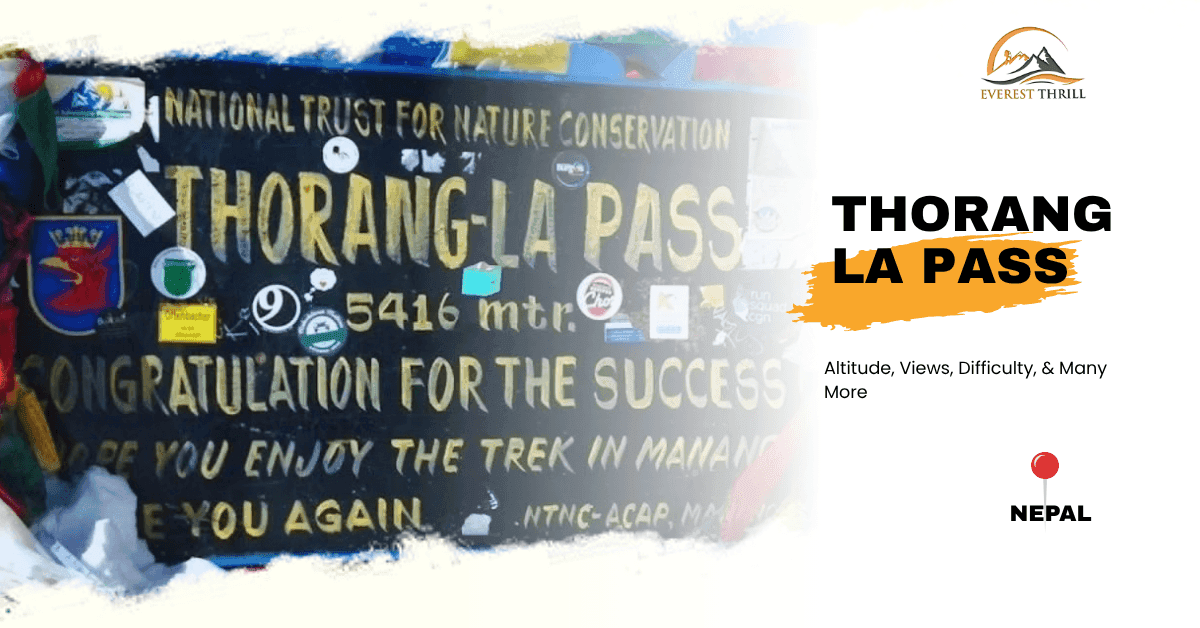
Table of Contents
- Where Is Thorong La Pass?
- How Difficult Is the Thorong La Crossing?
- The Crossing Day Starts Early
- The Most Important Part Happens Before the Pass
- What Trekkers Often Misjudge
- Weather Can Change the Plan
- What Is the Trail Like?
- What Happens After Crossing the Pass?
- When Is the Best Time to Cross Thorong La?
- Is Thorong La Suitable for Everyone?
- Practical Things to Think About
- Thorong La Is More Than a Number on the Map
Crossing Thorong La Pass is one of the defining moments of the Annapurna Circuit trek. At 5,416 meters, it is the highest point of the classic route, but the elevation alone does not explain why the crossing requires careful planning.
The real challenge comes from putting several factors together: high altitude, an early start, a long ascent, changing weather, cold conditions, and a descent that continues for hours after reaching the pass.
For trekkers planning the Annapurna Circuit, understanding how the crossing works in practice is more useful than simply knowing its altitude.
Where Is Thorong La Pass?
Thorong La connects the Manang side of the Annapurna Circuit with the Mustang side.
The approach from Manang gradually takes trekkers into a much higher and more exposed environment. After crossing the pass, the trail descends toward Muktinath and the Mustang region.
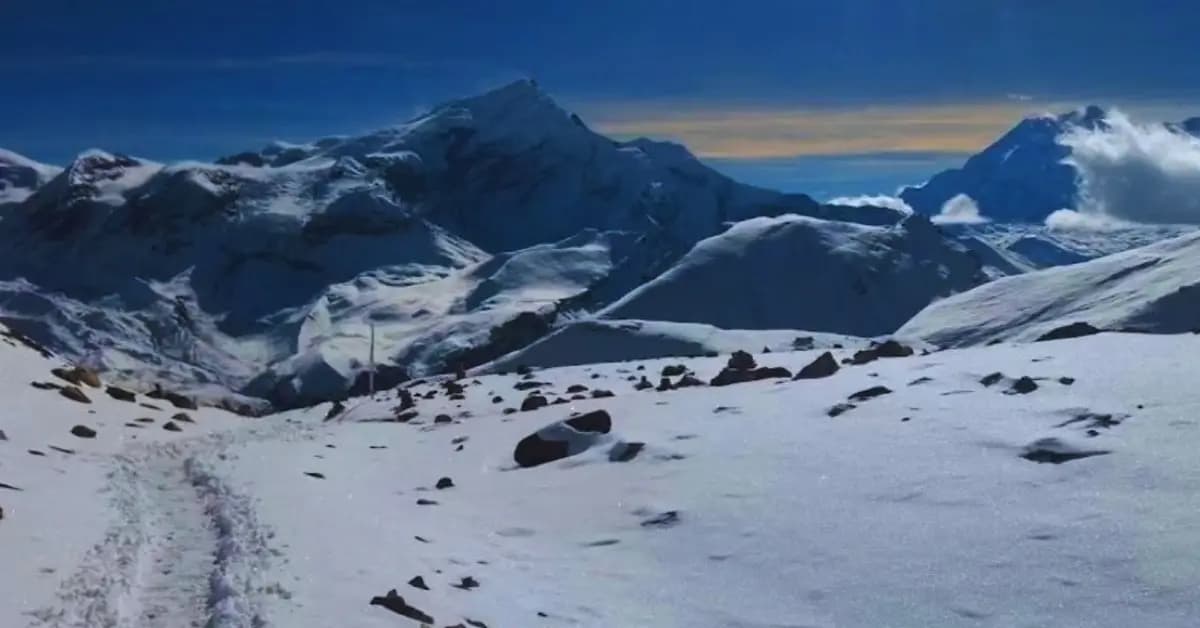
The landscape changes significantly across the pass. The greener valleys around the lower Annapurna Circuit give way to a much more alpine environment before the route drops toward the drier Mustang side.
This change is one reason the pass is such an important part of the circuit rather than simply a high point on a map.
How Difficult Is the Thorong La Crossing?
The crossing is demanding primarily because of altitude and the length of the day, not because the trail requires technical climbing.
A fit trekker can be capable of walking the required distance at lower elevations and still find the pass difficult. At more than 5,000 meters, the body is working with considerably less available oxygen.
The ascent also tends to feel slower than trekkers expect.
Near the top, progress can become a series of short climbs followed by brief pauses. Trying to maintain the walking speed you use at lower elevations usually works against you.
The descent after the pass is another part that should not be overlooked. Reaching the prayer flags and sign at the top is only the midpoint of the day's effort.
The Crossing Day Starts Early
The pass is normally crossed early in the day.
This is not simply a tradition or an attempt to start the day before everyone else. Mountain weather can change during the day, and an early start gives the group more time to complete the ascent and descent before conditions become less favorable.
The exact departure time depends on the season, weather, group pace, and overnight location.
This is one reason the previous day's acclimatization and positioning matter. The crossing day should not begin with an unnecessarily long approach.
The Most Important Part Happens Before the Pass
The best preparation for Thorong La is not the morning you cross it.
It is the gradual approach to altitude beforehand.
Trekkers need time to adapt as the route rises through Manang toward the higher settlements. This is why a well-planned Annapurna Circuit with Tilicho Lake trek itinerary should not treat the pass as an isolated challenge.
We pay particular attention to the sleeping elevations before the crossing. A trekker may feel comfortable during the day and still struggle after moving to a significantly higher sleeping altitude.
Pushing the itinerary too quickly to save a day can therefore create a much bigger problem later.
What Trekkers Often Misjudge
The most common mistake is assuming that fitness is enough.
Good fitness is certainly useful, but Thorong La is not a fitness test in the conventional sense.
A strong hiker may still experience headaches, unusual tiredness, reduced appetite, poor sleep, or slower recovery at altitude. These are different from simply becoming tired after a long climb.
Another mistake is focusing entirely on the ascent.
After reaching the pass, there is still a substantial descent. Legs that are already tired from the climb must continue working for several hours.
Trekkers should therefore think of the pass day as one long mountain day, rather than “the climb to 5,416 meters.”
Weather Can Change the Plan
Weather is one of the reasons we avoid treating a high-pass itinerary as a fixed timetable.
Wind, snow, cloud, and visibility can change conditions around Thorong La. A trail that is straightforward in good weather can become considerably more demanding when snow covers the route or visibility deteriorates.
This is particularly important outside the more reliable trekking periods.
If conditions make a crossing unsafe or impractical, changing the plan is preferable to treating the itinerary as something that must be followed regardless of circumstances.
For organized groups, having some flexibility in the schedule is therefore valuable.
What Is the Trail Like?
Thorong La is a trekking pass rather than a technical mountaineering objective.
The approach involves sustained uphill walking over rocky and barren terrain, followed by a long descent on the opposite side.
At this elevation, even simple terrain can feel harder than expected. The thin air slows the pace, and cold or wind can add to the physical strain.
The trail itself is not the only consideration. The combination of altitude, exposure, weather, and duration is what makes the crossing demanding.
What Happens After Crossing the Pass?
Reaching Thorong La is an obvious highlight, but the character of the trek changes immediately afterward.
The descent toward Muktinath leads into a noticeably different landscape. The dry terrain and strong Tibetan cultural influence of the Mustang side contrast with the landscapes encountered earlier around Manang.
This transition is one of the strengths of the Annapurna Circuit. The pass is not the end of the experience; it is the point where the journey begins to change direction both geographically and culturally.
When Is the Best Time to Cross Thorong La?
The most commonly preferred periods for the Annapurna Circuit are spring and autumn, when conditions are generally more favorable for high-altitude trekking.
However, conditions at Thorong La depend on current weather and snow, not simply the month on the calendar.
Winter can bring significant cold and snow at the pass, while monsoon conditions can affect the lower sections of the circuit differently.
For this reason, the pass should always be considered in the context of the entire Annapurna Circuit, rather than relying on a generic Nepal trekking season.
Is Thorong La Suitable for Everyone?
There is no single fitness level that guarantees a successful crossing.
The route can be suitable for trekkers with a reasonable level of fitness and proper acclimatization, but previous experience at high altitude is valuable.
The more important question is whether the itinerary allows enough time for the individual to adapt.
For groups, this becomes even more important. A strong trekker may want to move quickly, while another member may need a slower pace or additional acclimatization.
A sensible itinerary allows the group to respond to those differences.
Practical Things to Think About
Before committing to the Thorong La crossing, consider:
- Your previous experience with high altitude
- The number of days available for the Annapurna Circuit
- How quickly the itinerary gains elevation
- Where you will sleep before the crossing
- Your comfort with long walking days
- The season and likely trail conditions
- Whether the itinerary has flexibility for weather or acclimatization
These factors matter more than simply asking whether you are “fit enough” for a 5,416-meter pass.
Thorong La Is More Than a Number on the Map
The 5,416-meter figure is what makes Thorong La famous, but it is not what makes the crossing memorable.
The experience comes from the gradual change in landscape, the increasing altitude, the early start, the effort of reaching the pass, and the dramatic change on the Mustang side.
For trekkers, the most satisfying crossing is rarely the one completed as quickly as possible. It is the one where the Annapurna Circuit trek itinerary, acclimatization, weather, and walking pace all come together.
That is why Thorong La should be planned as part of the entire Annapurna Circuit, not treated as a single difficult day added to an otherwise ordinary trek.
About Author

Amir Adhikari is the Founder and Trip Curator of Everest Thrill Trek and Expedition. With 10+ years of experience in Nepal’s competitive tourism sector, he is a recognized expert in designing safe, personalized, and high-thrill Himalayan itineraries. His dedication to responsible travel and creating authentic experiences has positioned Everest Thrill as a leading specialist for Everest, Annapurna, and off-the-beaten-path adventures.